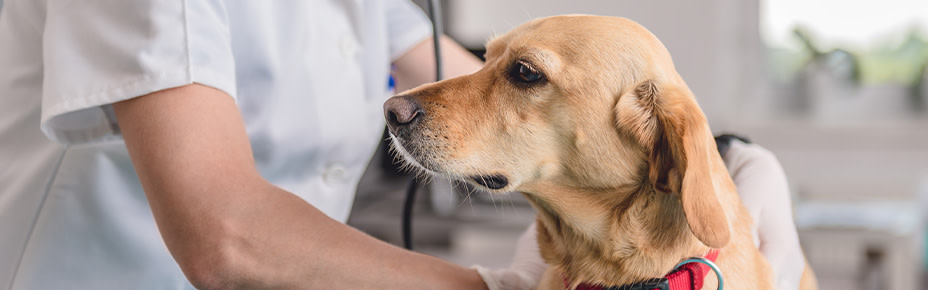
Preparing for the vet visit
For many dogs and their owners, going to the vet is often not one of their favorite activities. To help your four-legged friend get through the next examination more calmly, you can practice a few things at home.
Practice letting your dog be touched
As soon as your dog moves in as a puppy, you can start teaching him to let you touch him everywhere. This is very important, because not only during regular vet visits, but also in emergencies it may be necessary for other people to touch your dog somewhere and examine him.
For this reason, you should regularly practice with your dog that
you can hold all his paws for a few minutes.
he lets you look in his mouth and check his teeth.
you can look in his ears.
you can touch his belly and examine it.
he lets you pick him up.
Some of these exercises are important for you even outside of vet visits. For example, if you want to cut your dog's nails , he needs to let you hold his paws for that. Also, brushing his teeth is part of the grooming routine for dogs and should be trained in good time.

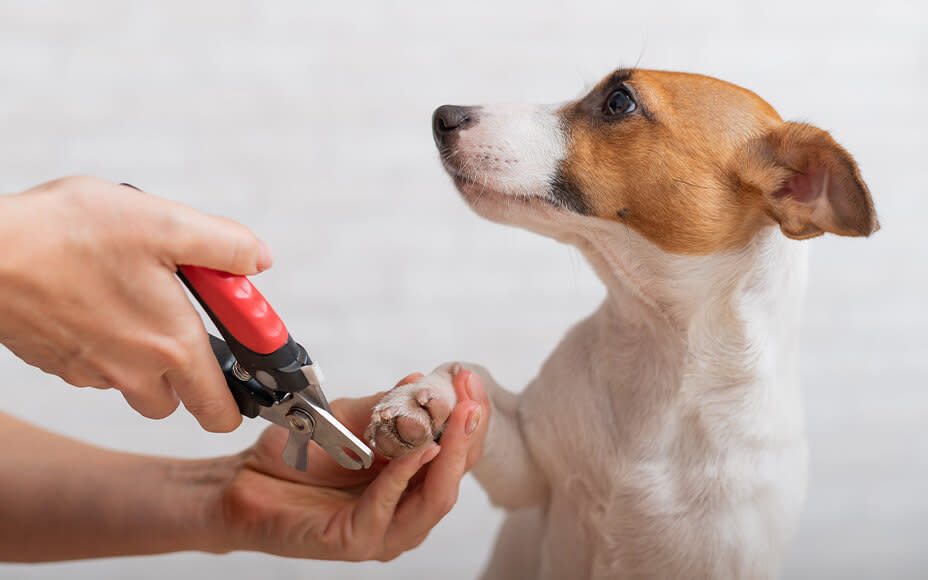
Through care routines such as trimming claws, cleaning ears, and brushing teeth, your dog learns to let you touch them everywhere.
Practice being relaxed around many dogs
Another important exercise and good preparation for vet exams is for your dog to be relaxed around other animals. In a vet clinic, you often encounter other dogs as well as cats, rabbits, or other small animals.
Some dogs have trouble staying calm around other dogs. If your dog already shows uncertainty around other dogs even without the extra stress of a vet clinic in the presence of other dogs, this is an important exercise for you. If your dog shows aggressive behavior, you should seek the help of a trainer. There are also different ways to help your dog here.
Get your dog used to the vet gradually
Whether young or older: it's always a good idea to get your dog used to vets and clinic rooms gradually. To do this, you can simply stop by the clinic, put your dog on the scale, sit down with him, let him eat some treats there, and so on. Anything that's not scary, is fun, and tastes good is basically allowed.
If you've gotten a puppy, there will be a few initial check-ups anyway. If your little friend has a hard time with relaxed vet visits from the start, you can look for a second vet. Wait, why double the stress? It's simple: while you're still teaching your puppy that the vet isn't scary, you can look for a 'bad vet' for vaccinations, etc. and a 'good vet' where your puppy doesn't get any exams and you can slowly build up vet visits. You can then use this positively associated vet for future treatments when your dog is fully grown.for future treatments.
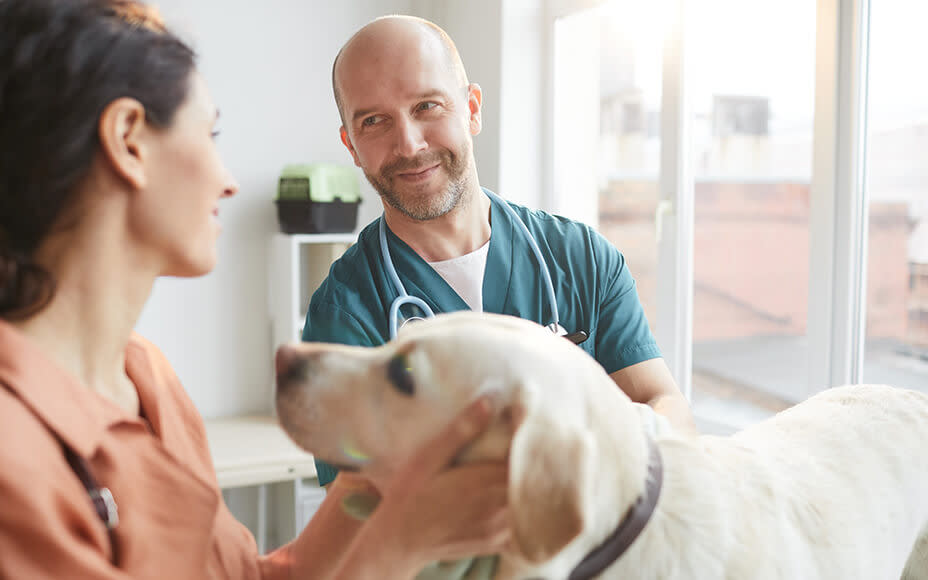
Simply stopping by the vet to pick up a treat or a cuddle is great training for your dog.
Reward, reward, reward
What's better than treating yourself to something tasty after a stressful situation? Our dogs feel the same way. Especially at the vet, you shouldn't skimp on especially tasty rewards. Here you can bring along the special treats that your dog might only get at the vet. That way, your dog will quickly learn that there are always really tasty things at the clinic.
Delicious Rewards for Brave Dogs
Your dog has lost his appetite? No problem! A nice walk in the woods after the exam, a good belly rub or the favorite toy are great rewards for our brave dogs and end vet visits on a positive note.
Long walk before the appointment
A nice long walk before the exam ensures that your dog is tired out and more relaxed when it's time to go to the clinic. Plus, he can take care of all his business beforehand. Also, after the exam some dogs are stressed and benefit from a short walk to unwind and sniff away the stress. So make sure to plan enough time around the vet visit.
Stay relaxed yourself
Our dogs mirror our behavior. That means if you are nervous and stressed yourself, it will also rub off on your dog. He'll sense that something is wrong and will be uneasy at the vet. Being relaxed on command doesn't work for dogs any more than it does for us.
To help you approach the vet visit a bit more calmly, we recommend that you stop by the clinic once without your dog. Check everything out, explain to the staff what challenges your dog has, and take your time finding the right vet for your furry friend. You also need to have a good feeling about your choice of clinic!
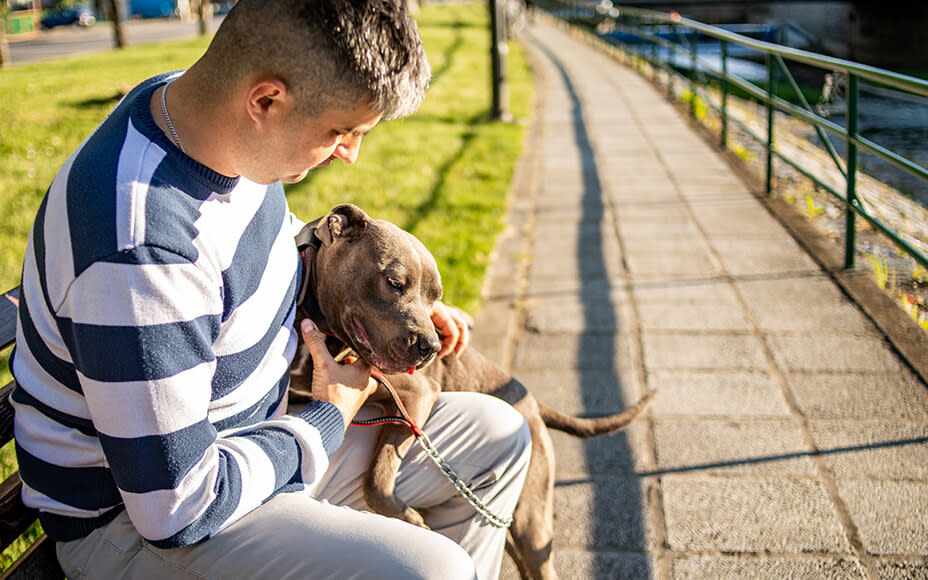
A long walk before and/or after the vet visit relaxes your dog and puts them in a good mood!
Be honest when making the appointment
Experience shows that your dog is more of a difficult candidate when it comes to vaccinations, exams, and the like? Not uncommon for him to bark up the waiting room, freeze up during the exam or leave a little protest poop at the entrance? No need to be embarrassed!
When you make the appointment for the exam, just be completely honest on the phone. Vets see more dogs with vet visit issues than you might think. Only by openly discussing your challenges can the staff accommodate you. A dog who doesn't get along well with other dogs can, for example, get an off-peak appointment and thus encounter as few other patients as possible.
Safety first!
Speaking of challenges—many vets also really appreciate it if you secure your dog properly, especially if he doesn't like being touched by others. So before he bites hands, it's better to put a muzzle on him. That makes things less stressful not only for the vets, but also for you.
It's best if you practice wearing a muzzle with your dog beforehand. That way, he's already used to it at the vet and can relax more easily. Of course, a leash on your dog is also a must, so as not to disturb other patients in the waiting room and to minimize the risk of injury.