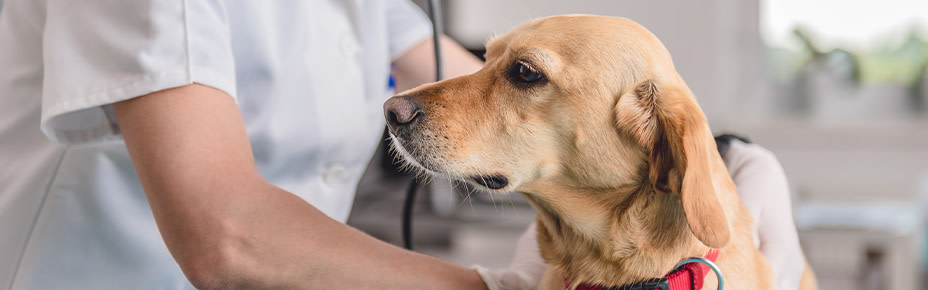
Preparing for the Visit to the Veterinarian
The visit to the veterinarian is often not one of the favorite activities for many dogs and their owners. To help your four-legged friend get through the next examination more relaxed, you can practice a few things at home.
Practicing Touching with Your Dog
As soon as your dog moves in as a puppy, you can start practicing with him to let you touch him everywhere. This is very important, as not only during →regular vet visits, but also in emergencies, other people may need to touch and examine your dog somewhere.
For this reason, you should regularly practice with your dog that
- you can hold all four paws for a few minutes.
- he allows you to look into his mouth and check his teeth.
- you can look into his ears.
- you can touch and examine his belly.
- he lets you pick him up.
Some of these exercises are also important for you regardless of the next vet visit. For example, if you want to [→trim your dog's nails](/magazin/hunde/hunde-gesundheit/so-schneidest-du-die-krallen-deines-hundes-richtig), he needs to allow you to hold his paws. Also, [→brushing teeth](/magazin/hunde/hunde-gesundheit/zaehneputzen-beim-hund-so-funktionierts) is part of the grooming routine** for dogs and should be trained in advance.

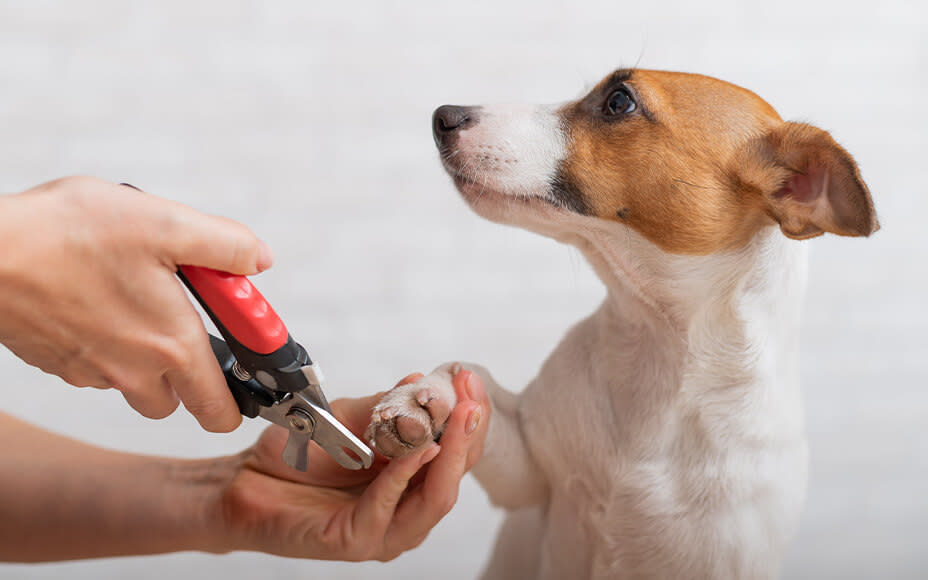
[TRANSLATION ERROR] Durch Pflegeroutinen wie Krallen schneiden, Ohren säubern und Zähne putzen lernt dein Hund, sich überall von dir anfassen zu lassen.
Practicing to Be Relaxed Around Other Dogs
Another important exercise and good preparation for examinations at the vet is for the dog to be relaxed near other four-legged friends. In a veterinary practice, you often encounter other dogs as well as cats, rabbits, or other small animals.
Some dogs have difficulty remaining relaxed near other dogs. If your four-legged friend shows uncertainties in the presence of other dogs even without the additional stress of a veterinary practice, this is an important exercise for you. If your dog shows →aggressive behavior, you should seek the help of a trainer. There are also various ways to help your dog here.
Gradually Getting Used to the Veterinarian
Whether a young dog or an older four-legged friend: It is always good to gradually get your dog used to veterinarians and practice rooms. You can simply stop by the vet, weigh your dog, sit down with him, let him have a few treats, and so on. Anything that is not harmful, is fun, and tastes good is basically allowed.
If you have gotten a puppy, there are →several examinations coming up anyway. If your little friend has difficulty with relaxed vet visits from the start, you can look for a second vet. Huh, why the double stress? Quite simply: As long as you are still teaching your puppy that the vet is not a bad thing, you can find a "mean vet" for vaccinations, etc. and a "good vet" where your puppy does not receive examinations and you gradually build up vet visits. You can then use this positively associated vet for future treatments when your four-legged friend is grown up.
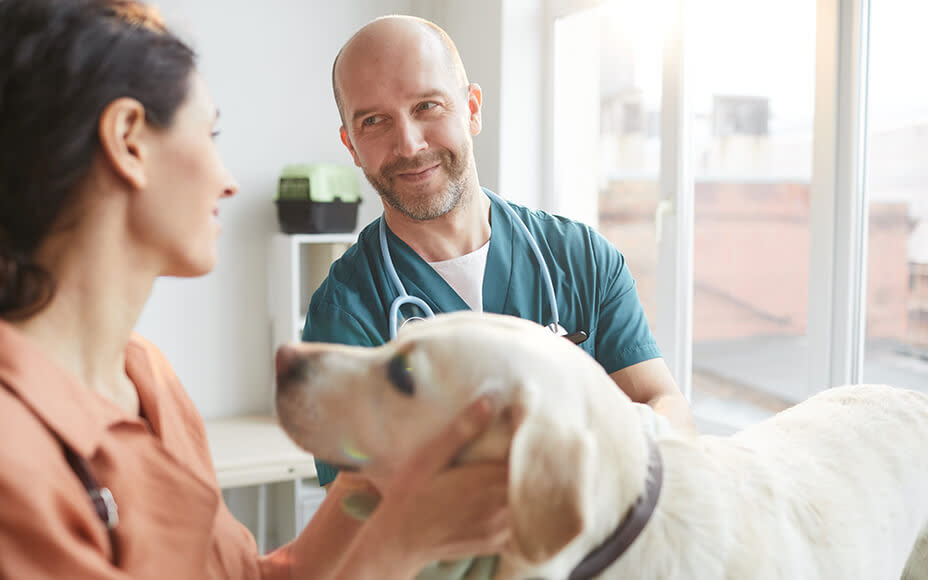
[TRANSLATION ERROR] Einfach mal beim Tierarzt vorbeigehen und sich einen Keks oder eine Streicheleinheit abholen, ist ein gutes Training für deinen Hund.
Reward, Reward, Reward
What could be better than rewarding yourself with a treat after a stressful situation? Our dogs feel the same way. Especially at the vet, you should not be stingy with particularly tasty rewards. Here you can bring the special treats that your dog might only get at the vet. This way, your dog will remember that there are always really delicious things in the practice.
Leckere Belohnungen für tapfere Hunde
Has your dog lost his appetite? No problem! A nice walk in the woods after the examination, a good petting session, or his favorite toy are great rewards for our brave dogs and positively conclude vet visits.
Extended Walk Before the Appointment
A nice long walk before the examination appointment ensures that your dog is exercised and more relaxed when heading to the practice. This way, he can also take care of all his business beforehand. Also, after the examination, some dogs are stressed and benefit from a short walk where they can calm down and sniff away the stress. So make sure to allow enough time around the vet visit.
Be Relaxed Yourself
Our dogs reflect our behavior. This means that if you are nervous and stressed yourself, it will transfer to your dog. He will sense that something is wrong and will also be tense sitting at the vet. Being relaxed on command - that works for dogs just as little as it does for us.
However, to approach the vet visit a bit more calmly, we recommend that you stop by the practice once without your dog. Check everything out, explain to the staff what challenges your dog has, and take your time to find the right vet for your furry friend. You also need to have a good feeling about the choice of practice!
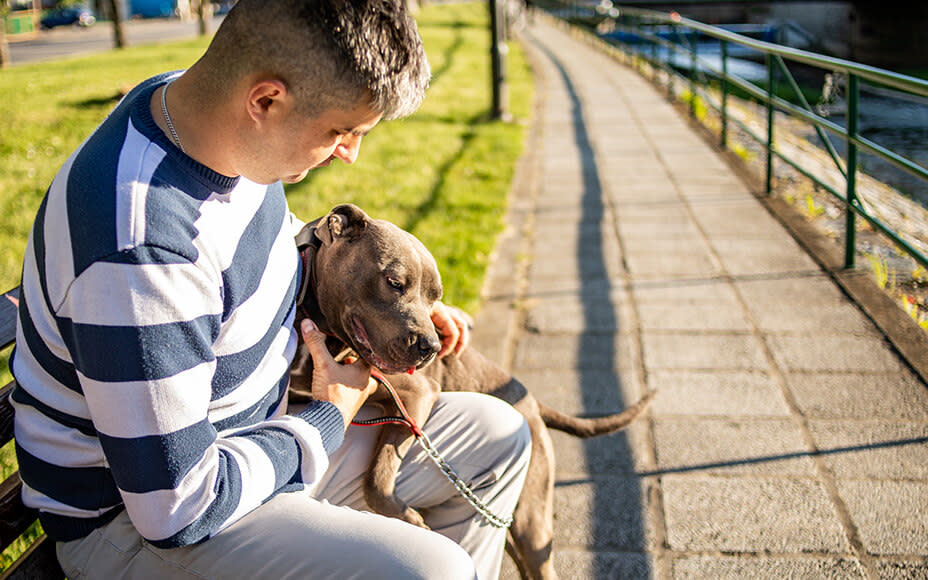
[TRANSLATION ERROR] Ein ausgedehnter Spaziergang vor und/oder nach dem Tierarztbesuch entspannt deinen Hund und sorgt für gute Laune!
Be Honest When Making the Appointment
Experience shows that your dog is more likely one of the difficult candidates when it comes to vaccinations, examinations, and the like? Not infrequently, he likes to bark in the waiting room, stiffens up during the examination, or leaves a little protest pile at the entrance? No reason to be ashamed!
When you make the appointment for the examination, just be completely honest on the phone. Veterinarians encounter dogs having difficulties with vet visits more often than you think. Only by openly discussing your challenges can the staff accommodate you. A dog that does not get along well with other dogs, for example, can be given a time slot at the edge and thus encounter as few other patients as possible.
Safety First!
Since we are already on the topic of challenges - many veterinarians appreciate it if you properly secure your dog, should he not like to be touched by others. So before he starts nailing hands, it's better to put a muzzle on him. This is not only more relaxing for the veterinarians but also for you.
It is best if you practice wearing a muzzle with your four-legged friend beforehand. This way, he is already accustomed to it during the vet visit and can relax better. Of course, a leash on the dog is also necessary to avoid disturbing other patients in the waiting room and to minimize the risk of injury.