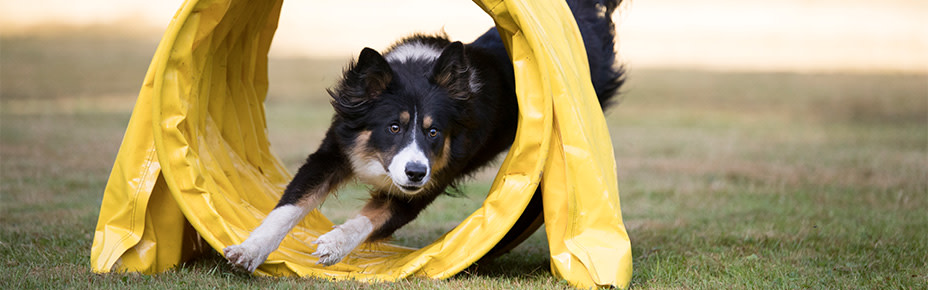
What is appropriate exercise for dogs, anyway?
Daily rounds through the park, a quick run with a dog buddy, and occasionally fetching a ball – is that enough to make a dog happy and tired? That depends entirely on the →breed and type of exercise. In principle, exercise means that your dog can regularly use and express all of its innate and learned physical and mental abilities, talents, and social behavior.
Rarely are dogs truly appropriately exercised just by going for a walk. A bike ride only reduces exercise to the physical aspect, and a few →simpler activities may still be insufficient for some dogs. We’ll show you how to appropriately challenge and support your dog and what to pay attention to. But here's a heads-up: Ball games are rarely a good form of exercise!

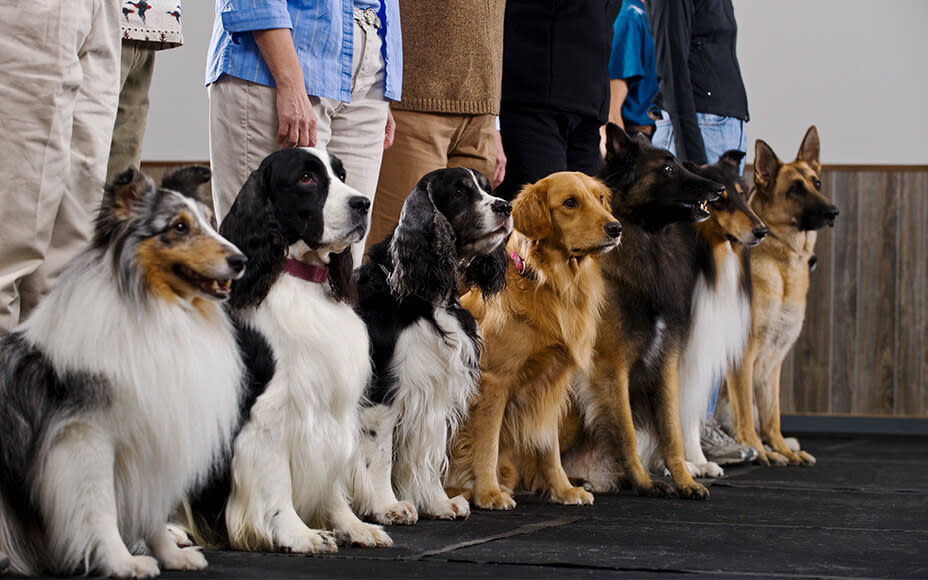
[TRANSLATION ERROR] Jeder Hund hat andere rassespezifische Gene, Vorlieben und Talente. Diese sollten bei einer artgerechten Auslastung berücksichtigt werden.
What types of exercise are there for dogs?
Fundamentally, the various types of exercise can be divided into several areas:
1. Physical exercise
2. Mental exercise
3. Olfactory exercise
4. Social exercise
5. Breed-specific exercise
The good thing is that some types of activities cover several of these areas. For example, a dog that goes tracking with its owner has to use its head and nose, may cover several kilometers, and works closely with its human. To help you understand what we’re talking about, we’ll take a closer look at the different areas and name popular activities for dogs.
You and your four-legged friend, are you out and about a lot? Then, in addition to vitamin-rich vegetables and valuable minerals and fats, a high meat content in the food is important, providing protein and enough energy for an active day. Our →Nassfutter Extra Meat is for true meat connoisseurs and meets your dog's needs in a healthy way.
Unser Futter für Hunde: gesund, ehrlich, lecker.


Physical exercise
Any form of physical movement is physical exercise. The need for movement is, of course, different for every dog. For some four-legged friends, a leisurely walk through nature is enough, while for others, bike rides or jogging sessions are just the warm-up. In addition to personal preferences and breed, physical exercise should always be adapted to the age, the →health status, and the training level as well as the individual performance limits.
Concrete recommendations for appropriate physical exercise can be sought from experienced trainers. They know dogs well and can advise you on suitable hobbies for you and your four-legged friend.
Examples of physical exercises
- Cycling
- Jogging
- Canicross
- Bikejoring
- Agility
- Dog dancing
- Disc dog
- Swimming
- Competitive dog sports
- Obedience
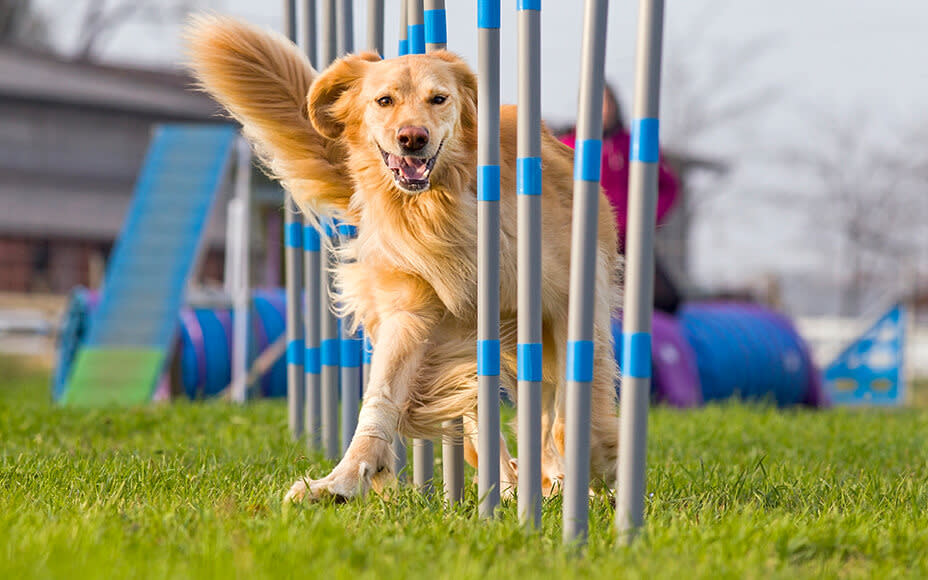
[TRANSLATION ERROR] Agility ist ein toller Sport für Hund und Halter*in. Je nach Lust und Motivation könnt ihr in einen Verein eintreten oder du baust ein paar Hindernisse bei euch im Garten auf.
Mental exercise
Also commonly known as "brain work," mental exercise is something where your dog has to think. Here, it learns new things or skills, can boost its self-confidence, and is exercised in a completely different way. Additionally, collaboration on a mental level enhances the relationship between you and your dog.
Many of the currently →popular breeds are originally working breeds. This means they were once bred for a specific task, such as the →Australian Shepherd for herding sheep, the →Magyar Vizsla as a hunting assistant, or the →Jack Russell for driving game. Thus, it’s no surprise that many breeds still need more than just physical activity to be truly appropriately exercised. A task is needed, preferably in collaboration with their humans. How great that many dog sports also provide mental stimulation.
Examples of mental exercise types
- Trick training
- Pulling sports
- Long-line work
- Herding ball
- Mantrailing
- Tracking
- Navigating obstacle courses
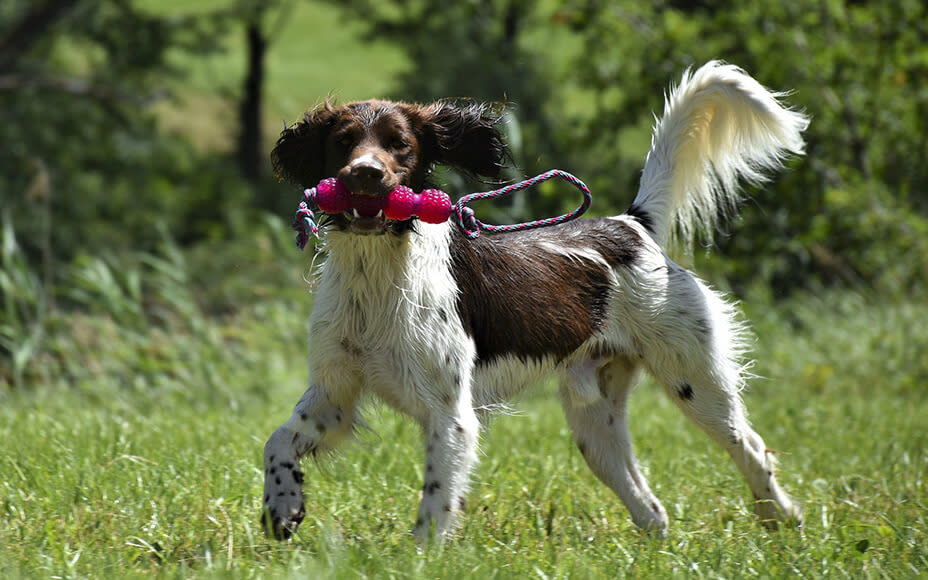
[TRANSLATION ERROR] Die Arbeit mit einem Dummy ist eine beliebte Auslastung für alle Jagdhunderassen, die nicht jagdlich ausgebildet werden sollen.
Olfactory exercise
Olfactory exercise, which involves working with the nose, is also part of mental exercise. A dog’s sense of smell is highly developed and plays a crucial role in perceiving its environment. For instance, by sniffing, various scent marks from other dogs are checked during your walks. Your dog can also recognize you or other household members and animals by their scent.
Depending on the breed, intensive and targeted use of the dog’s nose is very important for optimal exercise. Fortunately, you can easily exercise your dog through its nose without having to follow the neighbor's dogs around.
Examples of olfactory exercises
- Searching for food or tea bags in the home or garden
- Snuffle mats
- Tracking
- Dummy work
- Mantrailing
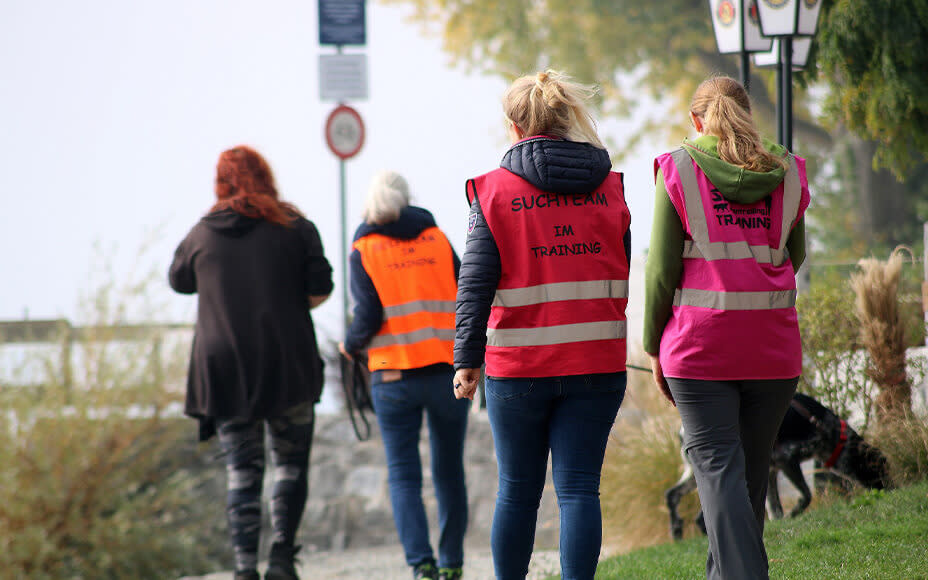
[TRANSLATION ERROR] Beim Mantrailing bekommt der Hund die Aufgabe, nach einer bestimmten Person zu suchen. Den Aufbau lernt man in der Regel in einer Hundeschule.
Social exercise
Dogs are very social beings that want or even need sufficient social contact with their fellow dogs in addition to contact with their humans. Of course, there are exceptions, and you may find a lone wolf among them. For a nice shared walk or play session, regular meetings with 1 to 3 familiar dog friends are more advisable than daily contact with strange dogs. Because only when dogs truly know each other does harmonious play occur.
Nevertheless, contact with strange dogs is valuable: Already in puppyhood and even later, dogs learn proper [→social behavior](/magazin/hunde/welpenerziehung/welpen-sozialisieren) and what is appropriate and what is not through interaction with unfamiliar dogs. A →visit to a dog school is particularly advisable for this, as sometimes dogs' body language can be misunderstood.
Examples of social exercises
- Play sessions with familiar dogs
- Visits to dog school
- Play with their humans, such as tugging games
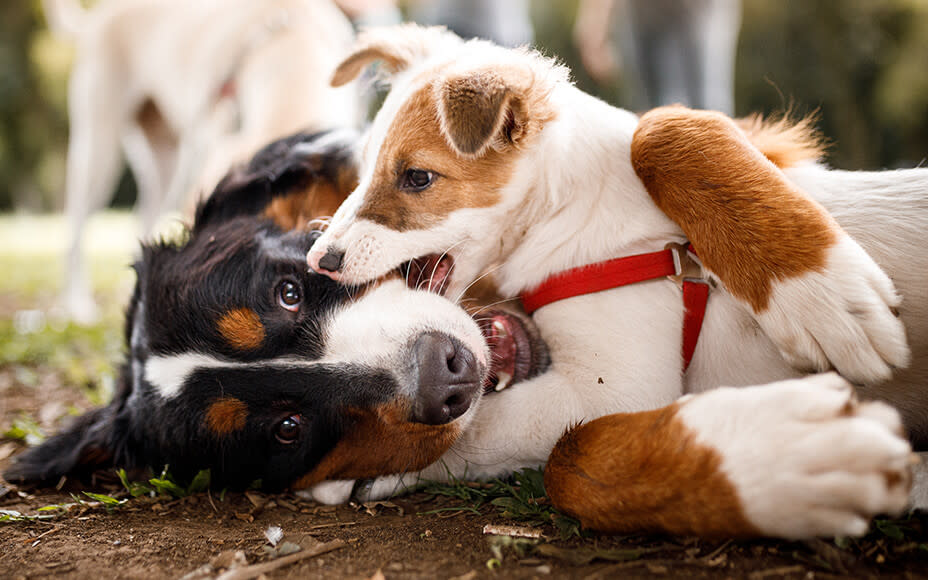
[TRANSLATION ERROR] Das soziale Spiel zwischen Hunden ist für die meisten unserer Vierbeiner sehr wichtig. Häufig reichen aber schon 1-3 dauerhafte Hundekumpels aus.
Breed-specific exercise
In principle, every dog, regardless of breed, should be given the opportunity to engage in the type of activity that brings them joy. So if your herding dog enjoys tracking, there’s nothing wrong with that.
However, breed-specific exercise refers to the expression of bred-in abilities or the pursuit of tasks for which the dog was originally bred. Of course, not everyone has a flock of sheep at home or takes their hunting dog into the woods to chase deer. Much more, it involves a kind of "substitute task" that can be assigned to the dog.
Examples of breed-specific exercises
For herding dogs, for example, herding ball can be the optimal exercise because it closely resembles working with a flock of sheep. →Sighthounds, on the other hand, are true sprinters and love to really let loose on a racetrack. Meanwhile, a →Cocker Spaniel or →Dachshund can hardly contain their excitement when they get to track a scent.
If you are unsure which type of exercise is suitable for your dog, seek advice from breeders of the breed or get advice from dog trainers. Even with mixed breeds, preferences can often be identified.
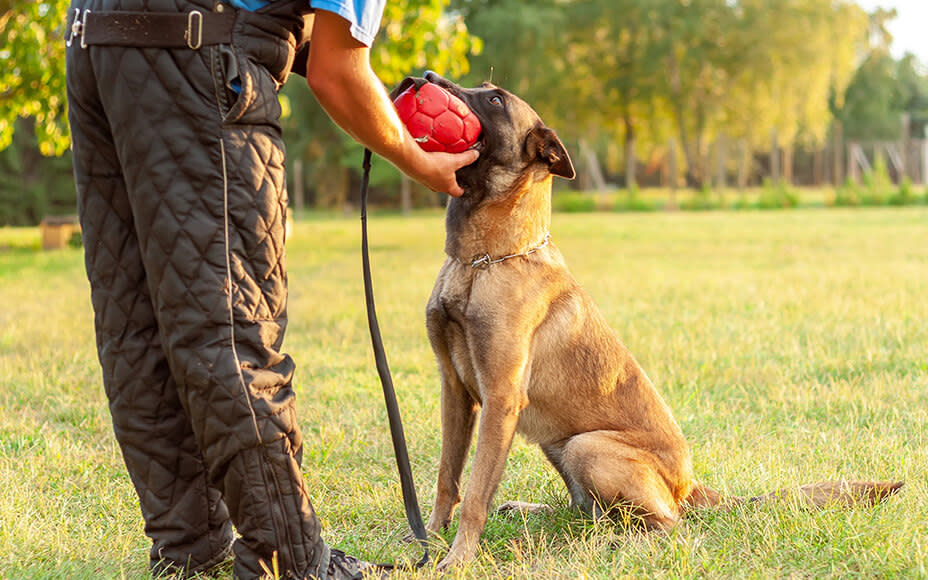
[TRANSLATION ERROR] Für Arbeitshunderassen gibt es verschiedene Auslastungsarten, die den ursprünglichen Aufgaben, für welche die Hunde einst gezüchtet wurden, nahe kommen.
Important: The balance between exercise and rest
You and your four-legged friend have found the type of exercise that you both really enjoy and that brings out the best in you? Very good! However, if you think that you engage in an activity with your dog every day and that he is thus balanced, tired, and relaxed, then you are mistaken. Because, as often is the case with exercise: More is not always better.
In addition to the suitable type of exercise, the right balance between rest and activity is very important. Rest breaks are essential, and rarely does a dog need more exercise than rest in a day. So you don’t need to feel guilty if one day you only take a few short walks with your four-legged friend and he otherwise sleeps, rests, or simply gets bored at home. Because our dogs need to learn this too - and they actually require it. Only then can they give their all with full concentration in the next round of agility, tricks, or canicross.
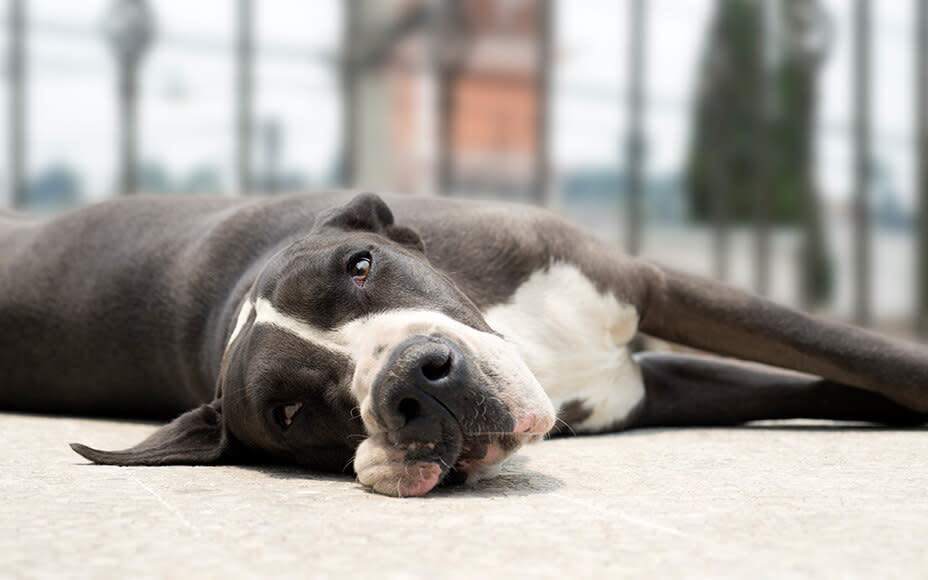
[TRANSLATION ERROR] Nur ein Hund, der die nötige Auszeit bekommt und auch gut zur Ruhe kommt, kann bei der nächsten Trainingseinheit wieder Vollgas geben!
→Rest is not only a crucial part of everyday life, but also in training itself. If your dog is already super excited in the car on the way to the dog training area and then pulls you along, whining and barking out of sheer excitement, that’s not a good starting situation to work focused and successfully. Anticipation is good, but a dog that is overly excited and stressed should practice relaxation and calmness again. Rest and exercise should always be in balance; otherwise, it can end up in stress, and your dog will benefit from a positive effect.
Can too little exercise have negative consequences?
You might find it interesting to know that a dog that is under-exercised or under-stimulated can also tend to behavioral issues. The reason is that we often underestimate how smart our four-legged friends actually are and how high their motivation is to achieve something great. It doesn’t matter whether you have a small [→Chihuahua](/magazin/hunde/hunderassen/chihuahua-haltung-pflege-ernahrung) or a professional athlete like the [→Malinois](/magazin/hunde/hunderassen/hunderasse-malinois-pflege-erziehung-und-co) at home.
So if you walk your highly motivated, clever dog three times a day for 30 minutes, it may be that this simply isn’t enough for them. In such cases, dogs tend to find a task or activity for themselves, which usually doesn’t please us humans. This can lead to →excessive barking, a strong guarding instinct in the house, chasing children, bicycles, or cars, as well as chewing and destroying things, all signs of a lack of appropriate exercise.