Recognizing conjunctivitis in dogs – symptoms
Conjunctivitis in dogs is not uncommon. Fortunately, the symptoms are clearly visible on the outside, making it possible to detect inflammation of the eye quite quickly. Frequent rubbing of the eye and watery discharge are the first signs of conjunctivitis. Also watch out for the following symptoms:
squinting the eye
increased blinking
rubbing or scratching the eye
watery and/or sticky eye
clear and watery or mucous to purulent-yellow eye discharge
red eye
in advanced inflammation: small blisters on the eye
Cause of the inflammation
Before treatment can begin, the cause of conjunctivitis in your dog must be determined. Most often, the conjunctiva in dogs becomes inflamed due to irritation, usually from a foreign object in the eye. Even small things like pollen or house dust can trigger a reaction in your four-legged friend →allergic reacts. But also strong drafts for example while driving, can irritate your dog's eye.
A contagious conjunctivitis is caused by infection with viruses, bacteria, fungi, or parasites. In this case, several pets in the household, including your cat, can be affected.
In addition, some dog breeds are said to have a higher potential for conjunctivitis. In particular, a genetically too small or too large eyelid opening causes eye problems. Also, if your four-legged friend has especially long hair that hangs into the eyes, conjunctivitis can be more likely.

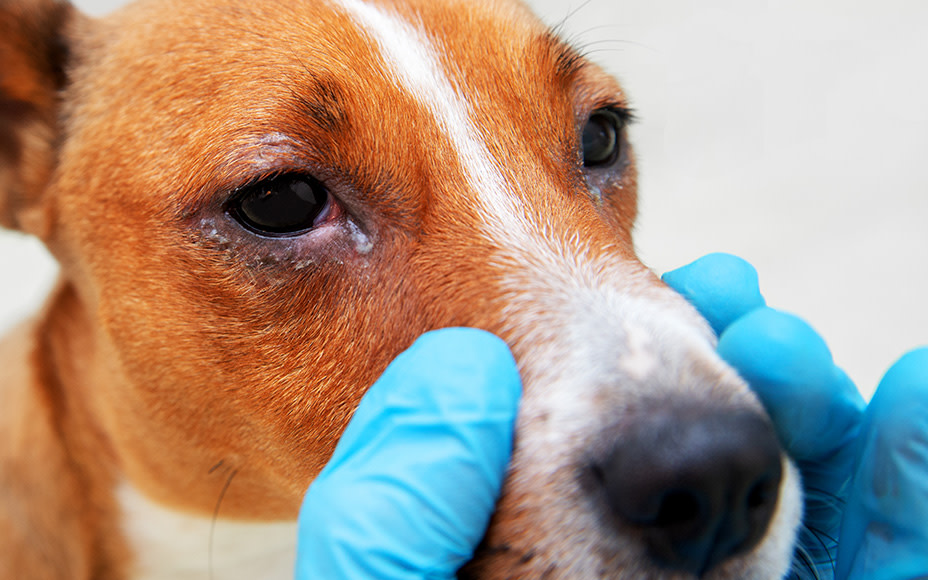
Red eyes with discharge are a clear sign of inflamed eyes in dogs.
Treatment of conjunctivitis in dogs
If you notice the first signs of eye inflammation in your pet, you should see a veterinarian promptly. Just as with humans, conjunctivitis is very uncomfortable for your dog and is accompanied by itching and a stinging pain in the eye.
Oh dear! The next vet visit is coming up and your dog isn't happy about it? Take a look through our snacks and reward your dog after or even during the examination with something truly special! This will turn the vet visit into a positive (and tasty) experience.
Delicious Rewards for Brave Dogs
Mild conjunctivitis in dogs
Depending on the cause and stage of conjunctivitis, treatment can be simple or more extensive. For a mild inflammation, for example caused by drafts, ointment or eye drops can provide quick relief. Please note that you should never give any eye drops or eye ointment from last time to your dog without medical advice!
More severe conjunctivitis in dogs
If the conjunctivitis is persistent and the discharge is already yellow and purulent, it is common for eye drops, eye ointments, or eye gels with an antibiotic ingredient to be prescribed. If the inflammation is caused by fungi or spores, antifungal agents are also administered.
(Chronic) conjunctivitis due to allergy
If your dog suffers from an allergy, for example to grasses, conjunctivitis can also become chronic. Here too, medications prescribed by veterinarians can help. To avoid giving your pet medication long-term, hyposensitization can be worthwhile. This is a long-term therapy in which your dog is gradually accustomed to the allergy-triggering substances.
Conjunctivitis caused by foreign bodies or parasites
A surgical procedure is only necessary in really difficult cases. This is the case, for example, when a foreign body such as a grass awn in the eye is stuck or a parasite, e.g. a →tick has settled in your dog's eye. In such cases, it is strongly advised not to try to remove the foreign object from the eye yourself! On the one hand, your dog's eye could be damaged, and on the other, any remaining fragments in the eye can cause serious inflammation.

With conjunctivitis, a visit to the vet is always necessary. This is where your dog can get the help they need.
Is conjunctivitis in dogs contagious?
Whether your dog's conjunctivitis is contagious to you, other people, children, or animals depends on the cause. An inflammation that is caused by bacteria, viruses, fungi, or parasites is contagious. For this reason, you should pay special attention to hygiene, always wash your hands and separate pets in the household if your dog has conjunctivitis. Also, children should, as a precaution, keep their distance from the dog.