
Allergies in Dogs: Definition, Causes & Symptoms
Is your dog behaving unusually? No, more than usual! →Diarrhea, flatulence, →grumbling belly, vomiting, or →frequent scratching and itching are the order of the day? Then it could be that your furry friend is suffering from an allergy. Don't worry! We will help you recognize more signs and have a few tips on how you can help your furry friend back on their paws again.

Allergie- oder Unverträglichkeit?
Jetzt passendes Futter für deinen Hund finden!
What is an allergy?
If your dog reacts to something specific, such as a food, it may be an allergy or intolerance. Depending on whether an allergy is present, the symptoms can vary in severity.
While with an intolerance you might "only" have to hold back one or two farts, allergies can lead to more serious health consequences due to the activated defense system. Intolerance is merely due to the lack of an enzyme to process certain foods. An allergy is thus an exaggerated reaction of the body to a specific substance. While healthy dogs can normally tolerate certain substances from the environment or the meat type beef, the body can switch to danger mode in the case of an allergy and sends the corresponding signals to the immune system incorrectly.


[TRANSLATION ERROR] Allergien bei Hunden sind meistens Überreaktionen des Immunsystems auf eine ungefährliche Substanz oder Futter.
What allergies are most common in dogs?
The most common allergies include allergies to →fleas and other parasites, environmental allergies (atopy) such as pollen and grasses, contact allergies, and in fourth place, food allergies and intolerances.
Every dog can react differently to the composition - sometimes it's a single ingredient, sometimes several components. Certain meat types like chicken and beef are statistically more likely to trigger allergies. The reason for this is protein compounds in the meat or in other food components like grains or soy. All types of grains together statistically represent the largest allergy component when it comes to food allergies in dogs.
Overview of allergies in dogs
How do allergies develop in dogs?
An allergy rarely develops from the first contact with the triggering component. Usually, multiple contacts between, for example, food and the body are necessary for the body to develop an allergy. While only internal processes occur during the first contact and the body becomes sensitized to an allergen, symptoms become visible from the 2nd-3rd time onwards. Causes of allergies can lie in the food, in environmental conditions such as fine dust, in humid living conditions, but also in the inheritance of allergies.
How can you recognize an allergy in dogs?
Unfortunately, dogs can only communicate to a limited extent - paying attention to symptoms is therefore the first way to help in the diagnosis of an allergy. The following symptoms indicate whether your furry friend suffers from an allergy or intolerance:
- Frequent vomiting that only improves after a change in diet
- Diarrhea that initially improves after a change in diet
- Flatulence
- Itching with flaky skin
- Skin inflammations and →hot spots
- Hair loss
- Occasionally poor appetite and lethargy
- →Licking of itchy spots
- Ear problems, inflammations
In summary, dogs suffering from an allergy exhibit itching, inflammations, and gastrointestinal problems.

[TRANSLATION ERROR] Juckreiz, Durchfall, Erbrechen, Lustlosigkeit - die Symptome einer Allergie sind vielfältig und zeigen, dass der ganze Körper betroffen sein kann.
How does an allergy test work for dogs?
Various tests assist veterinarians in diagnosing allergies in dogs. In addition to the classic blood test, there is an allergy test, the elimination diet, and other clinical procedures for diagnosis. It is noteworthy that blood and allergy tests often do not provide clear and reliable results.
The "test of choice" for allergies is usually the elimination diet. Here, the name is the program, but actually, the procedure is not a diet at all - you simply exclude food components in phases that your dog might be allergic or intolerant to. The elimination diet lasts several weeks to months, as the body adjusts only slowly. Often, this can help identify the ingredient that your dog is allergic to.
In the case of environmental allergies or others, various procedures are available. Here, specific diseases are investigated, and gradually excluded until the corresponding allergy is found.

[TRANSLATION ERROR] Verschiedene Verfahren zur Diagnose können unter anderem aus einem Allergietest und einer Ausschlussdiät bestehen.
How much does an allergy test for dogs cost?
Depending on the veterinarian and the extent of the test, it costs around 100 to 300€ and often settles in the middle - the amount varies greatly because sometimes multiple triggers are investigated, and the effort is correspondingly large. An elimination diet, on the other hand, only incurs "consultation costs and costs for the new food."
How to treat allergies in dogs?
Killing or avoiding parasites and substances
If the diagnosis reveals an allergy to parasites like fleas, the therapy involves removing the parasites. You create an environment for the dog where the allergy-triggering source occurs little to not at all, thus alleviating the symptoms. If the itching is already severe, supportive ointments may be prescribed.
Elimination diet
What helps in diagnosis also works in treatment. The method of choice for food allergies is often to remove certain ingredients from the menu. This is not as bad as it sounds, but it requires one thing from you: patience. And time. And of course: consistency!
So feed in consultation with veterinarians over a longer period - around 8 weeks - preferably monoproteins, meaning only one type of meat. Beef, pork, and meat that your furry friend has had problems with recently should be avoided to rule out intolerances from the start. Be sure to avoid grains, sugar, soy, and artificial additives.
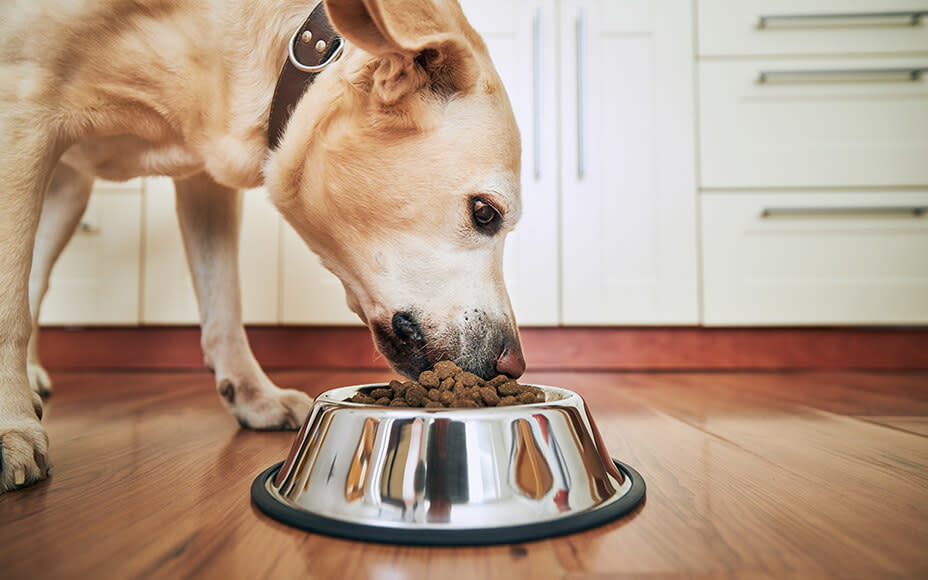
Endlich wieder Freude im Napf! Eine Ausschlussdiät hilft dabei, die Ursache einer Futtermittelallergie zu finden und sorgt für schmerzfreiem Genuss.
Hypoallergenic food
"Hypoallergenic" means producing products with as few allergy-triggering ingredients as possible. These →hypoallergenic meat types are ideal for an elimination diet, but it should be limited to one type only. There are some foods that naturally possess this hypoallergenic property. These include, especially in dog food:
- Lamb
- Horse
- Game
- Duck
- Goat
- Kangaroo
We know the problem with sensitive dog stomachs all too well and have also included →water buffalo, kangaroo and insects - yes, insects - in our range of sensitive food.
Hypoallergenes Futter für die Ausschlussdiät
Preventing allergies in dogs
The development of allergies is complex, and unlike other diseases, prevention is difficult. To prevent flea allergies, proper and consistent precautions are important, which should be done in veterinary consultation with [→special preparations](/magazin/hunde/hunde-gesundheit/floh-und-zeckenmittel-fuer-hunde-was-du-beachten-musst).
A varied, →species-appropriate diet allows the body to adjust to different protein and carbohydrate sources. But it holds true: be sparing with hypoallergenic sources like kangaroo, horse & co. - because in the case of an allergy, exotic varieties are helpful.
In the case of environmental allergies, only inheritance and breeding with healthy animals can be considered, which is why you should pay close attention to prevention here to ensure that your dog →comes from certified breeds or from animal welfare,** and in no case from illegal puppy trade or hobby breeding.