What is an intestinal obstruction in dogs?
You may have heard that an intestinal obstruction (medically referred to as ileus) can be dangerous for your four-legged friend. But what is it actually? As the name suggests, an intestinal obstruction is a blockage of the intestine. This means that the functionality of the organ is impaired and only a part of the food mass or, in the worst case, nothing at all can pass through the intestine.
Symptoms: How do I recognize an intestinal obstruction in my dog?
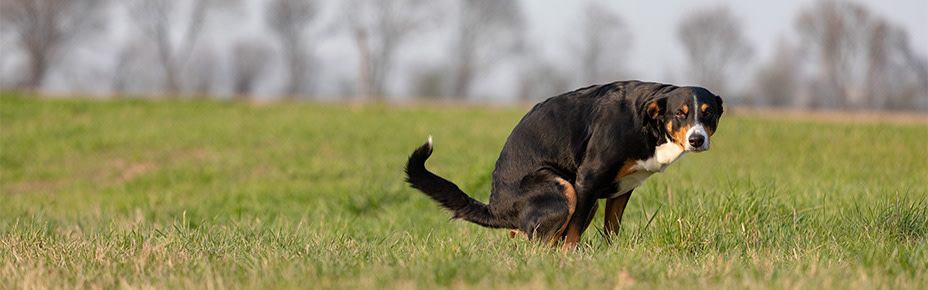
In the case of an intestinal obstruction, quick action is required. However, you can usually only recognize a blockage of the intestine after several hours. Therefore, it is important to observe your four-legged friend for a few hours and to inform yourself about how dogs behave with an intestinal obstruction. Even before you notice that your dog cannot defecate anymore, the animals often assume the so-called prayer position. In this position, they bend their upper body down and raise their hindquarters in the air.
Among other signs, the following may indicate an intestinal obstruction in dogs:
- little to no stool passage
- straining to defecate
- repeatedly assuming the prayer position
- frequent →vomiting of any food and liquid
- hardened and bloated abdomen
- →eating grass
- weakness, lethargy, fatigue
- →fever or low body temperature
- sensitivity to touch in the abdomen, →abdominal pain
Note that intestinal passage (the process from eating to the excretion of stool) takes at least 24 hours, often even longer. Consequently, it may take some time for the first symptoms to appear in the case of an intestinal obstruction. If you are unsure, it is best to contact a veterinary clinic.

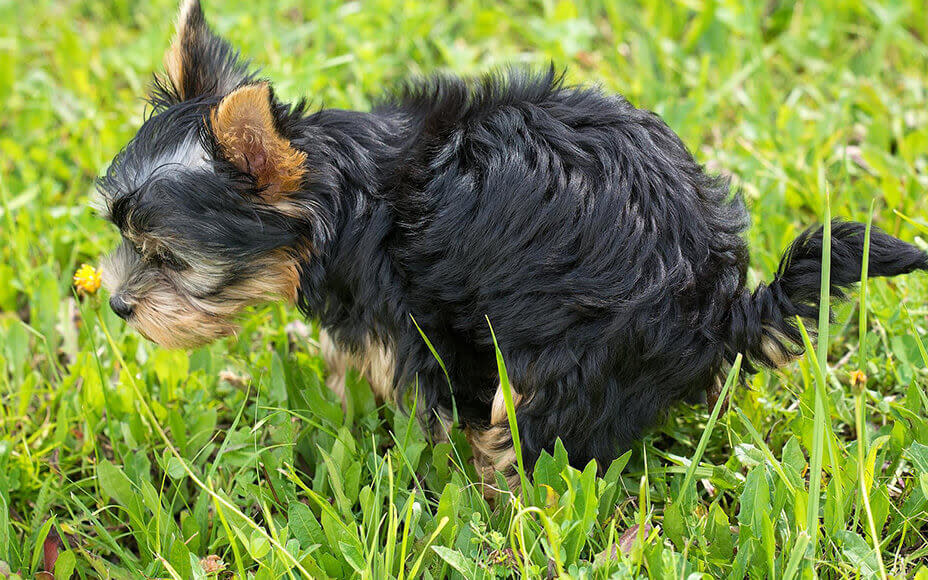
[TRANSLATION ERROR] Dein Hund kann keinen Kot absetzen? Verstopfung kann ein wichtiges Anzeichen für ein Darmverschluss sein!
Types of intestinal obstructions in dogs and possible causes
In principle, two forms of intestinal obstruction are distinguished in dogs:
Mechanical ileus
A mechanical intestinal obstruction is a complete or partial blockage of the intestine. The digested food mass can no longer pass through. The consequence is that the food mass gradually accumulates and the intestinal tract becomes distended.
Possible causes: In most cases, a mechanical intestinal obstruction in dogs is caused by swallowed foreign bodies, such as pieces of wood, bones, toys, chestnuts, or stones. Especially in young dogs, the desire to take objects into their mouths increases due to →teething. Suitable chew snacks can help satisfy the chewing needs of dogs.
Bite-resistant chew snacks for every chewing pleasure!
A severe infestation with intestinal parasites, gallstones, tumors, or twists of the intestine can also be causes of a mechanical intestinal obstruction in dogs.
Functional ileus
A functional ileus refers to intestinal paralysis or another functional disorder of the intestine. The consequence can be the cessation of intestinal motility. The intestinal passage is disturbed, and the food mass accumulates in the increasingly full intestine.
Possible causes: In the case of a functional intestinal obstruction, disorders in the nervous system often lead to a cessation of intestinal activity. But also inflammations such as →pancreatitis, circulatory disorders, or [→poisoning](/magazin/hunde/hunde-gesundheit/diese-dinge-sind-giftig-fur-deinen-hund) can cause a functional intestinal obstruction.

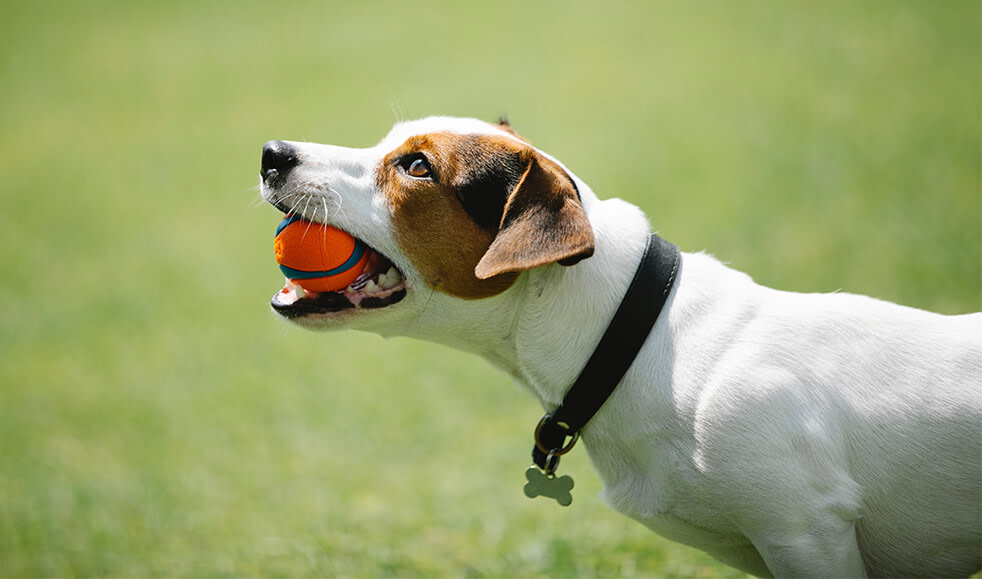
[TRANSLATION ERROR] Ein Ball und andere Spielzeuge sind manchmal schneller verschluckt als man denkt und können zu einem Darmverschluss führen. Achte hierbei unbedingt auf die passende Größe für deinen Hund!
Possible treatments for intestinal obstructions
Examination and diagnosis
An intestinal obstruction must always be treated by a veterinarian. Depending on the condition of the dog and the symptoms that occur, various examinations are initially performed. Typically, the abdomen is palpated, fever is measured, and the oral cavity is examined.
After that, an ultrasound is used to check whether your dog is indeed suffering from an intestinal obstruction. In some cases, this is sufficient for a secure diagnosis; in other cases, additional X-rays may need to be taken. In unclear cases, a diagnostic opening of the abdomen (laparoscopy) may sometimes be necessary, after which an operative procedure may be performed immediately.
Treatment
The necessary treatment measures depend on the cause and severity of the intestinal obstruction in your dog. In simple cases, sometimes just the administration of laxatives or antispasmodic medications is enough to relieve the blockage.
If your dog has swallowed an object or the intestinal obstruction is already more advanced, a surgical procedure is usually necessary. The swallowed object and any permanently damaged sections of the intestine must be removed, and the healthy sections of the intestine must be stitched together. After the operation, your four-legged friend will typically need to spend a few days in the veterinary clinic for optimal care.
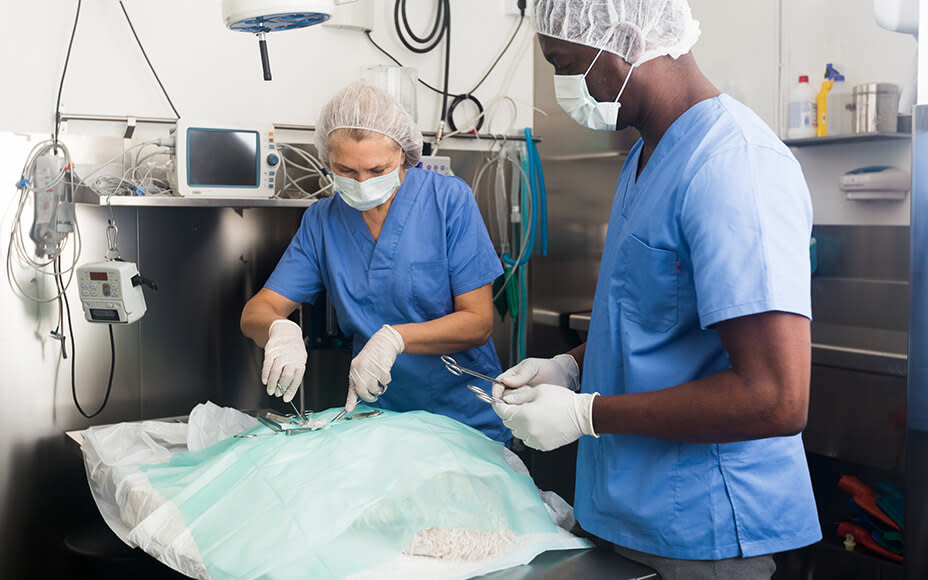
[TRANSLATION ERROR] In schweren Fällen muss ein Darmverschluss durch eine lebensrettende Operation behandelt werden. Danach wird es deinem Liebling bald wieder besser gehen!
When should I go to the vet if I suspect an intestinal obstruction?
If you suspect that your dog has an intestinal obstruction, you should contact your veterinarian immediately. There is no way around treatment by veterinarians in the case of an intestinal obstruction. If the blockage remains untreated, it can lead to the death of the animal. In general, if you think your dog has swallowed or ingested something, quick action is required. Even if there is no blockage, your beloved pet may have ingested something toxic like a →poison bait and quick treatment is necessary**.
How to prevent an intestinal obstruction in your dog
To prevent an intestinal obstruction in your beloved pet, there are several things you can do:
- A →balanced and species-appropriate diet with a sufficiently high fiber content supports a healthy digestive tract in your dog.
- Inferior dog food with artificial additives such as sugar, grains, or labels with "animal by-products" should be avoided.
- Adequate fluid intake to support digestion.
- When giving bones, for example during →BARFing, you should keep an eye on your dog and teach him that he must chew bones well.
- Dog toys should not be chewable and should be the right size so that your dog cannot swallow them. Caution: Balls can quickly end up in the stomach or, worse, in the trachea of dogs due to unfortunate accidents!
- Teach your dog early on that he should not pick up anything from the ground. Chestnuts, acorns, nuts, stones, and sticks are not suitable dog toys.
- Regular exercise (at least 2 hours per day) stimulates intestinal activity and helps prevent an intestinal obstruction in your dog.
- Preventive treatment of intestinal parasites such as worms and →giardia can contribute to maintaining intestinal health.