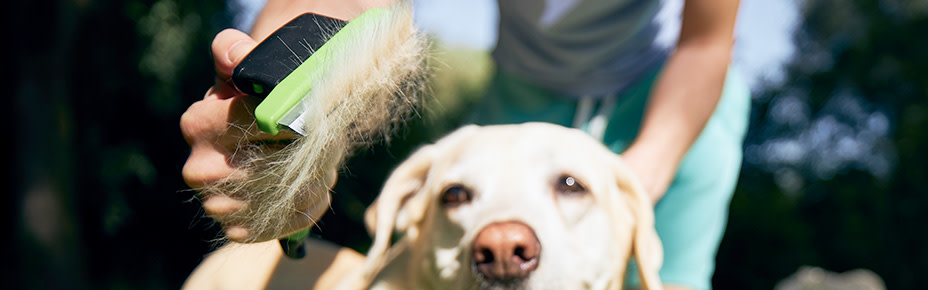
Shedding and Coat Care as a Voice for Health in Dogs
The skin is also the largest organ of the body for your four-legged friend - and the coat of your dog truly depends on it. Proper coat care is important to keep your four-legged friend healthy. What you should particularly pay attention to during shedding is explained in this article.
In which months does shedding occur in dogs?
Depending on the season, your dog loses its thick winter coat in spring as temperatures rise, and a thinner coat grows in for summer to protect your four-legged friend from heat and UV rays.
In winter, it is exactly the opposite: A warm woolly coat forms to keep your four-legged friend optimally warm in the cold. And even though this automatic process is quite impressive, there are a few tips to help your dog during shedding.

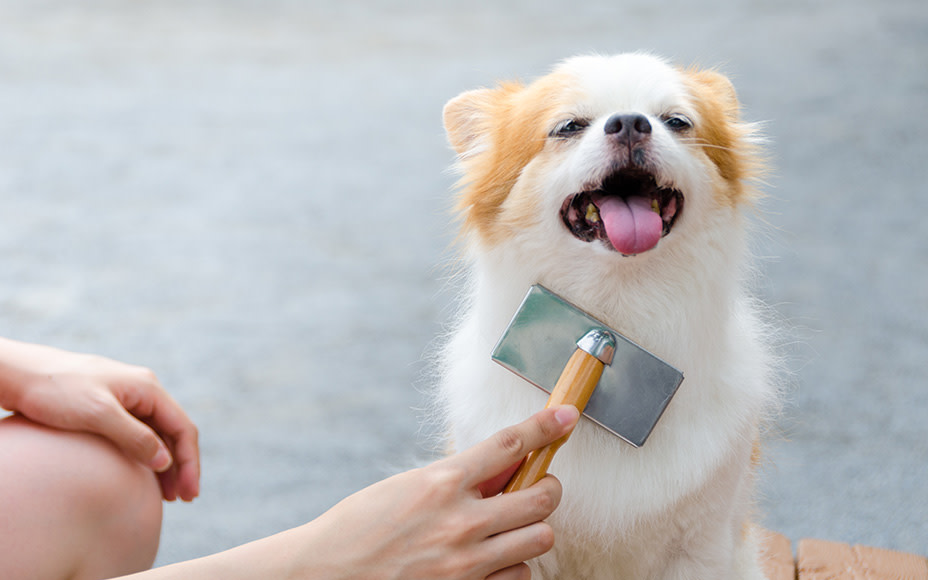
[TRANSLATION ERROR] Im Frühling verliert dein Hund sein dichtes Winterfell und beginnt deswegen ordentlich zu haaren. Regelmäßiges Bürsten ist hier besonders wichtig.
Tips for Shedding When the Dog is Shedding Heavily
Every year, your dog sheds its coat, and theoretically, it can do this all by itself. However, especially from winter to summer coat, dogs lose heaps of hair, and we wish there was something to reduce the heavy hair loss. In fact, there are a few things you can do to support your dog during shedding:
1. Regular Brushing
...is the be-all and end-all during shedding. This process stimulates the skin, which boosts metabolism, allowing old fur to be shed more easily and dead skin flakes to be removed. Additionally, you remove already loose fur and relieve your four-legged friend's coat in this way. Depending on the length of the fur, you should brush your dog once a day - for shorter fur, three to four times a week is recommended.
2. Oils Facilitate Shedding
...by the Omega-3 and Omega-6 fatty acids contained in them supporting hair growth during shedding from the inside out. High-quality food already contains healthy oils. However, in cases of very thick fur and heavy shedding, →oils can also be administered as a supplement to the food.
Such supplements are not only helpful during shedding but are also generally good for a healthy, shiny coat. Oils also have anti-inflammatory effects and can support the regeneration of already damaged skin or stressed fur, thus improving your dog's coat appearance in a short time. For dogs, →flaxseed oil is a good choice for coat problems.
3. A Healthy Diet Benefits Shedding
...because coat care also takes place from the inside. Additives like grains often lead to scaly, irritated skin, dull fur, and itching. Conventional pet foods rely on a much too high proportion of wheat and corn, which is reflected in the fur of the four-legged friends.
A →species-appropriate food provides high-quality protein from animal or alternative sources, as well as important vitamins and minerals from healthy fruits and vegetables. Unsaturated fatty acids make your pet's coat shinier, and shedding is supported by promoting the regeneration of skin and hair follicles. →Food to strengthen skin and coat offers optimal support for a healthy and beautiful coat.
Unser Futter für Hunde: gesund, ehrlich, lecker.
How long does shedding last in dogs?
Depending on the breed and how much your dog "suffers" during shedding, the hairy phase can last 6-8 weeks. Depending on how much you support your four-legged friend during shedding, brush him regularly, or even take him to a dog groomer, you can shorten the time a bit.
Recognizing and Treating Coat Problems in Time
It is completely normal for your dog to lose a lot of hair during shedding and is not a cause for concern at first. But somehow, does your dog's coat not shine anymore? An unhealthy, dull coat appearance can be attributed to various factors. Often, skin fungi are behind a pathological change in your dog's skin and coat.
Skin Fungi in Dogs
→Bald and sore spots on the skin can indicate a fungal infection in dogs: Since the affected skin area often itches, the animals lick it until the itching is alleviated. If a fungal infection is suspected, your trusted veterinarian can prescribe a suitable medication.
Caution is advised: Certain fungi can be transmitted from animals to humans, which is why wearing gloves is recommended when applying ointments.
The right natural-based care products support your dog's coat and skin health. Our [→Deep Clean Shampoo](/products/deep-clean-shampoo-mit-wegerich-sanddorn-und-frauenmantel-fur-hunde) with plantain, sea buckthorn, and lady's mantle, for example, has antibacterial, odor-reducing properties and supports against fungi, bacteria, or lichens. Ideal for sensitive fur noses!
I CARE for you - sauber und gepflegt mit unseren Pflegeprodukten für Hunde
Parasite Infestation
Another common reason for bloody residues on the skin or for skin injuries and hair loss is the infestation of your four-legged friend with parasites. Fleas, →ticks and worms often lead to pathological changes in the skin and cause itching, prompting the animal to lick the affected areas raw or scratch them bloody.
Unlike fungi, parasites can be at least partially identified and targeted through the correct removal of ticks. In the case of flea infestation, a thorough bath with anti-flea shampoo is necessary, along with cleaning the home. For worms or →giardia, the veterinarian can provide assistance.
Allergies
Also, →allergies to certain foods or grasses can cause severe itching and changes in the skin appearance in dogs. At a veterinary practice, you can have an allergy test done with your four-legged friend against food and/or grasses. If it turns out that your dog has food intolerances, a →change to a hypoallergenic food can help. For allergies to grasses or house dust, tablets can help.
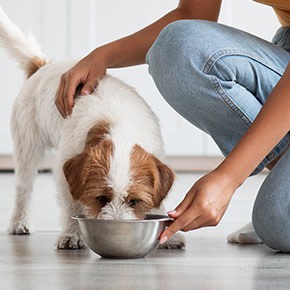
Bei Haut- und Fellproblemen:
Futter zur Stärkung von Haut und Fell
How do I keep my dog's coat healthy?
The most common reason for a negative change in the coat is improper or low-quality nutrition for dogs. If certain ingredients in the food are not tolerated, the body reacts adversely or allergically to these substances, which often manifests through skin and coat. Itching, →vomiting, →diarrhea or lethargy in your dog and deficiencies in the body are just a few possible consequences of a →food intolerance or allergic reaction to certain foods.
Conventional dog food usually contains all the necessary nutrients, but often delivers them in an unnatural way, as they are typically artificially added to the food afterward. You can think of it as eating fast food every day - not exactly what one understands by →healthy pet food. Artificial additives, preservatives, and flavor enhancers that are supposed to compensate for this can often trigger hypersensitivities or allergic reactions in the animal. The most common triggers for food allergies are gluten-containing grains, chemical additives, preservatives, and conventional meat additives like chicken and beef.
When we cannot tolerate something and react to food with rashes or →stomach pains, we can avoid it. However, your furry friend is completely dependent on you: You make all the food decisions for them and lay the foundation for a healthy, long life for your beloved pet. Your dog is family - and deserves only the best.