What do dogs need their liver for?
The liver is one of the most important metabolic organs in our dogs. It consists of several liver lobes and is located in the abdominal cavity just behind the stomach. Closely connected to the liver is the gallbladder. Substances that are absorbed from the intestine into the bloodstream, reach the liver via the portal vein. Depending on the substance, the substances are then utilized, stored, converted, or broken down—so the liver is quite the all-rounder.
The following functions are among the tasks of the liver:
Storage of sugar, fat, vitamins. The liver provides these to the body when needed
Production of proteins such as albumin and clotting factors
Production of bile acids, cholesterol
Breakdown of ammonia: It is produced by the breakdown of proteins, is toxic, and is converted in the liver into urea, which is then excreted in the urine
Breakdown of blood cells, which have reached the end of their life
Breakdown of medications, toxins, hormones
How do liver problems manifest in dogs?
As you have already learned, the liver has various functions and is involved in many metabolic processes. That is why the symptoms of liver disease are diverse and non-specific.
These symptoms often occur with liver diseases:
Loss of appetite
Vomiting
Diarrhea
Lethargy and apathy
Weight loss
increased abdominal girth
Fever
Yellowing of the mucous membranes (icterus)
increased tendency to bleed
increased water intake and more urination
If you notice one or more of these symptoms in your dog, you should seek veterinary advice promptly .


What liver diseases are there?
There is a variety of liver diseases with different causes. The following liver diseases are common:
Congenital diseases
Congenital liver diseases in dogs include the so-called portosystemic shunt. This is a malformation of the liver vessels. The blood coming from the intestine is enriched with substances absorbed from the digestive tract. In the case of a portosystemic shunt this blood does not reach the liver for metabolism, but instead flows directly into the main bloodstream. As a result, toxic substances such as ammonia end up in the body and can lead to severe symptoms such as seizures. Puppies and young dogs are especially affected by this disease.
Another congenital disease is copper storage disease. This is a genetic defect, which causes too much copper to be stored in the liver, leading to chronic hepatitis. Some breeds are more commonly affected than others. These include:
Bedlington Terrier
West Highland Terrier
Dalmatian
Doberman
Labrador
Liver inflammation (hepatitis)
The causes of liver inflammation include:
Bacteria
Viruses such as canine adenovirus 1 (CAV-1)
Parasites
Protozoa
Poisoning, for example by xylitol, medications
Tumor diseases
Liver inflammations can be acute or chronic and the therapy depends on the cause. The canine adenovirus 1 (CAV-1) is the causative agent of Hepatitis Contagiosa Canis, a generalized viral infection. You can vaccinate your four-legged friend against this virus. For this, it is best to seek veterinary advice.
Liver tumors
Unfortunately, our furry friends are not spared from tumor diseases. The liver itself can become tumorous or be affected secondarily by metastases.
Liver cirrhosis
Liver cirrhosis is the end stage of chronic liver diseases. The liver structure and function are irreversibly altered by ongoing damage.
Although the liver has great regenerative potential, the damage in cirrhosis can no longer be repaired .
When it gets to this point, your pet can only be helped to a limited extent and treated symptomatically. Enjoy the time with your furry companion and spoil them with lots of cuddles and healthy snacks.
Indulge your pet in a healthy and delicious way – with our snacks
How are liver diseases diagnosed?
Your veterinarian will, after you describe your pet's symptoms and condition, start with a clinical examination . Since the symptoms of liver diseases are so varied and often not clear, the next step is usually a blood test. Here, blood cells, liver enzymes, and other values can be assessed.
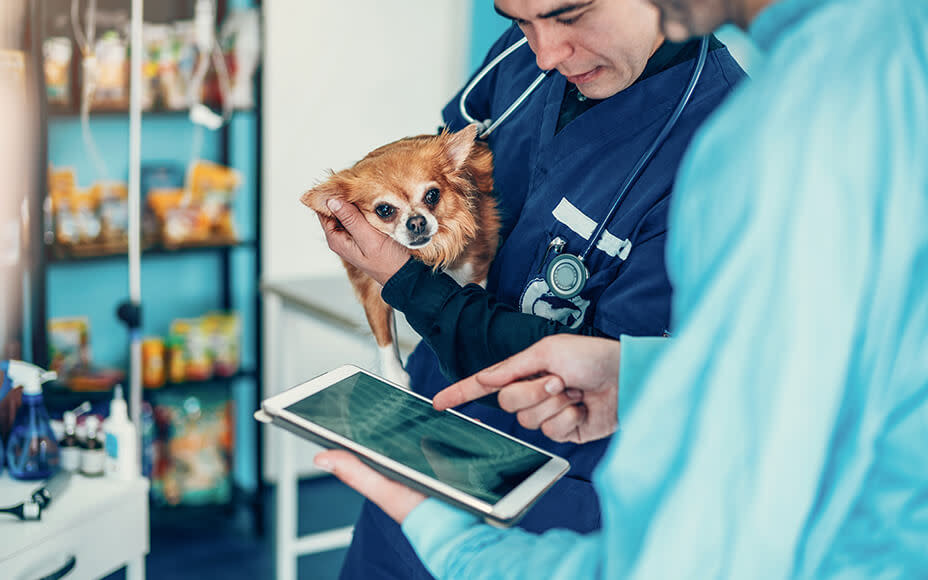
Imaging procedures such as ultrasound or X-ray are often necessary. In some cases, such as with a portosystemic shunt, further imaging procedures like a CT or MRI are necessary. If a tumor disease or other structural change in the liver is suspected, your veterinarian can also take cells or tissue in the form of a biopsy to examine the liver tissue under the microscope.
What do elevated liver values mean?
In a blood test usually many values are determined. You have probably never heard of most of them—and that's okay. Your veterinarian will discuss and explain your pet's blood results in detail, but what does it actually mean if the liver values are elevated or decreased ?
Here is a brief overview of common liver values:
Liver enzymes
Liver enzymes are sensitive parameters for detecting liver diseases. However, they can also change in other diseases and are therefore not definitive proof of liver disease. They also do not provide information about liver function.
The following blood values are among the liver enzymes:
Alanine aminotransferase (ALT) is a good indicator of liver diseases.
Alkaline phosphatase (AP) can also be elevated in other diseases such as Cushing's syndrome or diabetes mellitus.
Gamma-glutamyltransferase (GGT) is an important indicator of liver problems, especially in cats.
Aspartate aminotransferase (AST) is found not only in the liver but also in muscle and red blood cells. Changes are therefore not specific to the liver.
Glutamate dehydrogenase (GLDH) is elevated in hepatitis and poisoning with liver-toxic substances.
Synthesis products of the liver
These include the substances produced by the liver:
Albumin
Urea
Glucose
Clotting factors
Decreased values can indicate reduced liver function.
Metabolic products of the liver
These include:
Bilirubin
Bile acids
Ammonia
A change in these values provides clues about the functionality of the liver.
How are liver diseases treated?
The therapy for liver problems depends on the cause. In the case of a bacterial infection, antibiotics help, in the case of a tumor or portosystemic shunt surgery may be appropriate. For symptomatic therapy, infusion therapy is used to provide your four-legged friend with sufficient fluids. There are also medications that can support the liver and a low-protein diet is beneficial. Your veterinarian will choose the right treatment for your pet .
Preventing liver diseases
Unfortunately, you can't do something preventive against all liver diseases. With regular vaccinations and deworming you can at least protect your four-legged friend from some infectious causes of liver diseases.
With a →healthy diet you can protect your dog from fatty liver. It is also the be-all and end-all for a long, happy dog life. If you are unsure which food is right for your dog, you can →get free advice from us. Thanks to our → practical trial packs you can try out different foods.