Help, my dog has hypothyroidism
Hypothyroidism is one of the most common diseases of the hormone-producing organs in dogs, with various symptoms. Our Pets Deli veterinarian explains the symptoms of hypothyroidism, how it is diagnosed and treated in this article.
What exactly is the thyroid gland?
The thyroid glands are paired organs and are located in dogs just like in humans, closely adjacent to the trachea on the left and right. They produce thyroid hormones, including the so-called thyroxine (T4) and triiodothyronine (T3), which are involved in many metabolic functions of the body.
The hormone production is regulated by the pituitary gland and the hypothalamus. The hypothalamus sends signals to the pituitary gland, which in turn sends signals to the thyroid gland, which then produces thyroid hormones. Dogs often suffer from hypothyroidism (hypothyreosis), while cats suffer from hyperthyroidism (hyperthyreosis).
How do I recognize hypothyroidism?
Hypothyroidism is a disease that develops gradually over months to years. The disease occurs more frequently in older dogs. Certain breeds are more affected than others. Golden and Labrador Retrievers, Dobermans, Cocker Spaniels, and German Shepherds are among the most commonly affected breeds.
Common symptoms
The symptoms are diverse and often nonspecific. Signs of hypothyroidism may include:
- lethargy,
- decreased performance,
- increased need for sleep,
- weight gain without an apparent reason,
- sensitivity to cold.

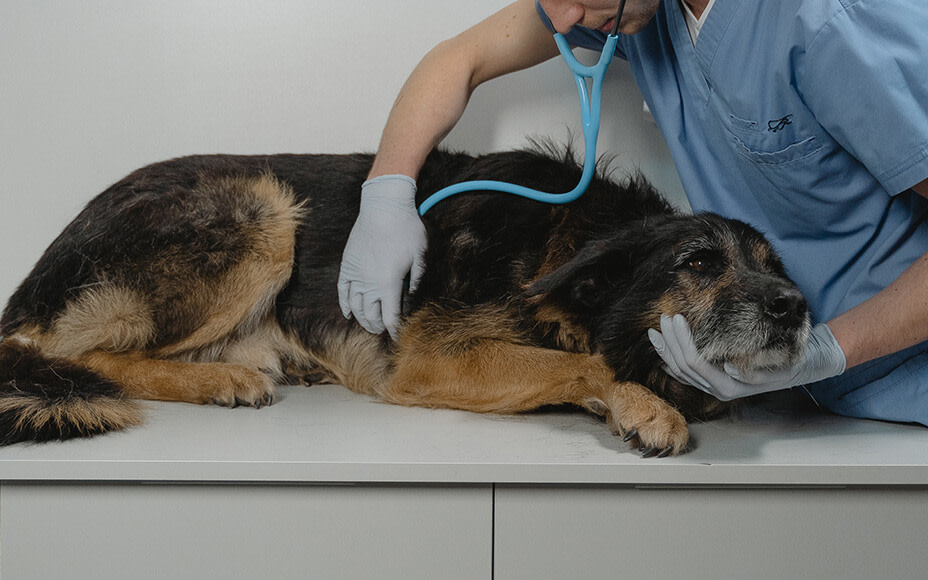
[TRANSLATION ERROR] Fallen dir ungewöhnliches Verhalten und einige der oben genannten Symptome bei deinen Hund auf, hol dir besser tierärztlichen Rat ein.
In 60-80% of affected dogs, [→skin changes](/magazin/hunde/hunde-gesundheit/juckreiz-haarverlust-oder-stumpfes-fell-ursachen-fuer-hautprobleme-beim-hund) also occur as symptoms. [→Dandruff](/magazin/hunde/hunde-gesundheit/was-bedeuten-schuppen-im-fell-beim-hund), dry, dull, or greasy fur are among the common problems. →Hair loss or, on the other hand, increased hair growth** are possible. Hair loss often begins in the area of the tail and the base of the tail, which is often referred to in medicine as "rat tail."
Due to fluid retention in the head area, the faces of furry noses may sometimes appear slightly swollen, and they may look as if they have a tragic facial expression. In some cases, the dogs show neurological symptoms, such as head tilt or paralysis. Gastrointestinal symptoms, such as [→diarrhea](/magazin/hunde/hunde-gesundheit/5-hausmittel-und-tipps-gegen-durchfall-beim-hund) and [→vomiting](/magazin/hunde/hunde-gesundheit/6-haeufige-ursachen-fuer-erbrechen-beim-hund), may also occur.
As you can see, the disease can manifest in different ways. The gradual development sometimes makes it difficult to recognize whether your four-legged friend's symptoms are part of the normal aging process or if there is indeed a disease behind them.
What to do if I recognize symptoms?
If you notice one or more of the mentioned symptoms in your furry friend, you should definitely seek veterinary advice. The signs may also indicate other diseases, and only through a veterinary examination and further diagnostics will you be able to help your four-legged friend.
Little tip: Does your dog absolutely hate →veterinary examinations? Our delicious snacks are the perfect reward for after a stressful vet visit:
Leckere Belohnungen für tapfere Hunde
How is the diagnosis of hypothyroidism made?
If your veterinarian suspects hypothyroidism based on the existing symptoms and the clinical examination, the next step is usually a blood test. Typically, blood cells and organ values, including thyroid hormones, are measured. In hypothyroidism, these values are altered. Some furry friends may also have other abnormalities in the blood count due to the disease, such as anemia (anemia) or elevated cholesterol levels.
Depending on how high or low the thyroid hormone levels are, additional so-called "stimulation tests" are often performed. In these tests, the thyroid hormones are measured twice. Between the measurements, a medication is administered that normally stimulates the release of thyroid hormones to see if the thyroid gland responds appropriately to the stimulus. Other imaging studies, such as an ultrasound examination, can also be helpful.
Don't worry, your veterinarian will explain the values of your furry friend to you in detail and choose the right treatment.
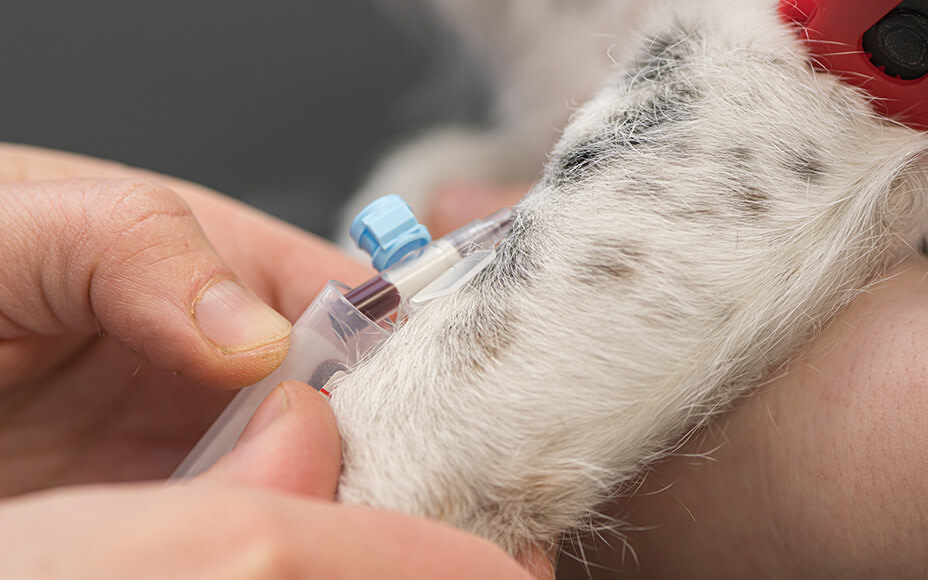
[TRANSLATION ERROR] Durch eine Blutabnahme können Auffälligkeiten in den Blutwerten diagnostiziert und somit eine Schilddrüsenunterfunktion beim Hund festgestellt werden.
Not all altered values indicate thyroid issues
However, thyroid hormones can also be influenced by other diseases, which often complicates the interpretation of the values. For example, if another underlying disease is present, it may be that the thyroid values are low even though the problem does not lie with the thyroid gland. Medications such as corticosteroids, which are often used to treat skin problems, as well as pain relievers, can also influence thyroid values. This influence of thyroid hormones by other factors occurs because the thyroid gland is involved in many metabolic processes in the body and therefore reacts quickly to changes.
What causes hypothyroidism?
As you have already learned, the thyroid gland produces several thyroid hormones and is regulated by the pituitary gland and the hypothalamus. The cause of reduced thyroid function can therefore lie either directly in the thyroid gland or in one of the two higher organs.
In over 95% of cases, the cause lies directly in the thyroid gland, which is called *primary hypothyroidism*. There are two important forms.
- The first form, lymphocytic thyroiditis, is an inflammatory disease that is controlled by the immune system. Inflammatory cells invade the thyroid gland, and additionally, the body produces antibodies against the thyroid hormones. This reduces the function and decreases the production of thyroid hormones.
- The second form is known as idiopathic atrophy. "Idiopathic" means that the cause of something is unknown. In idiopathic atrophy, the hormone-producing thyroid tissue is destroyed without a known cause. In rare cases, a tumor can also destroy the thyroid gland and thus its function.
If the cause of your furry friend's hypothyroidism lies outside the thyroid gland, this is referred to as *secondary hypothyroidism. This means that the hormone-producing cells of either the pituitary gland or the hypothalamus are damaged. This form occurs in only about 5% of dogs*.
Very rarely, there is also a condition known as *congenital hypothyroidism. In this case, the dogs are born with a malformation of the thyroid gland*. The prognosis in this case is very poor, and the puppies often die very early, but this is really rare.
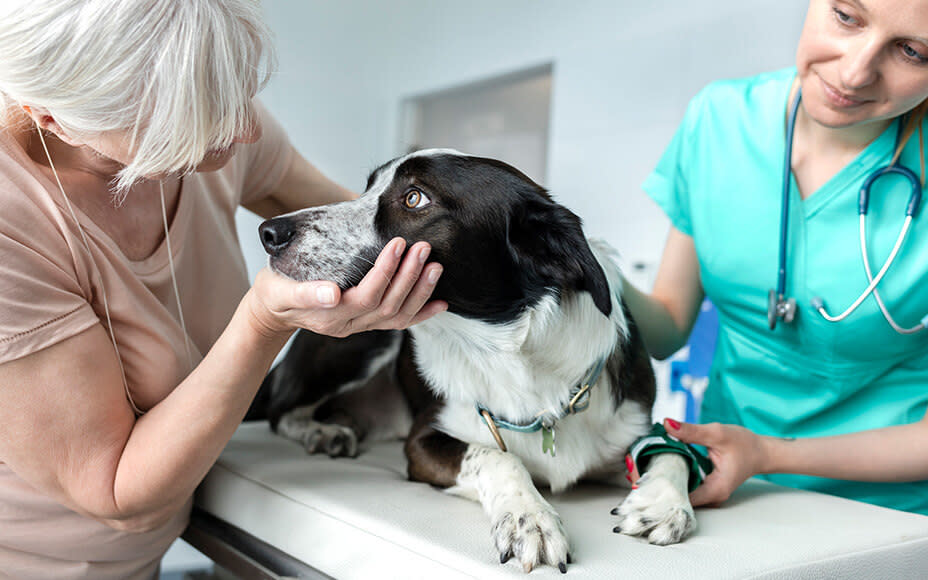
[TRANSLATION ERROR] Die gute Nachricht: Rechtzeitig erkannt kann eine Schilddrüsenunterfunktion beim Hund gut behandelt werden!
How is hypothyroidism treated?
If your four-legged friend has been diagnosed with hypothyroidism and you are wondering how it can be treated, here is the good news: In most cases, hypothyroidism is well treatable, and the symptoms usually disappear completely. The missing own thyroid hormones are usually replaced by the active ingredient levothyroxine, a synthetic hormone. This means for you: You will have to give your furry friend tablets every day for life.
Does your dog dislike swallowing tablets? Our delicious →liver pâtés in a tube are particularly good for hiding tablets.
To find the correct dosage of the medication, your furry friend will need some control blood tests. Typically, the first control examination takes place about four weeks after the start of therapy. If the control examinations go well and your friend is well adjusted to the medication, it is sufficient to have the blood checked by a veterinarian every 4-6 months.
Another good piece of news: Your four-legged friend can have a normal life expectancy with a well-managed hypothyroidism. So you can look forward to many long cuddling sessions with your furry friend.
The basis for a healthy, long dog life is a →healthy diet. Have you already tried our delicious and healthy →sample packages? Whether dry, wet, or BARF: Explore our large selection and find the new favorite food for your furry friend!