How to Keep Your Dog Fit for Winter
When the wind starts blowing cooler, you wrap yourself in your warm winter jacket, and December is just around the corner, it's time to think about winter care for your furry friend. Cracked skin and constant shivering is not just a problem for us humans: Our beloved four-legged companions also need good preparation for the cold winter months. How you can optimally protect your dog is revealed here.
When is it too cold for a dog?
Our four-legged friends can handle the cold quite well depending on their breed due to their more or less dense fur. Even though our furry companions are well adapted to various weather conditions, not all dog breeds have the appropriate coat for icy sub-zero temperatures. While every Husky in our latitudes would probably sweat in winter, it looks rather bleak for breeds without an undercoat like Chihuahuas, Dobermans, Dalmatians, Greyhounds, and the like.
Whether your dog is cold or not usually depends on size and proximity to the ground - larger breeds over 25 kg generally have no problems with fresh temperatures down to -7 °C, whereas small dogs weighing less than 10 kg often shiver even when the needle is at 0 °C. Here, the rule is: Better to bundle up your beloved furry friend than to let them freeze.
No. 1: Stylish in Knits with Sweaters and Coats for Dogs in Winter
Yes, yes, we know: Dogs have fur that is supposed to keep them warm and protect them from the cold. However, if your furry friend can't stop shivering, you can assume that they are really cold - and for certain breeds, a winter jacket is necessary. Particularly small dogs, whose bellies are very close to the ground, rely on a warming sweater or a protective jacket.

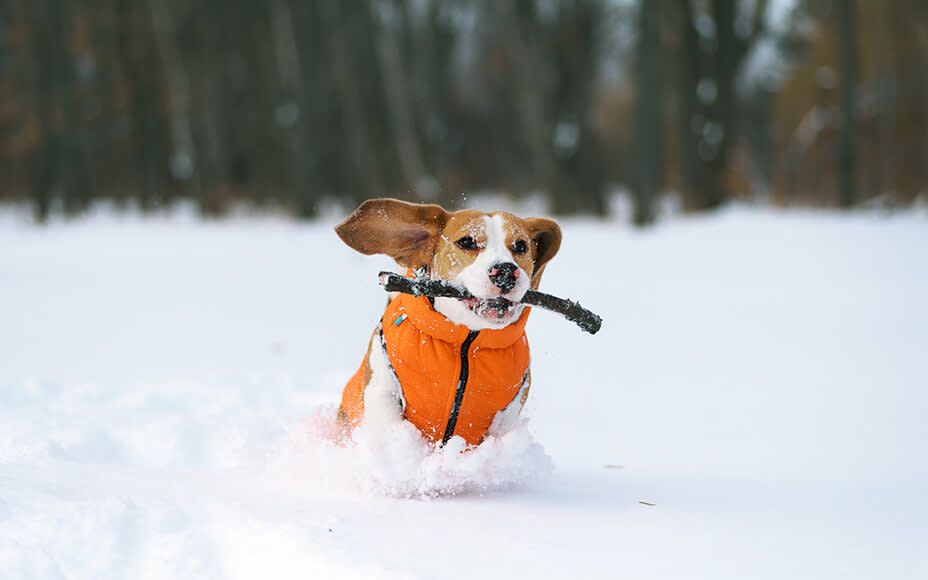
[TRANSLATION ERROR] Je nach Hunderasse und Außentemperatur sorgt eine funktionale Jacke, ein Mantel oder ein Pullover dafür, dass dein Hund im Winter nicht friert.
Dogs with very short fur, little guard hair, and lacking undercoat also appreciate a jacket during the cool winter months. Older or sick animals, whose immune systems are already weakened, should definitely not be sent out into the cold without protective clothing.
Dog jackets and coats come in various styles and colors: No matter if you are a fan of snap buttons or zippers, team glitter with fur collars, or prefer a more casual turtleneck style - you will definitely find a stylish jacket or a neat sweater for your furry friend at the specialty store.
Keep Walks Short
Even if your four-legged friend is well and securely wrapped in their new turtleneck sweater and enjoys the snowy walk, you should keep walks shorter. Especially in sub-zero temperatures, the risk of a bladder infection or cold increases. Your dog's immune system works overtime in cold temperatures to keep the body warm and may not be able to fight off viruses as reliably at the same time.
No. 2: How Do I Feed My Dog Properly in Winter?
It's sensible to think about the right food in winter as well. Due to very low temperatures, your four-legged friend may have an increased energy requirement - because the cold demands a lot of energy from the body, even when they are hardly active. Dogs can have an energy requirement up to 90% higher in the cold winter months, depending on their coat and activity level.
While winter fur protects your dog during the cold season, you can additionally support your furry friend by increasing the food amount to compensate for the increased energy consumption. Whether your dog needs more food in winter depends on the length and density of their fur. Not every dog grows a dense, warming coat, and some breeds only have a thin coat even in winter. If your four-legged friend is outside in the cold for a long time, this also indicates an increased portion in the bowl. You can refer to the →feeding recommendations for the upper feeding amounts based on your dog's weight.
You should also regularly check their weight - as →too much winter fat should be avoided.
With a →healthy and species-appropriate dog food, you give your furry friend's immune system a good chance to defend against the cold. Our four-legged companions also need healthy nutrients that cover their daily needs. Our food provides your furry friend with important vitamins, trace elements, and minerals that promote a fit immune system in winter.
Fit and healthy on cold winter days: With Pets Deli by your side
No. 3: The Right Coat Care in the Cold Season
When it gets colder, just let it grow and it's all good! Unfortunately, it's not that simply tempting, but generally, letting the fur grow in winter is a good idea. Trimming particularly dense fur is definitely beneficial in summer, but in the cold months, your four-legged friend appreciates their warm, natural coat.
To keep your dog's fur supple, you should brush it regularly. Small pebbles, salts, and ice clumps often get tangled in the fur on their paws, belly, and tail. If you have a dog with long hair, it's best to check it after every walk to avoid later troubles.
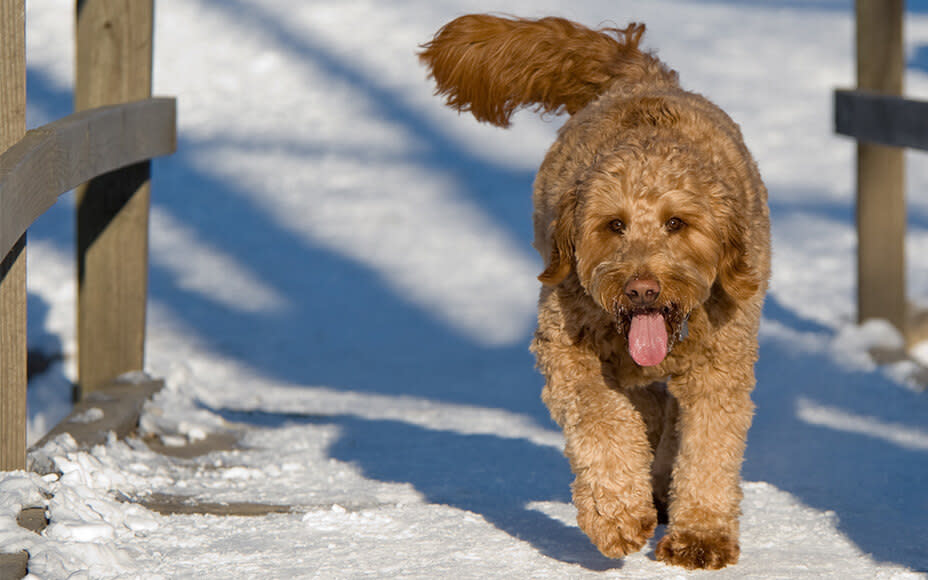
[TRANSLATION ERROR] Nach einem Spaziergang durchs heimische Winter Wonderland solltest du dir Zeit für die Pfotenpflege nehmen. Rollsplitt, Eislumpen und Schnee bleiben dort hängen und strapazieren die Hundepfoten.
If Miss Maggy the Spitz has once again rolled around like a schnitzel in the muddiest puddle in the forest, a pleasantly warm bath is also welcome in the cold outside. Make sure that your furry friend's ears do not come into contact with the water, as these should only be cleaned with special ear cleaners. You can learn more about →proper coat care here.
With our CARE Line, you can gently and thoroughly clean the fur, paws, and skin of your four-legged favorite. Guaranteed vegan and free from frills!
I CARE for you - sauber und gepflegt mit unseren Pflegeprodukten für Hunde
No. 4: Protecting Dog Paws in Winter
For warm paws without knots: Lots of gravel, icy and muddy paths, and cold drafts are the bane of every dog paw. Although the skin on the paws of your furry friend is designed to withstand most weather conditions without problems, salts, ice, and cold can cause the skin to need regeneration.
During short walks in winter, your furry friend's body can manage this on its own. However, if you both regularly walk over snow, sticks, and stones, a little paw care before and after the walk is very beneficial. Bathe your dog's paws in warm water (caution: not too hot!) and free them from dirt, gravel, and ice clumps. These particularly like to sit in the folds between the individual toes. To prevent dirt from getting too tangled, you can trim the fur in this area preventively.
For the protection of healthy dog paws, a balm or ointment is important, which, due to its high fat content, optimally protects the skin on the paws. Our →paw balm is the ultimate savior when it comes to safe prevention against cracked paws. Just apply it before the walk, put on the warm winter jacket, and off you go outside - into a new winter wonderland adventure.
No. 5: Dogs in the Dark Season: Reflectors, Please!
Getting up in the morning: dark, coming home in the evening: dark. Winter, indeed. To ensure that walks are safe for you and your furry friend during this time, you should both always be equipped with sufficient reflectors. Especially on busy roads, it is important that drivers can recognize not only you but also your four-legged friend in time.
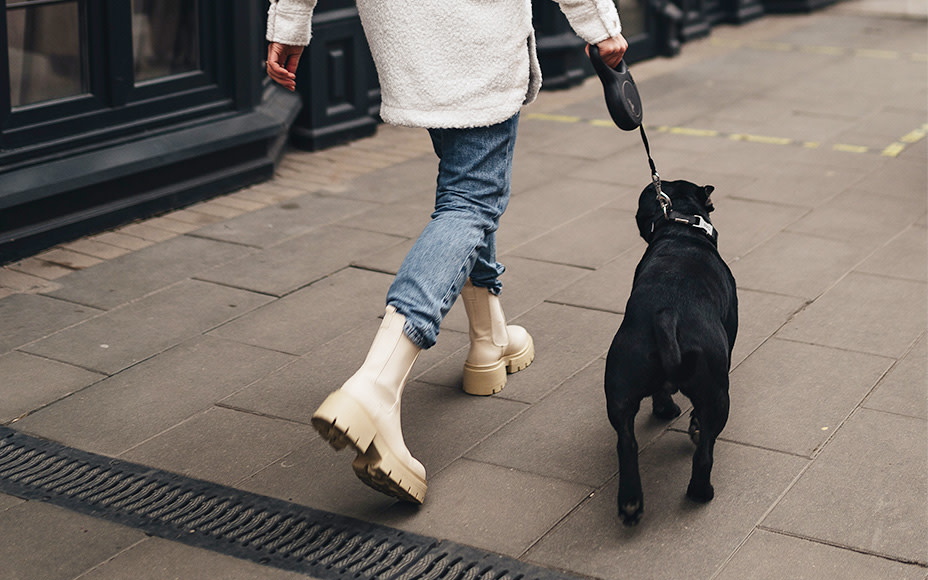
[TRANSLATION ERROR] Während man deinen Hund im Sommer auch noch nachts gut sehen kann, ist es an dunklen Wintertagen zu unsicher, deinen Hund ohne Reflektoren auszuführen. Hier eignen sich auch leuchtende Halsbänder.
For this, using reflectors on dog clothing or even better: a stylish light collar for your furry friend is recommended - this way, your beloved four-legged companion will definitely not be overlooked, and nothing stands in the way of an extensive evening winter walk. With a warm jacket and well-protected paws on top, you can now dive into the winter adventure without worries!
No. 6: Eating Snow is Taboo
Is your four-legged friend a vacuum cleaner on four paws and doesn't stop at snow? You should be careful here, as snow can irritate the gastric mucosa and lead to inflammation with →diarrhea, →vomiting, →stomach pain, fever, and coughing. The so-called snow gastritis is particularly caught by four-legged friends who frequently lick snow. A small nibble is unlikely to cause symptoms, and →it's generally not toxic, but it's still important to pay attention.
Moreover, there are so many things that are much tastier than snow! Treat your furry friend to a species-appropriate and healthy snack, as your dog will surely find that much more attractive!