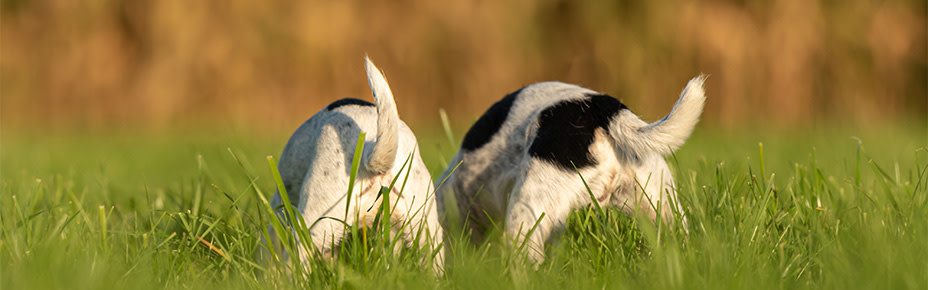
Why does my dog slide its bottom on the ground?
The so-called “sledding” could be a sign of an anal gland or pouch inflammation, a common problem in our four-legged friends. According to studies, up to 12% of dogs are affected by this. In this article, learn everything important about anal gland inflammation and how you can best support the health of your furry friend.
What are anal glands?
Our dogs (and also cats) have two very special glands - the anal glands. These produce a very strong-smelling, brownish secretion, which is collected in the anal pouches. The anal pouches are located just behind the anus, between the inner and outer sphincter muscles. If you imagine your pet's rear end as a clock, the anal pouches are approximately at 5 and 7 o'clock.
With every defecation, a little of this secretion is expelled due to the pressure that the stool exerts on the rectal walls. This serves as a special scent note for territorial marking by the furry ones. In the case of an inflammation, it is often mistakenly referred to as anal gland inflammation, when in fact the anal pouches are always inflamed, making it an anal pouch inflammation. They are often also visibly swollen as round bumps on the left and right of the anus.

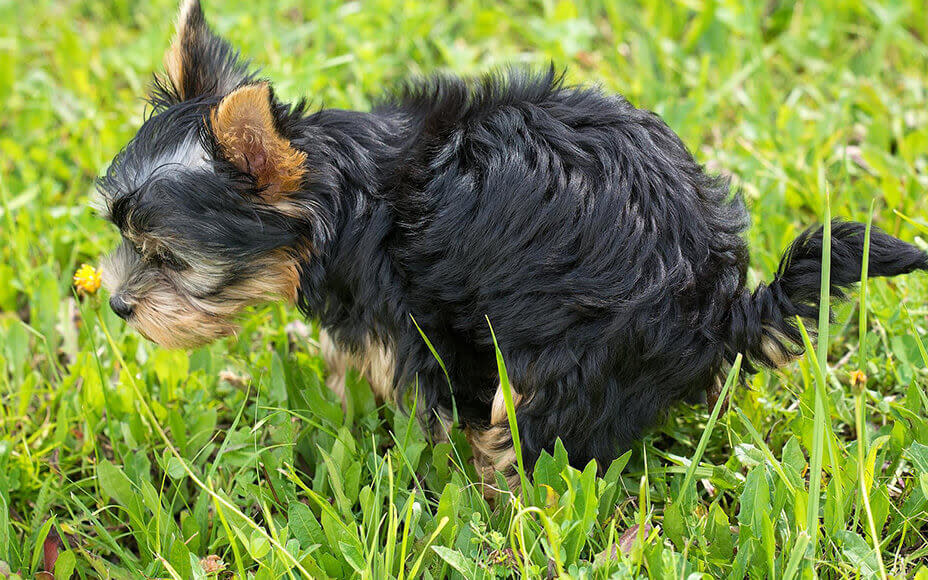
[TRANSLATION ERROR] Beim Verrichten des großen Geschäfts sondern unsere Hunde einen bestimmten Duftstoff über die Analdrüsen ab. Rutscht dein Hund mit dem Po auf dem Boden, handelt es sich aber meist um eine Analbeutelentzündung.
How do I recognize an anal pouch inflammation?
A common sign is the so-called sledding: your four-legged friend sits down and rubs its rear end on the ground. But why does it do that? The answer is: itchiness. Overfull anal pouches that become inflamed cause discomfort for our furry friends. By sledding, they try to combat this irritation.
Excessive licking of the anal area, reddened skin around the anus, or signs of pain such as →increased straining during defecation are also symptoms. Constantly “chasing the tail” is another sign.
In general, a distinction is made between anal pouch blockage, anal pouch inflammation, and anal pouch abscess. In severe cases of inflammation or abscesses, the dogs may also appear lethargic or show fever. An anal pouch abscess can also burst, causing the secretion to drip out or become visible during sledding on carpets or other textiles.
Why do anal pouches become inflamed in dogs?
As you have learned, a little of the anal gland secretion is expelled with every defecation. However, if the stool is softer than usual, such as in cases of diarrheal diseases, not enough pressure is exerted on the anal pouches, and the secretion remains there. The anal glands continue to produce actively. Over time, this can lead to the anal pouches becoming too full, blocking, and subsequently inflaming.
In addition to diarrhea, there are also several other causes: narrow anal pouch openings, chronic gastrointestinal diseases, or slightly soft stool can promote anal gland inflammations. Small dogs are significantly more affected than large ones. Some breeds, such as Chihuahuas and Poodles, are reported to have more problems with their anal glands than others.
Our tip: If your furry friend is suffering from →diarrhea and stomach rumbling, healthy bland food like our →Vet- gastrointestinal food can be easier on digestion. Our →gastrointestinal tabs harmonize the gastrointestinal tract and are ideal for diarrhea.
Behandlungsbegleitend an eurer Seite: Pets Deli VET
What can be done about it?
Not every rubbing on the ground means an anal pouch inflammation. However, if you notice one or more symptoms in your four-legged friend, you should promptly seek veterinary advice.
Other causes, such as a flea allergy or parasites, an inflammation of the vagina, or →allergies in general, can lead to similar symptoms.
Depending on whether the anal pouches are “only” blocked or if there is also an inflammation, the treatment differs. Blocked anal pouches are gently emptied by a veterinarian using fingers. This provides relief for your furry friend. The procedure is understandably uncomfortable for the dogs, so particularly sensitive ones may need to be slightly sedated. However, in most cases, it can be done without sedation.
If your veterinarian finds that there is also a significant inflammation, for example, due to purulent or bloody secretion, treatment with antibiotics may be advisable. Ointments for the anal region can also be helpful at times.
If there is an anal pouch abscess, your veterinarian will likely recommend flushing it. This involves flushing the anal pouches with a disinfecting, sometimes antibiotic-containing solution.
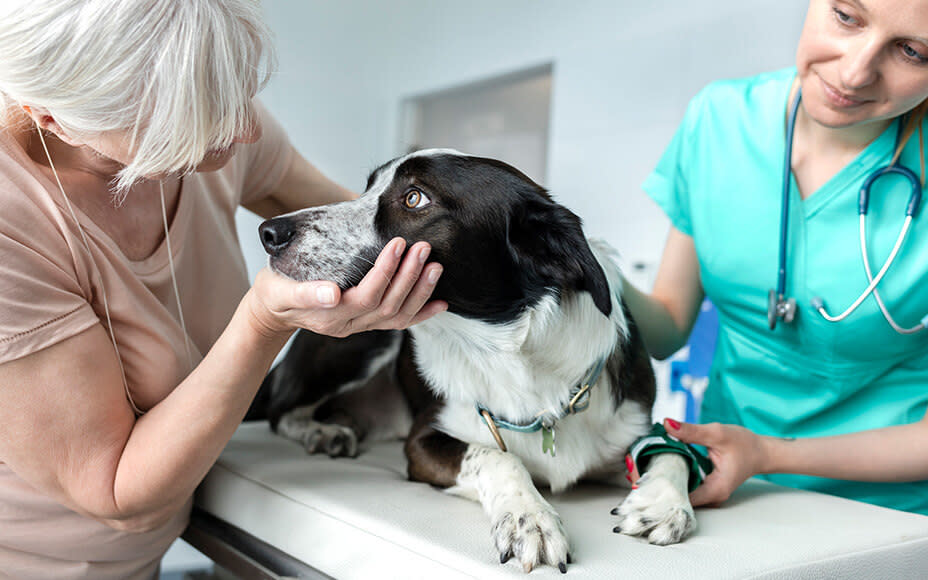
[TRANSLATION ERROR] Rutsch dein Hund mit seinem Po auf dem Boden, solltest du tierärztlichen Rat aufsuchen. Nicht selten benötigt dein Vierbeiner eine entsprechende Behandlung und ggf. Medikamente.
Can anal gland inflammation come back?
If a four-legged friend has had problems with anal glands once, it does not necessarily mean that this will happen again. For example, if a diarrheal disease preceded the inflammation, it may have been a one-time issue. However, small dogs often need their anal pouches emptied by a veterinarian at regular intervals.
If your beloved pet repeatedly struggles with anal pouch inflammations, there is also the option of surgically removing the anal pouches. However, the surgery also carries some risks and is therefore only recommended in certain situations.
Can I express the anal pouches myself?
If your four-legged friend needs to have its anal pouches emptied by a veterinarian several times a year, the question quickly arises whether you can do it yourself. If you feel confident, you can generally do it yourself. However, there are also many ways to do it incorrectly, so you should definitely seek thorough veterinary training.
Especially with sensitive dogs that lose patience quickly even with your veterinarian, it is advisable to have the anal pouches always done by experienced veterinary hands.
Can I do something about it?
As you have learned, the anal pouches are actually emptied in portions with normal defecation. A normal stool consistency thus contributes to the emptying of the anal pouches. A well →digestible food that your four-legged friend tolerates well and provides an ideal stool consistency is important. Fiber and prebiotics can contribute to healthy digestion and are therefore also recommended.