
Symptoms: How do I recognize gum inflammation in dogs?
Gum inflammation is also referred to as gingivitis and is a serious matter. It is often a consequence and arises from bacterial deposits on the teeth. However, sometimes there is more to it. Generally, dogs show signs of gum inflammation quite clearly, and it can be treated well as a result. Pay attention to the following symptoms:
- yellowish discoloration or deposits on the teeth
- unpleasant breath
- bleeding gums, redness, swollen gums
- slower eating than usual up to →refusal to eat
- refusal of dry food, chew snacks, tugging games, or similar
Often, dogs maintain their usual appetite and continue to eat normally. Only in advanced cases of inflammation does eating cause pain, and the dogs become noticeable here.

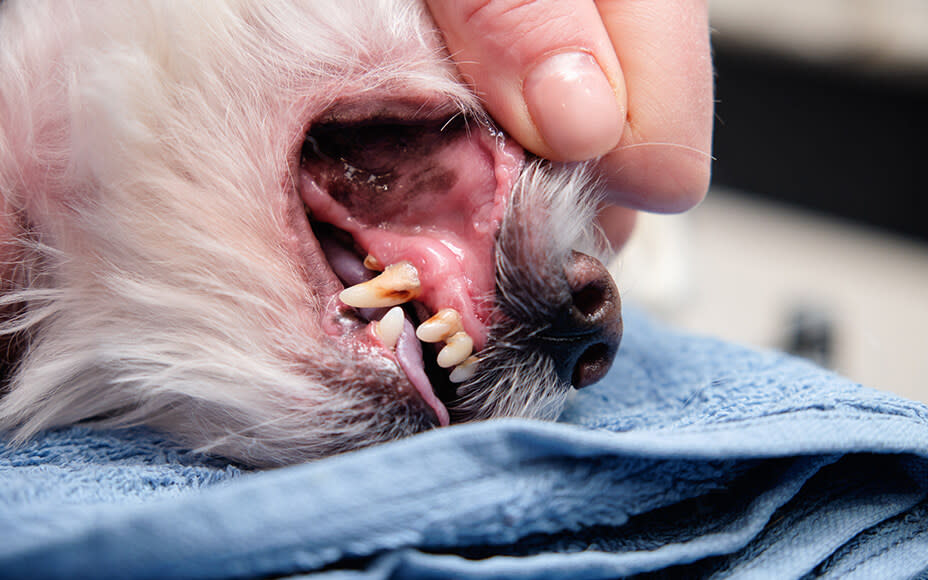
Zahnstein und Beläge sind eine häufige Ursache für Entzündungen des Zahnfleischs.
Treatment of gum inflammation in dogs
If you suspect that your furry friend has gum inflammation, a visit to the veterinarian is unavoidable. There, your dog will first be thoroughly examined to determine the actual cause of the inflammation. The further treatment will then depend on this.
If the gum inflammation in your dog is only mild, the removal of →tartar and deposits under anesthesia is usually sufficient. This drastically reduces the number of bacteria in the mouth, allowing the gums to heal. If the inflammation is advanced, a more extensive dental treatment may be necessary, during which loose teeth will be extracted to prevent the entry of germs. Subsequently, antibiotics, pain relievers, and anti-inflammatory medications may be prescribed.
If there is another cause for the gum inflammation in your dog, appropriate treatment must be carried out. For example, a dental brace may be necessary in the case of misaligned teeth.
What home remedies help?
The fact is that gum inflammation always requires treatment by veterinarians. To alleviate the symptoms a little until treatment, you can give your dog some cooled chamomile tea.
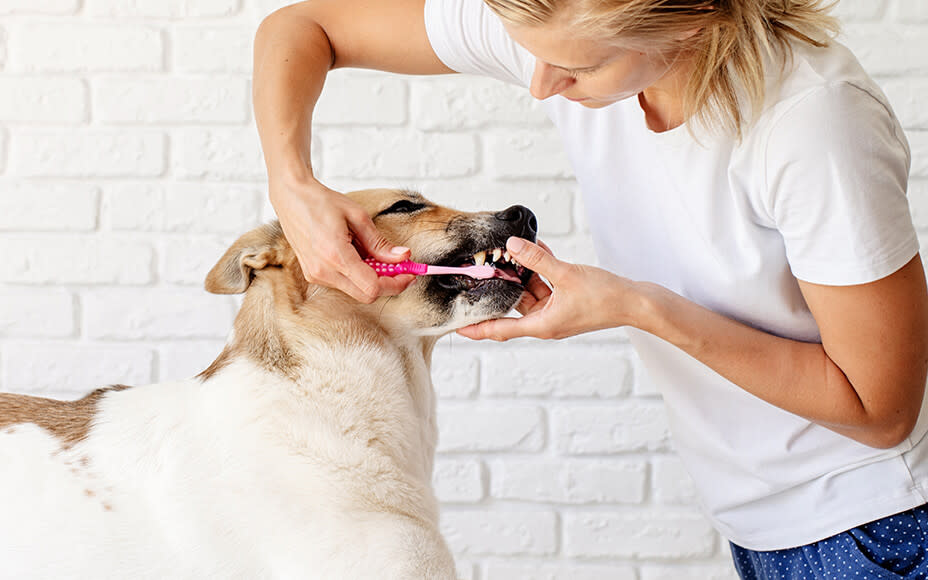
[TRANSLATION ERROR] Zähneputzen als "Hausmittel" ist wohl am wirkungsvollsten in puncto Vorbeugung. Ist die Entzündung erst einmal da, muss sie tierärztlich behandelt werden!
What causes gum inflammation?
The most common cause of gum inflammation in dogs is so-called *plaque. This is a bacterial dental deposit that hardens over time and forms tartar. Numerous bacteria accumulate there, which together cause gingivitis and loosen the tissue around the teeth*.
Plaque and tartar are favored by a →lack of dental care and inferior food types. If you are unsure which food is suitable for your four-legged friend, feel free to →get a free consultation from us. That high-quality food can be uncomplicated and delicious is proven by our Pets Deli dry food: Lots of juicy meat, selected fruits and vegetables, nutritious oils, and fresh herbs - all combined in crunchy pieces of dry food!
Das schmeckt! Hochwertiges Trockenfutter für deinen Hund


Sometimes, however, a misalignment of teeth or deformities of the teeth can lead to gum inflammation or even to overgrowth of the gums (hyperplasia). Due to the anatomical misalignment, there is a mechanical overload of the teeth and gums. This permanent irritation can also cause the gums to become inflamed.
How you can easily prevent gum inflammation in dogs
The good news is: Preventing gum inflammation is quite simple. To prevent your four-legged friend from developing inflamed gums, you can do the following:
- High-quality food: →Species-appropriate dog food with high-quality ingredients and a coherent composition prevents the formation of dental deposits, tartar, and thus inflammation in the mouth. Unnecessary additives such as sugar, grains, flavorings, or colorings in the food are not health-promoting and should not end up in your four-legged friend's bowl.
- Chew items for dental cleaning: By occasionally giving your four-legged friend some harder chew items like our →Denta bones, you support the cleaning of the teeth and the care of the gums.
- Regular tooth brushing: Sounds silly, but it's highly effective! →Brushing your dog's teeth is one of the best ways to prevent inflamed gums and other diseases in the oral cavity. Once well-trained, it becomes easy and is part of your furry friend's care routine.
- Regular professional dental cleaning: Even with "self-brushed" teeth, high-quality food, and tasty chew snacks, it is worth having veterinarians take a look inside your dog's mouth. If dental deposits or tartar are present, a professional dental cleaning can provide immediate help and thus prevent a painful gum inflammation.