
Feeding Dry Food Properly to Cats
The question of the right and healthy feeding method for cats is not always easy to answer. The fact is that your cat must take in all essential nutrients through its food in a balanced ratio. Therefore, dry food must also be nutritionally complete in every case. If a food meets this condition, it is referred to as a complete feed. The variety of textures and flavors is vast, and finding the right dry food for cats is not always simple. We are here to help you and provide an overview of the most important information about dry food for your furry friend and →we are also happy to advise you for free and online on the suitable food for your cat.
Which Dry Food is the Best for Cats?
When choosing a good dry food, you should primarily keep an eye on the ingredient list. While cheap can be very good, it is unlikely to find high-quality ingredients in the cheapest supermarket food. One must look closely here, as pet food manufacturers often rely on a lot of sugar. Why? Cats are known as →picky eaters who are quick to turn up their noses at the bowl and leave the food behind.

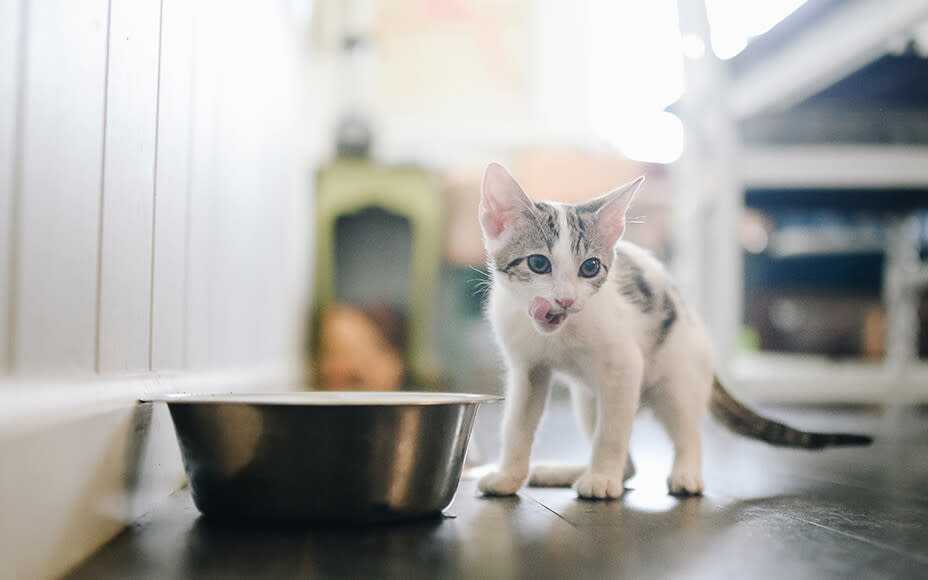
[TRANSLATION ERROR] Ein gutes Trockenfutter für Katzen erkennt man nicht auf den ersten Blick. Hier muss genauer hingeschaut werden, wenn es um die Zusammensetzung geht.
Sugar in food can not only promote →overweight but also lead to cardiovascular diseases. Likewise, grains have no place in healthy cat food. Unlike dogs, cats are strict carnivores and require a high proportion of meat in their dry food to live healthily. Of course, fruits, vegetables, oils, and herbs also deserve a place - however, the proportion for cats is rather low. So if you are looking for the best dry food for your cat, it's best to take a look at a detailed declaration and healthy composition.
Unser Futter für Katzen: ehrlich, gesund, lecker.


The Best Cat Food for Cats: Criteria at a Glance
From a veterinary and nutritional perspective, there are several aspects you should consider when making your choice:
- free from grains and sugar
- without artificial colors, flavors, and preservatives
- high meat content
- low proportion of plant ingredients
- negative animal by-products: claws, horns, hooves, feathers, and wool
- allowed animal by-products: stomach, liver, lungs, and kidneys
Can Cats Be Fed Only Dry Food?
There are some pros and cons to →dry food for cats as the food of choice. Dry food can be easily portioned into small servings - and as you have just learned, this is also important when it comes to species-appropriate feeding for kittens and cats. Many pet owners are fans of the practical bags that are easy to reseal or transfer. Here, attention must be paid to an airtight closure, as otherwise, →mites and other parasites can settle in.
Due to the high energy content, cats can manage with less dry food compared to wet food. However, this should not be the only reason, as the healthy composition of a food always takes priority. You can feed your cat dry food - as long as it is a complete feed - in any case. Here, you can listen to your cat's preferences and let them decide.
For many cats, the →different textures of wet food are often more attractive, as the delicious smell combined with the soft enjoyment particularly appeals to picky indoor cats. Additionally, wet food has important advantages for the water balance of cats - as they are often →poor drinkers. Wet food provides much more liquid (about 80%) and covers most of the daily needs of cats. Dehydration is a serious issue, as it can unfortunately promote urinary tract and kidney diseases. However, wet food must always be served fresh and stored in the refrigerator once opened, as bacteria can otherwise form quickly. In contrast to dry food, it has a higher protein content but must also be fed in larger quantities due to a lower carbohydrate content.

A popular option is mixed feeding, where cats receive some meals as wet food and can also snack on a bowl of dry food throughout the day. Note that the feeding amount must be calculated based on both recommendations so that your cat is not over- or underfed.
Can Kittens Be Given Dry Food?
Yes, your cat can also receive dry food as a young kitten. It is important to pay attention to food specifically developed for juniors. Why? Young cats are in growth and therefore require more protein (about 10%) and nutrients than adult cats. From 2 to 12 months of age, it is better to use a junior dry food for cats - after that, the growth processes are complete.
Healthy from day one - the long life of your furry friend is very important to us. That’s why we help you with the joint start and support you with the tastiest food. No grains, free from sugar, and 100% without artificial additives. This bag has a lot of bite!
Gesund ab Tag 1 - mit unserem Trockenfutter für Kitten und Jungkatzen


How Often Should Kittens and Young Cats Be Fed Dry Food?
Young cats should receive five to six or even more small meals a day. Until the age of 6 months, this feeding with several small meals is recommended; afterwards, the number can be reduced, and the amount per portion can be increased. However, adult cats may also prefer to receive several small portions throughout the day rather than, for example, two large ones. This is due to the natural feeding behavior of cats, as wild cats also consume several rations throughout the day - up to 20 meals within a 24-hour period.
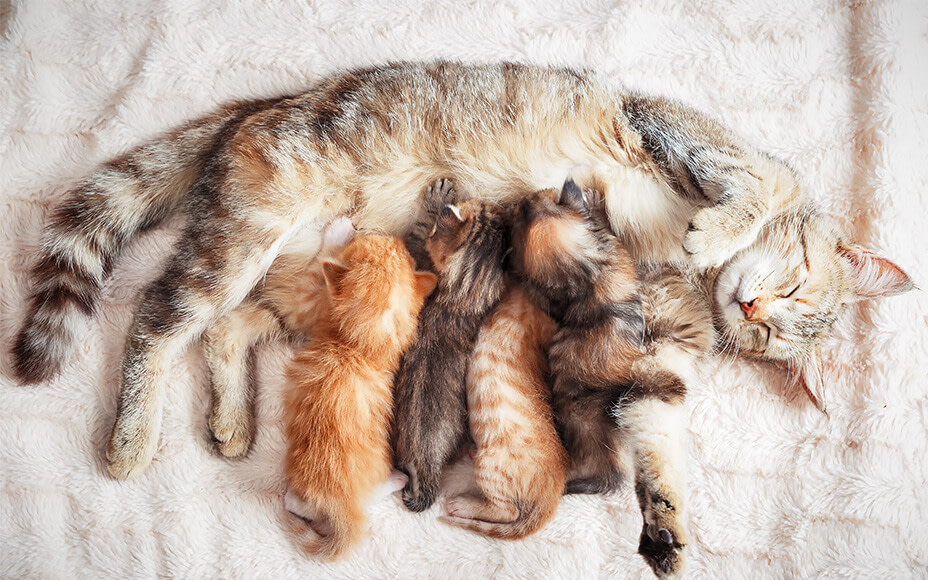
[TRANSLATION ERROR] Sowohl beim Muttertier als auch in freier Wildbahn nehmen Katzen viele kleine Mahlzeiten zu sich.
How Much Dry Food Do Kittens Need Per Day?
You can easily find out how much food should be in a meal for complete feeds, as you often find in →BARF, wet or dry food, from the feeding recommendation. Proceed as follows.
1. Weigh your cat and note the current weight. You will need this shortly to read in the table on the dry food bag how much your cat is allowed to eat.
2. Research the expected final weight of your cat. For specific cat breeds, you can quickly find out online or by calling breeders how much your cat will weigh approximately. Why is this important? In the →feeding recommendations, the rows and columns for the feeding amount correspond to what is best for the current weight and the expected final weight. This way, you know exactly that your kitten is provided with all necessary nutrients.
3. As a final step, you just need to look at the table for the feeding recommendations and take the correct amount for your cat. Note: This is the daily amount. You divide this by the number of meals you want to feed your young cat.