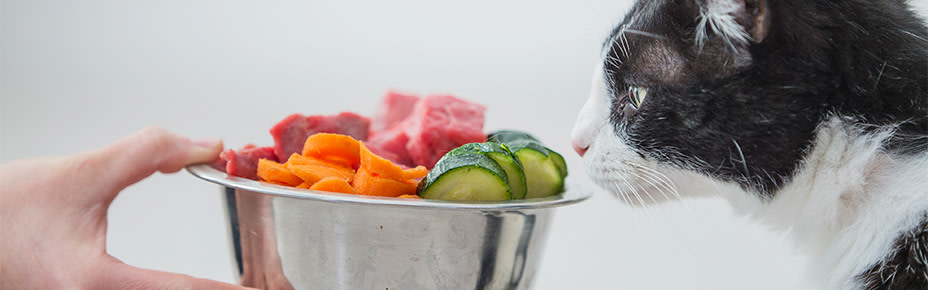
Can cats eat vegetables?
A look at the →species-appropriate nutrition of cats reveals: Unlike our dogs, cats are true carnivores, known as obligate carnivores. The necessary main ingredient in a healthy cat menu therefore consists mainly of meat. Carbohydrates and the starch contained in vegetables can only be digested by cats in small amounts. Thus, the daily amount of starch should not exceed 5g per kilogram of body weight in your cat's daily ration. For an average European Shorthair weighing 4kg, that would be about 20g of starch per day.
Of course, vegetables and also fruits are still important components in the →nutrition of kittens and cats. In addition to providing important vitamins, the fiber contained in vegetables also supports a healthy digestion in cats.
Which vegetables can cats eat?
The following types of vegetables can be fed to your cat, properly prepared and in appropriate amounts:
- Broccoli
- Carrots
- Celery
- Beetroot
- Legumes (in processed form)
- Sweet potatoes
- Parsnip
- Root parsley
- Black salsify
- Jerusalem artichoke
- Cucumbers
- Zucchini
- ripe tomatoes
- Lamb's lettuce, oak leaf lettuce, Lollo Rosso
Wait a minute - can tomatoes also be fed? If they are ripe and you only give them very rarely in small amounts, they won't harm your cat. The idea that tomatoes are always toxic to dogs and cats is →a misconception, however, they should not be fed regularly.

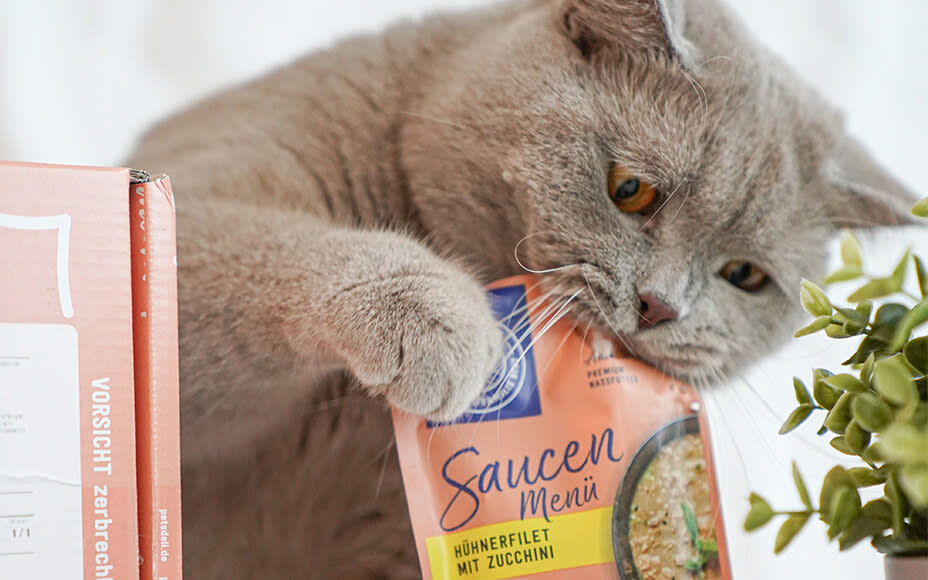
[TRANSLATION ERROR] Gemüse ja, aber vegetarisch bitte nicht. Katzen benötigen viel Fleisch und eine geringe Portion Gemüse in ihrem Futter.
Which vegetables can cats not eat?
There are some →toxic foods for our sensitive furry friends. In addition to →chocolate, this also includes onions and other onion plants as well as leeks and various leek plants. You should be especially careful with chives, as they are often mistakenly confused with cat grass.
When it comes to legumes like beans, peas, and lentils, it is often heard that these are not well tolerated by cats. However, this is only partly true: In processed form, for example in food, they are indeed very good ingredients that provide your cat with important vitamins and fiber. It always depends on the form of processing. The same applies to cabbage and potatoes.
Early signs of poisoning can include vomiting, →diarrhea, restlessness, and excessive salivation. If your cat has snatched something unauthorized from the kitchen and you're unsure what it was, contact your veterinarian rather more than less. Acting early can ensure that your furry friend is well treated, so they can quickly be back on their four paws.
How to properly feed vegetables to your cat
In order for cats to utilize vegetables and fruits, they should either be fed in raw form or steamed and then pureed. Starchy vegetables like sweet potatoes or parsnips should always be cooked and then pureed. You can then mix the vegetables into your cat's food. Cutting the vegetables into small pieces and then offering them to your cat usually does not work very well. Many furry friends →are quite picky and leave whole pieces of vegetables in the bowl. You should avoid feeding large pieces of vegetables, as these can be poorly or not at all digested.
With high-quality →complete feeds for cats, the individual nutritional components are already included in the right amounts, ensuring that your furry friend's needs are optimally covered. We at Pets Deli rely on high-quality ingredients. In addition to delicious meat, valuable vegetables also find their way into your cat's bowl. In our →"Filet Menu" with tender chicken fillet, for example, carrots and dandelion complete the menu and provide your cat with important minerals and vitamins and support a healthy digestion**.
Unser Futter für Katzen: ehrlich, gesund, lecker.


Can cats be fed a vegetarian diet?
Unlike dogs, which can be healthily and adequately fed with →vegetarian alternatives, the organism of cats is only designed for a predominantly meat-based diet. Vital vitamins and amino acids like taurine, for example, which cannot be produced by the body itself, are obtained by our furry friends from the meat of mammals, →fish, and poultry. A →high meat content in food is therefore a good indicator of a species-appropriate and healthy composition.
So do cats really only need meat? No, that is not correct either. While cats best obtain their daily energy from animal protein, plant nutrients support a functioning intestinal activity. Cats definitely need small amounts of fiber, oils, and minerals for a healthy digestion and the maintenance of their body.
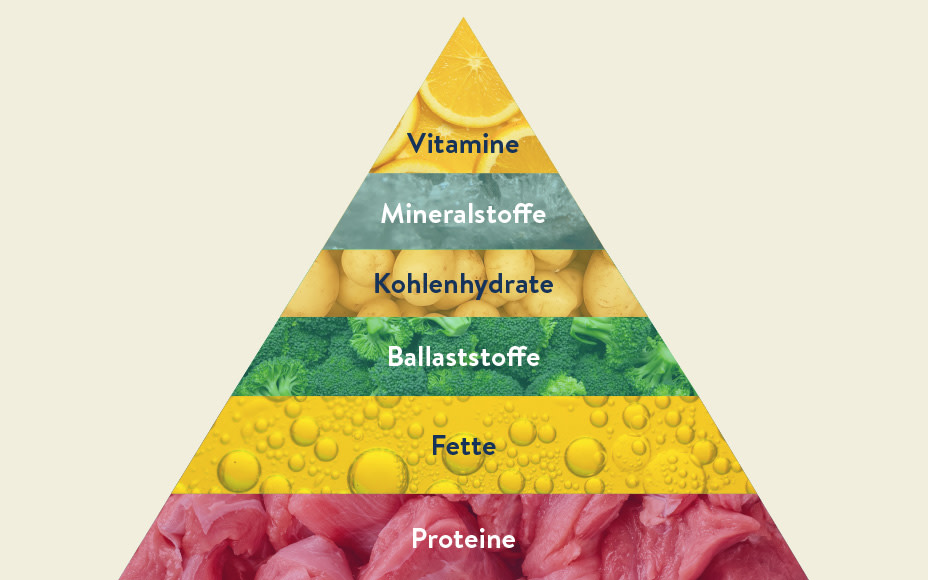
[TRANSLATION ERROR] Bei der Ernährung von Katzen deckt Fleisch als Proteinquelle den größten Anteil ab.
A look at the nutrition pyramid for cats makes it clear once again: In addition to animal proteins, which make up the largest level in the nutrition pyramid, fats, fibers, carbohydrates, minerals, and vitamins are also included. Thus, cats can eat vegetables, but care should be taken regarding the right amount.