Food Allergy and Intolerance in Cats: Symptoms, Diagnosis, and Treatment
Your cat is constantly scratching, has already developed sore spots on its head and neck, and its digestion seems to be going crazy? Then it might be suffering from an allergy or intolerance to one or more ingredients in its food.
To prevent your cat from suffering unnecessarily, you should seek veterinary advice if you suspect a food allergy or if you can observe strong itching in it.

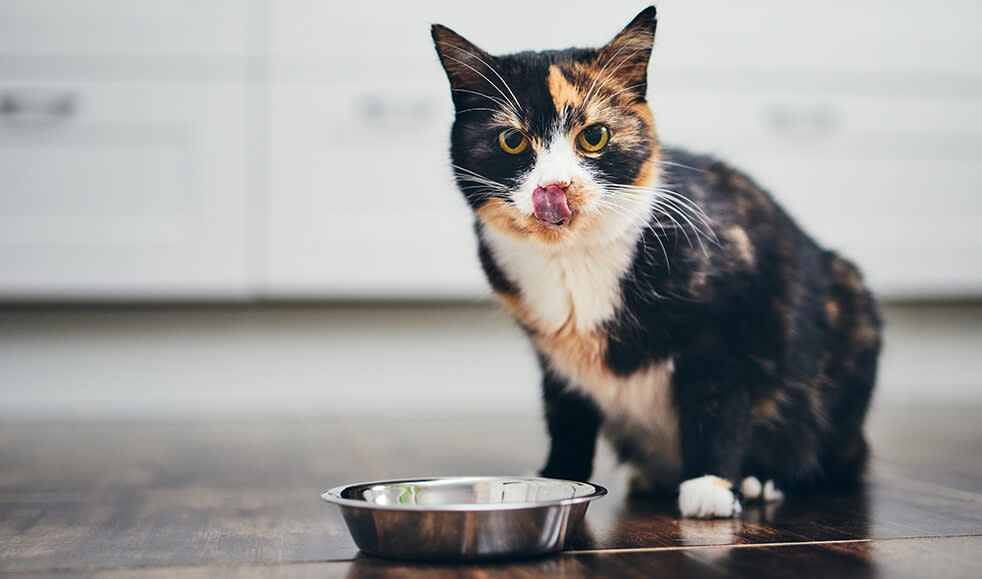
[TRANSLATION ERROR] Lecker schmeckts deiner Katze auch dann, wenn sie eigentlich gegen bestimmte Futterbestandteile allergisch ist. Aus diesem Grund ist sie auf deine Hilfe angewiesen!
Definition: What is a Food Allergy in Cats?
Often, the term intolerance is equated with or even confused with allergy. When people talk about a food allergy, they usually mean an intolerance, as a true allergy occurs less frequently. To clarify what we mean, let’s briefly explain the difference:
What’s crucial is that a true food allergy requires an initial contact without symptoms, as the immune system only reacts upon the second contact with the ingredient. The antibodies formed during the first contact then signal to your cat's body: "Hey, something dangerous is coming, we’re going all out against it!"
In the case of an intolerance, your cat's body shows symptoms upon the first contact. Since these symptoms are similar, it’s worth taking a look at the symptoms of food allergies and intolerances.
Possible Symptoms of Food Allergy in Cats
In cats, severe itching is the main symptom of a food allergy. Affected cats scratch themselves particularly hard on their head and neck, which can lead to self-inflicted wounds.
Overall, you should watch for the following symptoms in your cat:
- increased scratching (due to severe itching)
- sore spots and skin infections (especially on the neck and head)
- unusually high fur loss
- →diarrhea
- vomiting
- →refusal to eat
However, not every cat shows the full range of symptoms. In cases of severe itching combined with gastrointestinal issues, a food allergy is quite likely the cause.

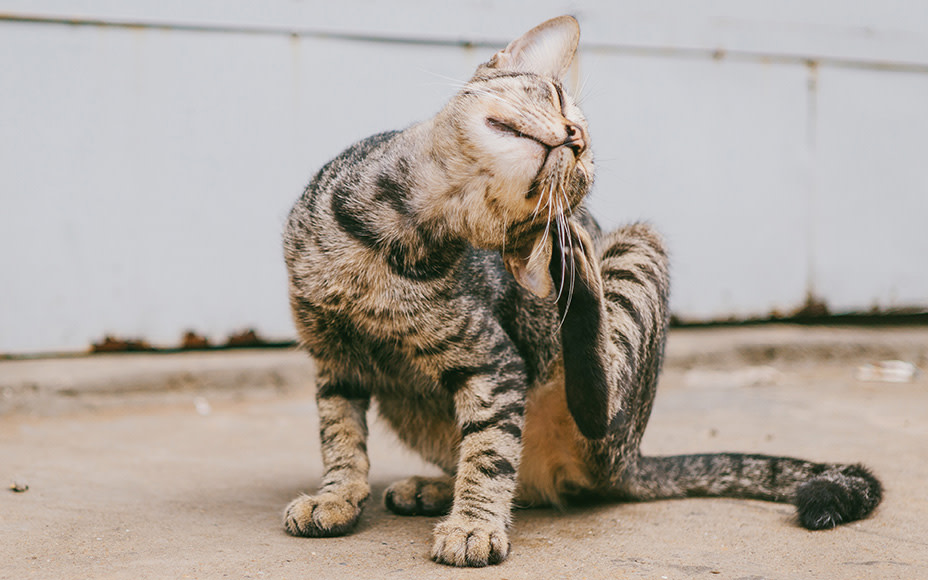
[TRANSLATION ERROR] Wenn sich deine Katze ständig kratzt, kann das ein Zeichen für eine Allergie oder Unverträglichkeit sein.
What Food Components Are Cats Often Allergic To?
Just like humans, our cats can be allergic to various foods. However, there are a few food components that comparatively often trigger allergic reactions. These mainly include protein sources, as unlike dogs, a →species-appropriate cat diet is primarily meat-based. The various compounds of different protein sources can then trigger the allergic reaction in the body.
Cats often react allergically to the following food components or foods:
- →fish
- beef
- chicken
- lamb
- →dairy products
- →egg
- wheat
- corn
- rice
Diagnosis and Test: The Elimination Diet as an Allergy Test
First, your cat will be examined by veterinarians. Usually, they can confirm your suspicion or find another cause for your cat's behavior. If an allergy is suspected, an elimination diet is generally recommended.
This involves a special diet where your cat initially receives a food with ingredients it has never eaten before. Together with your trusted veterinary practice, the ingredients of the current food will be broken down. Then certain ingredients will be completely removed from your cat's diet for several months (about 2-4).
Veterinarians often recommend starting with so-called hypoallergenic food, as these use only "exotic meat types" as single proteins and are therefore well-suited for an elimination diet. This often includes cat food with horse, goat, or kangaroo. Or has your cat already had kangaroo before?
Monoproteine & hypoallergen: Entdecke jetzt unser vielfältiges Futter für Katzen


Typically, after about 3-4 weeks during the elimination diet, an improvement in symptoms is observed. Gastrointestinal disturbances usually improve after about 2 weeks, while itching and open skin lesions take about 4-6 weeks to improve. Therefore, it is also necessary to have a sufficiently long period during which your cat only receives the food prescribed by your veterinarian. It’s also important: No unauthorized snacks outside of the plan, no bites from the kitchen table, as such actions can distort the results of the diet!
No snacks? Not quite! If it’s exactly the type of meat in its pure form that your cat is being fed as part of its dietary change, then snacks are allowed. Your cat can indulge in our [→hypoallergenic snacks](/collections/fur-katzen-snacks/hypoallergen) that are tailored to the meat it receives as hypoallergenic food.


Suitable Food for Cats with Food Allergies
If you’re now thinking that you have to start cooking for your allergic cat, you’re mistaken. Of course, you can prepare a balanced →BARF menu yourself for your cat, but this usually requires a bit more work.
Just make sure that no allergens are present in the chosen food. It’s important to take a critical look at the ingredient list on the packaging. Just because the package says "With horse" doesn’t mean that the food contains only horse meat. Hidden allergens are often found on labels under terms like "animal fats," "meat by-products," "bone meal," or "starch." If you’re unsure, you can also show your veterinarian your desired food and ask if your cat can eat it.