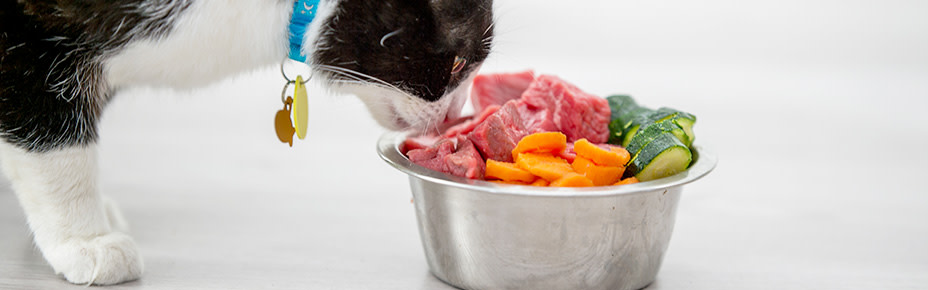
More and more people are opting for a vegetarian or vegan diet. But is a meatless diet also suitable for your cat? Find out in this article why your cat needs meat and why you shouldn't feed your furry friend a vegetarian diet.
Is a vegetarian diet for cats species-appropriate?
A vegetarian diet for cats is theoretically possible, but it places enormous demands on feeding and is only advisable in exceptional cases of multiple allergies. A vegan diet does not meet the nutritional needs of cats and would technically even violate animal welfare laws.

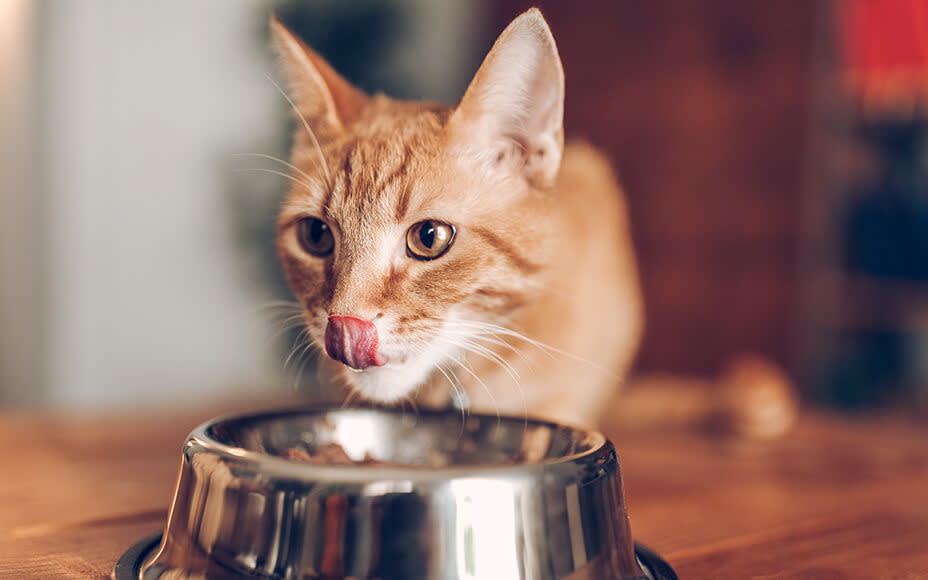
The answer to whether vegetarian cat diets are species-appropriate is fundamentally: No, with special exceptions.
Cats are strict carnivores, known as *Carnivores. Unlike dogs, they have not adapted to human diets over time and require animal protein* for a balanced diet. Anything else would not be species-appropriate.
→Healthy cat food is characterized by a high meat content, without added sugar. →Our delicious cat food offers the right option for every feline taste.
Knusprig, gesund & sooo lecker: Unser Trockenfutter für Katzen
Why do cats need meat?
As Carnivores, cats rely on meat for adequate nutrient supply.
In the wild, a cat eats its prey, such as a mouse, completely. This means it consumes the meat, organs, and the plant substances contained in the organs. Plant products like vegetables and a small amount of carbohydrates are also part of a cat's diet, but without meat, your furry friend won't be happy for long.
The enzyme *Amylase, which is responsible for carbohydrate digestion, has low activity* in cats. This means that cats can only digest carbohydrates, such as grains, to a certain extent. In a vegetarian or vegan diet, this carbohydrate content would exceed what a cat can digest.
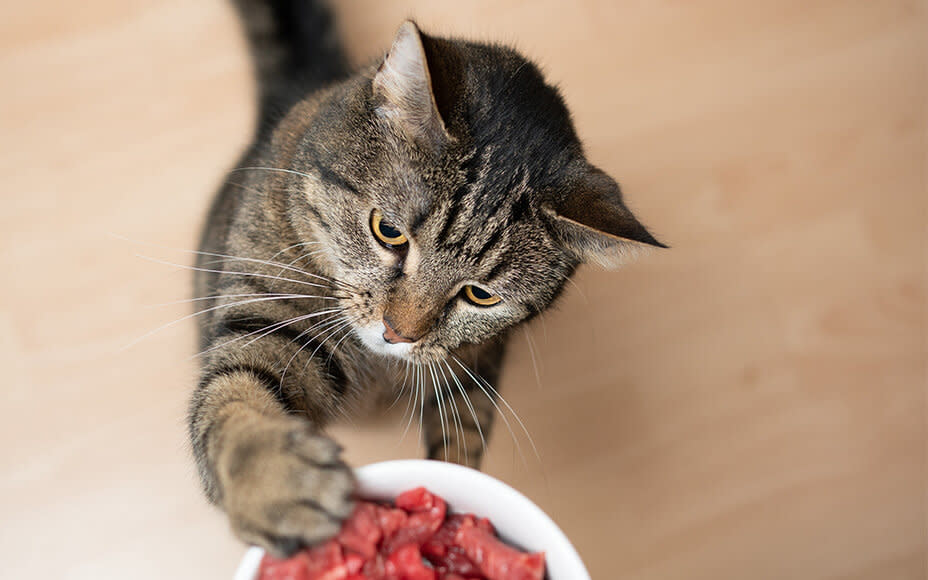
Critical nutrients
The essential amino acid taurine is only found in animal products. Unlike dogs, cats cannot produce this amino acid themselves and must therefore obtain it through their diet. A taurine deficiency can lead to disturbances in the nervous system, the function of the retinal tissue, or impairments of the immune system, fertility, and fetal development.
Some vitamins, such as Vitamin A and Vitamin B12, are also only found in animal products, and cats cannot produce them themselves.
Vegetarian or vegan-fed cats cannot therefore obtain all nutrients from their food and will sooner or later develop deficiencies.
With our delicious and healthy cat food, your furry friend will not only be provided with all the nutrients but can also find their absolute favorite consistency thanks to our large selection.
Entdecke jetzt unsere Nassfutter-Konsistenzen!
When is a vegetarian diet appropriate for cats?
There is one exception where a vegetarian diet may be appropriate: If your cat is allergic to any animal protein sources. This is very rare, but in some cases, a vegetarian diet is the most sensible option for the cat. However, a vegetarian diet should only be undertaken under regular veterinary supervision.
If you feel that your cat has a food allergy because it →is no longer eating, definitely seek veterinary advice. For the vast majority of cats, a protein source can be found that they tolerate well.

Is vegetarian cat feeding against animal welfare?
The →German Animal Welfare Act states in Paragraph 2: "Anyone who keeps, cares for, or is responsible for an animal must feed, care for, and house the animal appropriately according to its species and needs."
Feeding cats as strict carnivores vegetarian or vegan, except in exceptional cases, is not species-appropriate and would technically even violate the Animal Welfare Act.
So, with a vegetarian diet, you are not doing your cat any favors, and you should stay away from it. Instead, spoil your furry friend with extended cuddles and irresistible snacks.