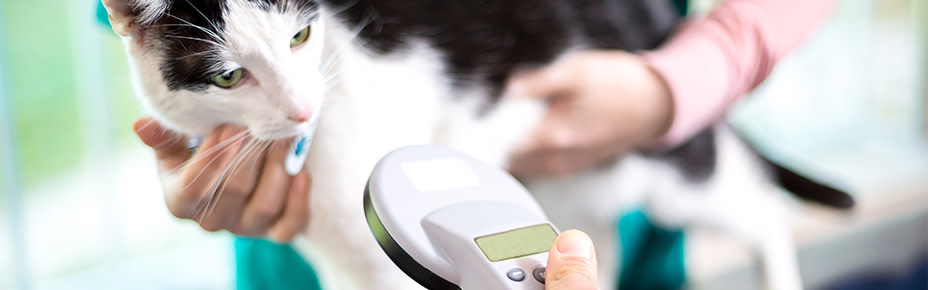
How does chipping a cat work?
When chipping, a small transponder the size of a grain of rice is placed under the cat's skin. This microchip contains a unique 15-digit code that can only be scanned with a special reader. Based on the individual identification code, which is also recorded in your pet's passport, your cat can be recognized anywhere in the world and more easily returned to you.
The following information is read from the ID chip:
- Country of origin of the cat
- Microchip number/personalized identification number of the cat (unique worldwide)
- Manufacturer of the microchip
The small microchip is placed exclusively by veterinarians. It is implanted into your pet's skin using a syringe-like device with a thick hollow needle without anesthesia. This takes only a few seconds and only slightly pricks your cat, similar to a vaccination and otherwise causes no pain. Your cat does not feel the chip, and it will not break even during a wild mouse hunt.


[TRANSLATION ERROR] Nicht mehr als ein kleiner Piks - der Mikrochip ist innerhalb weniger Sekunden implantiert und tut deiner Katze nicht weh.
You want to have your cat chipped, but to get her to step into a veterinary practice requires a bit of persuasion? Luckily, most furry friends are totally into our tasty snacks**. With some delicious rewards, you can surely convince your kitty and make the next vet visit to her liking.
Richtig belohnen dank schmackhafter Snacks
Radiation, material & co. - is the microchip harmful?
No, the microchip is not harmful to cats. It is made of a special anti-allergenic material that is tissue-friendly and does not harm your cat. The chip is inserted in such a way that it fuses with the surrounding body tissue and cannot penetrate deeper skin layers.
Additionally, the transponder is inactive all the time and is only activated when the reader is brought close. This means that the chip does not emit any radiation or other information and cannot provide the data stored on the microchip through GPS, satellites, or other tracking devices. It serves solely for the identification of your pet.
Why should I have my cat chipped?
Unlike dogs, it is not as common to have cats chipped. There are some breeders who chip their kittens from the 6th week of life, while others prefer to leave this decision to the future owners.
If your cat is an outdoor cat and loves to roam her kingdom day and night, a microchip can be quite useful. Curiosity often leads many a feline into strange sheds or garden houses, where they may accidentally get locked in and only be discovered a few days later. When found cats are taken to shelters or veterinarians, a microchip makes it easier to determine to whom the cat belongs.
Also, although we certainly hope it doesn't happen, the agility of outdoor cats can sometimes involve them in an accident when crossing streets. Helpful veterinarians can then find out to whom the cat belongs using the reader and contact the owners.

[TRANSLATION ERROR] Vor allem Freigängerkatzen verirren sich gern mal in fremden Schuppen oder Gartenhäusern. Dank MIkrochip finden sie schnell wieder zu ihren Halter*innen zurück.
Cat flap with microchip recognition
Did you know that there are also cat flaps that can read your cat's chip? This can be an implanted microchip or a chip in the collar. No more constant door opening and closing - with an innovative cat flap, your indoor tiger can now become even more independent and come and go as he pleases!
Is it worth having my indoor cat chipped?
Indoor cats usually never leave their warm nest and may only accidentally get locked in the basement. If you rustle a snack bag, you'll quickly find out which room your indoor tiger is hiding in. However, indoor cats can escape through the front door faster than you think or be accidentally locked out. Especially then, they risk getting lost outside or hiding somewhere out of fear and later not finding their way back home. If they are then picked up by rescuers and taken to shelters, they can quickly return home thanks to the microchip.
Also, some cat health insurance policies only cover animals that are chipped, as this is the only way to clearly identify the animals.
Don't forget to register the chip
You have decided to have your cat chipped and hope to quickly find her in case of an emergency? Then you should not forget to register your pet, including chip number, name, and address. Veterinarians only handle the placement of the microchip. For the chip or chip number to be associated with you when your cat is found, you must register the microchip number (also known as the transponder number) with a specialized organization.
Well-known organizations where you can register your cat include FINDEFIX (free of charge), Tasso e.V. (free of charge), and IFTA (for a fee). For registration, you usually need to provide the following information:
- Transponder/chip number (to be taken from your cat's pet passport)
- Information about the cat: species/breed, name, gender, date of birth, coat color
- Name, address, current phone number, and possibly email address of the cat owners
- Possibly a second contact address or phone number
What costs can you expect for microchipping?
Typically, microchips for cats cost between 30-60 euros. There are also costs for the insertion of the chip, which costs 19.23 plus VAT according to the fee schedule for veterinarians (GOT). For reading a chip from the cat, fees range from 3 to 10 euros.
Current regulations: When does my cat need to be chipped?
Currently, there is no general legal obligation for chipping cats in Germany. However, if you want to take your cat on vacation to the EU abroad or overseas, in addition to the required vaccination certificates and an EU pet passport, there is also a mandatory identification requirement for the cat in the form of a microchip.