Why is your cat sneezing?
Cats have a particularly fine nose and can smell three times better than we humans. So it's no wonder that they react much more sensitively to certain odors. If your cat is sneezing more often, it's not a cause for concern at first. Perhaps a dust particle or an unfamiliar smell is tickling her nose.
Perfumes, cleaning agents, deodorants, or air fresheners
You’ve just put on your favorite perfume, and your cat is sniffing curiously, accompanied by several sneezes? Don’t worry, that’s not a sign that you don’t smell wonderful. Certain products like perfumes or cleaning agents smell particularly strong to our cats and irritate the mucous membranes in their noses. A little sneezing fit can provide relief and is completely normal.

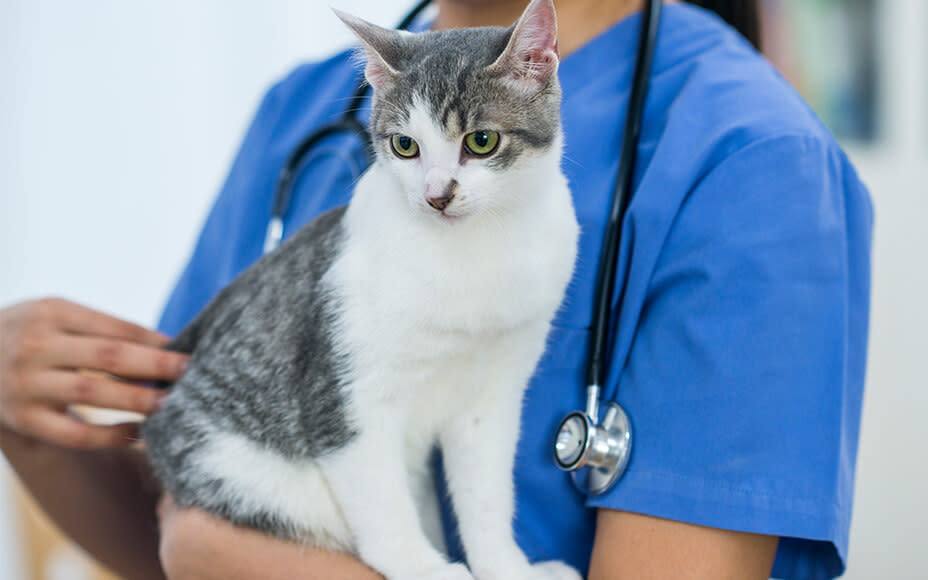
[TRANSLATION ERROR] Bist du dir unsicher, wieso deine Katze niest, geh besser zum Tierarzt bzw. zur Tierärztin.
Dry heating air
Just like us humans, dry heating air can also cause your cat to sneeze from time to time. Especially in the winter months, we tend to turn up the heating, which makes the air in the room quite dry. With excessively dry indoor air, the mucous membranes in the nose produce more moisture. The nose then tries to get rid of the excess secretions by sneezing vigorously.
House dust or mites
You’ve just vacuumed, and your cat can’t stop sneezing? Well, your indoor tiger is not only much closer to the ground than you, but her nose is also much more sensitive and reacts easily to dust. Swirling dust particles tickle her nose, causing her to sneeze. To help her, you can open a window or put her in another room while you vacuum.
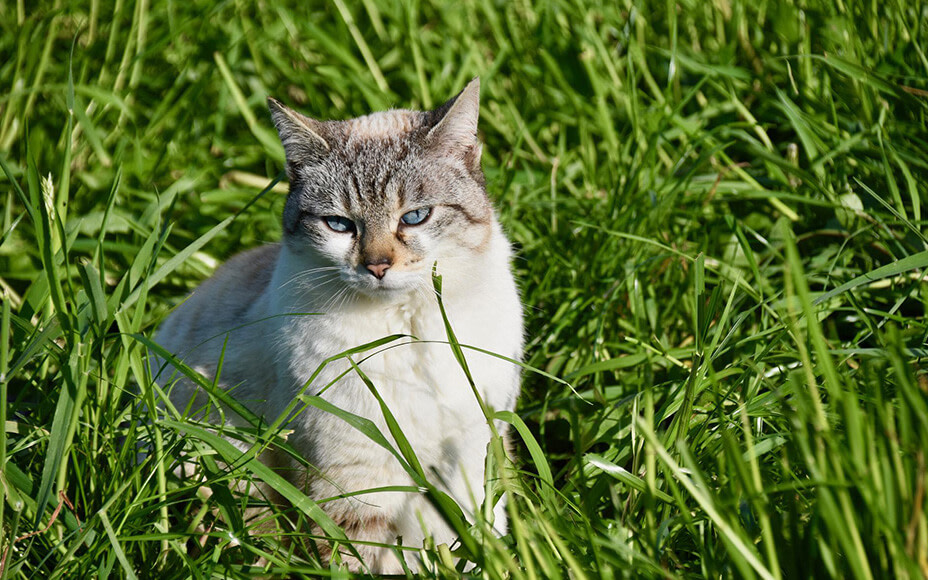
[TRANSLATION ERROR] Allergien gegen Gräser oder Pollen können ein Grund für häufiges Niesen sein.
Allergies
If your cat is sneezing unusually often and you can’t quite determine whether it’s due to the new perfume, the heating air, or the dust, an allergy may also be present. Just like us humans, our four-legged friends can also develop allergies to things like house dust or grasses. If that’s the case, the immune system reacts with an excessively strong defense reaction (e.g., sneezing) to certain harmless environmental substances. Other signs of an allergy can include itching, skin irritations, difficulty breathing, and increased breathing through the mouth.
If you suspect an allergy, you should consult your veterinarian. They can tell you exactly whether your cat has an allergy and initiate appropriate treatment.
A →healthy and high-quality cat food forms the optimal foundation for a healthy cat life. Take a look at the ingredients of the cat food your pet is getting. If there are unidentifiable terms and ingredients like sugar, grains, flavorings, or colorings, you should consider switching to a different food.
Gesund in jedem Alter: Unser Katzenfutter für 7 Katzenleben


Colds or infections
You should also consider the possibility of your cat having a cold, especially if none of the above reasons apply. Just like us, your cat can catch a cold. In addition to sneezing, this can also be accompanied by a runny nose or difficulty swallowing. However, if your kitty is otherwise healthy and fit, the cold usually goes away on its own after a few days. By the way, sneezing is rarely an indication of a →Covid-19 infection in your cat.
When is it time to go to the vet? If the symptoms persist or worsen, you should definitely go to your veterinarian.
Cat flu
Not to be confused with a common cold or flu, cat flu is a serious illness in your furry friend, caused by bacteria or viruses. In addition to sneezing, other signs of cat flu include a watery discharge from the nose and eyes as well as a slight redness of the eyes.
If you’re unsure, consult your veterinarian and have your kitty checked out. If cat flu is left untreated for too long, it can lead to consequential damage and can even be life-threatening for →very young cats. However, with early treatment, your cat can become completely healthy again.
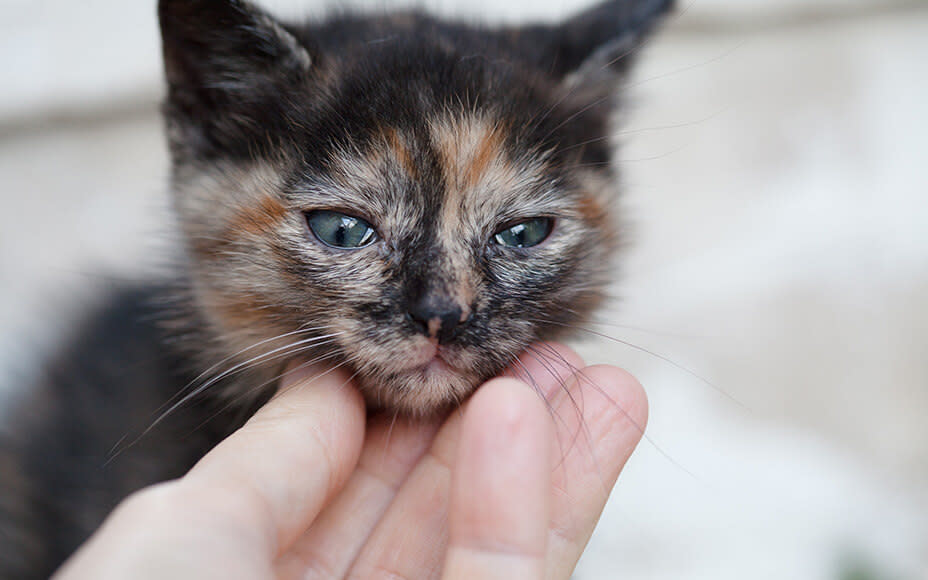
[TRANSLATION ERROR] Glasige Augen und dünnflüssiger Schleimausfluss aus Nase und Augen sind Anzeichen für Katzenschnupfen.
Foreign bodies in the nose
It’s also possible that a foreign body has become lodged in your cat’s nose. This can happen faster than you think. For example, if you give your kitty cat grass or →catnip, a piece of it can get into her nose via the throat. Symptoms include sudden sneezing, unilateral nasal discharge, notable swallowing, and severe restlessness. In such a case, you should take her to the vet as soon as possible** for an examination.
Home remedies for sneezing in cats
To help your cat, you first need to find out why she is sneezing so much. If there is a health issue like an allergy or cat flu, medical treatment is absolutely necessary.
Additionally, you can help your cat by trying the following:
- Vacuum and wipe more often; perhaps your cat is reacting to dust particles? When vacuuming, make sure your indoor tiger is in another room and ventilate thoroughly afterward.
- Regularly clean your cat’s face around the nose and eyes with a damp warm cloth and clear water.
- In case of dry heating air, you can set up a humidifier or place a bowl of water under cabinets.
- Remove houseplants that could be toxic to your cat.
- Wash all textiles like pillowcases or blankets thoroughly.