
Kitten has diarrhea: Causes & Treatment
If your young cat's stomach is rumbling and her sensitive gastrointestinal tract reacts with →diarrhea (diarrhea), you are surely worried. It is not always clear where the diarrhea is coming from and when it is time to grab your kitten and take her to the veterinarian for examination. What you need to consider when your kitten has diarrhea and where the →common kitten illness comes from, you will find out here.
Causes: Why do kittens have diarrhea?
Diarrhea itself is only rarely a disease in itself, as it often is one of many symptoms of a specific illness. Especially in young cats, diarrhea occurs more frequently because the digestive system is not yet fully developed and reacts very quickly to an unstable fluid balance. Various causes play a role:
- Change of food: When your young cat moves into her new home, she has to get used to many new impressions in a short time. Often, the →change of food happens too quickly, and your kitten reacts with diarrhea. It is important that your cat continues to receive the old food for a few days before a gradual transition can take place.
- Parasites: Depending on where you buy your kitten, breeders unfortunately do not always pay attention to regular deworming. Since kittens can contract →worms even before birth or later through mother's milk, early administration of deworming medication is important. If this has not happened, your kitten may have caught a worm or →giardia. Diarrhea is a common symptom in this case. However, even the deworming itself can lead to a mild stomach upset with diarrhea.
- Poisoning or eating something bad: Not everything that is healthy for us humans belongs in a cat's belly. Did your furry friend steal something from the table like →chocolate, onions, or →raw ground meat? Then quick action is required, as this poses a risk of →poisoning, which can also lead to organ failure.
- Stress: When everything is new, your kitten is working physically and mentally at full speed. Every cat processes the separation from her siblings and mother at different speeds. Sometimes, all the new impressions lead to stress, which in turn causes diarrhea.
- Allergies and intolerances: Sometimes, an allergy to a specific food manifests early in kittenhood, and itching, vomiting, and diarrhea can be the result.


[TRANSLATION ERROR] Eine Infektion mit Parasiten wie Giardien zeigt sich durch Symptome wie Durchfall, Inappetenz, Apathie und Gewichtsverlust.
With our Pets Deli range, we ensure a carefree start to your shared life. Our junior food for kittens and young cats optimally supports important growth processes with healthy proteins and essential nutrients. Does your four-legged friend have a sensitive stomach? With our sensitive varieties, we also bring joy and light enjoyment to the bowls of our furry friends with rumbling tummies!
The Best Start to a Four-Legged Life: Discover Our Healthy Junior Food


My kitten has diarrhea but is fit. What should I do?
If your kitten has diarrhea and is bouncing around the apartment as usual, it may not seem at first glance that medical advice is necessary. However, young cats can dehydrate very quickly with diarrhea, and their condition can change suddenly. A weight loss with nutrient deficiency can also be the result, which is life-threatening for young cats. It is all the more important that you react early if your kitten has persistent diarrhea.
When to take a kitten with diarrhea to the vet?
Here, the rule is: If the diarrhea lasts all day, you should take your kitten to the veterinarian on the same day for safety. If the diarrhea appears suddenly and your kitten seems lethargic and tired or is additionally vomiting, seek your trusted veterinarian immediately. If you know that your kitten has eaten something toxic, contact the practice immediately. Poisonings are always emergencies and must be treated promptly.
Diagnosis: How it is determined why your kitten has diarrhea
During an examination, the veterinarian will ask specific questions to find out what is wrong with your kitten. Ideally, you have a stool sample with you, as it can be examined on-site to see if there are possibly larvae of worms or other parasites present. You will also be asked in the practice if there has been a new food recently and whether your kitten shows signs of stress. A blood test may also be possible to check more precisely what is wrong with your kitten.
In case your cat has swallowed something, a further step may involve X-rays or ultrasound to check for foreign bodies.
Treatment: What to do against diarrhea in kittens?
Once the cause is established, appropriate action can be taken at the veterinary practice. In the case of a parasite infestation, your kitten will be prescribed a medication (antiparasitic) that leads to the death of the worms. Depending on how much fluid your kitten has lost due to diarrhea, she may also receive an infusion. This will restore the fluid balance and stabilize the circulation. Additionally, depending on the causes and other symptoms such as vomiting and pain, painkillers and anti-nausea tablets may also be prescribed.
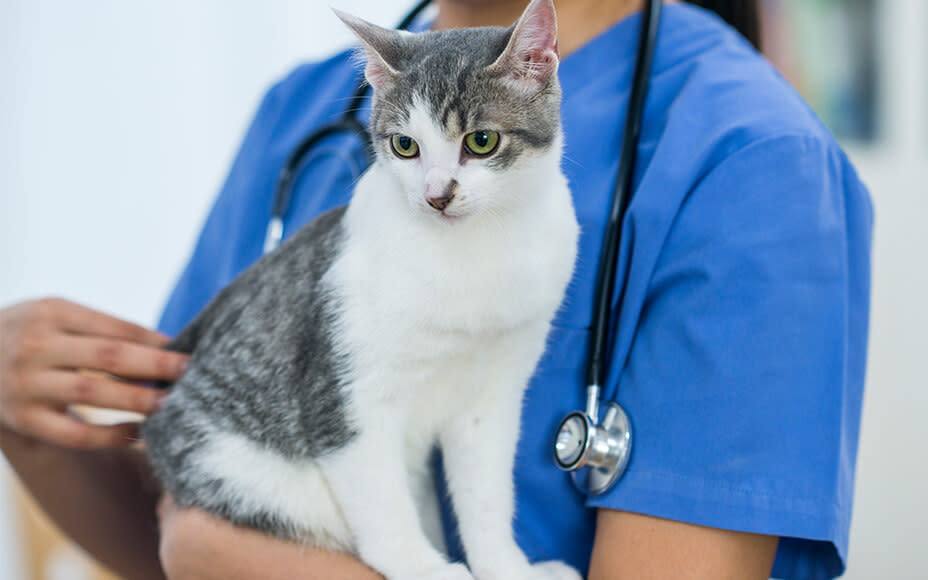
[TRANSLATION ERROR] In der Praxis untersucht der Tierarzt oder die Tierärztin dein Kitten genauer, um herauszufinden, was hinter dem Durchfall steckt. Darauf abgestimmt gibt es dann Medikamente und ggf. eine Infusion.
Veterinarians may also prescribe a light diet, where you can swing the cooking spoon and prepare your kitten a soup made of chicken with a small portion of rice and carrots. Remember to keep the portions small and prefer to feed 5-10 portions throughout the day rather than serving your young furry friend a whole soup plate at once, in line with the →proper kitten nutrition.
We are by your side when your young furry friend's stomach is rumbling. In good times and bad - and for the phase of illness, we support your cat with our VET wet food as a complementary treatment. Our →stomach & intestinal fit provides delicious rice, easily digestible chicken, and a tasty broth to balance the fluid balance and relieve the digestive system.