
How can I tell if my cat is pregnant?
Congratulations! You suspect that your cat might be pregnant? That's great news, and your cat will surely be a wonderful mom. Now it's time to head to the vet, where an ultrasound will determine if your suspicions of pregnancy are confirmed or if it was just a false alarm. In some veterinary practices, this can be determined as early as 15 days after mating. By the 40th day, you can even see how many kittens your cat is expecting.
Before seeking veterinary advice, you can also look for signs of pregnancy in your cat. In the first few days, you might not notice much, but after two to three weeks, you could observe the following signs of pregnancy:
- swollen, pink to reddish nipples
- a growing, bloated-looking belly
- sensitivity in the belly
- occasional nausea/vomiting
- increased appetite
- more affectionate, seeking more attention
Many of the mentioned signs can also be symptoms of diseases like a →worm infestation. Therefore, it is very important that you have your cat checked out and do not simply assume she is pregnant.

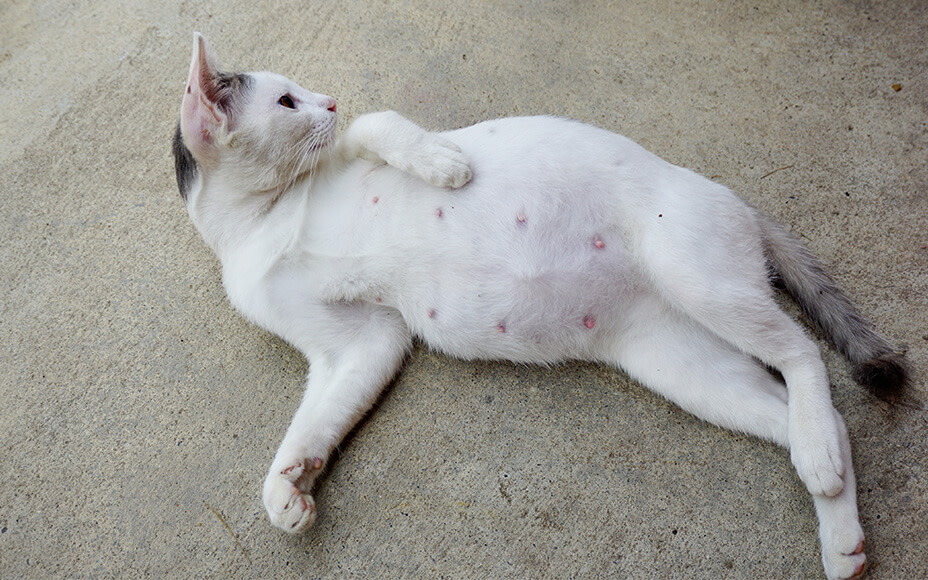
[TRANSLATION ERROR] Kugelrunder Bauch und hellrosa Zitzen: Eindeutiges Zeichen, dass deine Katze schwanger ist!
How many kittens can cats have?
Typically, cats have 3-6 kittens per litter. An exception is the first litter, where the average is "only" 2-3 kittens. However, how many offspring your cat ultimately gives birth to depends on many factors, including the breed.
What food is right for pregnant cats?
Cats are usually pregnant for 8-9 weeks. This is a time when you can actively support them. During pregnancy, your cat has special needs. As little kittens grow and need nourishment in her belly, she has a higher calorie and nutrient requirement than usual. During your cat's pregnancy, calcium, vitamin A, taurine, copper, and iron are particularly important.
Instead of continuing to give your furry friend her regular food, you should gradually switch to a special food for pregnant and nursing cats. Alternatively, you can also use →kitten food, as it also contains increased protein and nutrient content. However, it’s best to discuss the diet with your trusted veterinarian.
Unser Futter für Katzen: ehrlich, gesund, lecker.


Are vaccinations or parasite treatments allowed?
Ideally, your cat is already vaccinated →before her first pregnancy, as she can then pass on all the important antibodies directly to the kittens. If that is not the case, discuss your cat's vaccination plan with your veterinarian. Some vaccinations are not suitable for pregnant cats.
If your cat suffers from a parasite infestation, such as from fleas or worms, during her pregnancy, you should still →treat her for it. However, it is advisable to first visit a practice to ensure which treatment is allowed and should be administered.
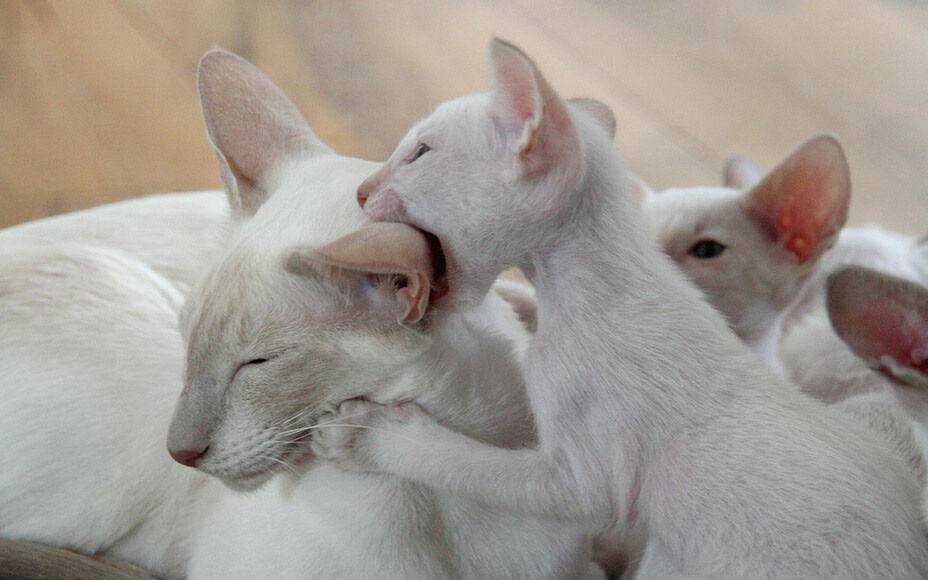
[TRANSLATION ERROR] Idealerweise ist deine Katze gegen Parasiten und anderen Krankheiten vor der ersten Schwangerschaft durchgeimpft und kann die Anitkörper an ihre Jungen weitergeben.
What else should I pay attention to with a pregnant cat?
In addition to the right diet, lots of cuddles and closeness are also important. Cats tend to be quite clingy during their pregnancy and will appreciate a bit more petting. However, you should not touch the belly area, as it is now particularly sensitive. Such a pregnancy can also be quite stressful for your cat, which is why safety and security are very important - and she surely gets plenty of that from you.
Possible complications during your cat's pregnancy
Even if you give your cat everything, provide her with the best food and the most extensive petting, complications can arise during pregnancy. Not always do these have to be serious issues, but your cat will usually need veterinary assistance. Watch for sudden behavioral changes and the following symptoms:
- restlessness, confusion
- crying, obvious pain
- excessive licking of genitals
- loss of appetite
- foul-smelling or bloody discharge
- bleeding during pregnancy or birth
- frequent visits to the litter box without urinating or blood in the urine
If you notice some of the mentioned symptoms, you should quickly visit a practice. There, your cat can receive help.
Preparations for birth: Building a nesting area
As the pregnancy progresses and your cat is approximately in the last two weeks of pregnancy, you can prepare a so-called nursing area or birthing box for her. This is a cozy retreat during and for the first time after giving birth. Also, make sure that your cat stays indoors, so she does not unexpectedly give birth to her kittens outside.
A large box or cardboard box lined with clean sheets, bedding, towels, or blankets is sufficient for a nice nesting area. The box should be large enough for your cat to lie comfortably in and later have enough space for all the kittens. At the same time, a certain height is important to prevent the little kittens from leaving the nest too early. Place the prepared box in a pleasant, quiet spot with room temperature.
Even if you have put in a lot of effort, it can happen that your cat chooses another place for the birth. This is not a problem, you should just have enough towels ready there as well. After the birth, you can gently move the kittens and your cat to the nesting area or make them comfortable right there.
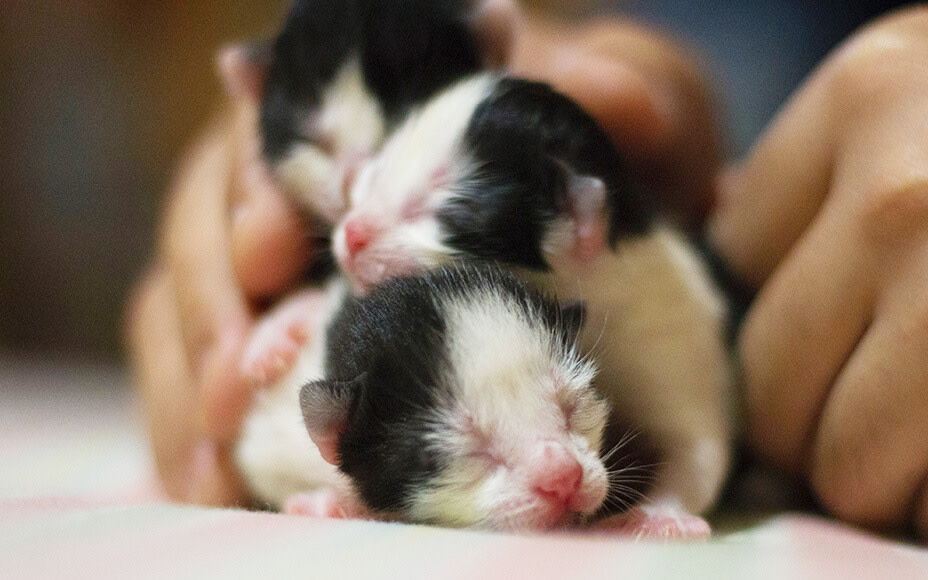
[TRANSLATION ERROR] In einer Wurfkiste bzw. im Wurflager können Muttertier und die frisch geschlüpften Jungen erst einmal zur Ruhe kommen.
Signs of impending birth
Don't worry, your cat is usually quite capable of managing the birth on her own. However, if you would like to support her, speak soothingly to her, and be ready to help if needed, you can look for the first signs that the cat birth is about to begin:
- Your cat refuses food.
- Your cat becomes restless and looks for an undisturbed place.
- Your cat appears a bit louder and constantly wants to groom herself.
- You can observe strong contractions in her lower abdomen (the belly becomes hard) followed by some vaginal discharge.
Note: If your cat has strong, dark red vaginal discharge, go to a practice. In this case, the birth needs to be expedited, and the kittens must be delivered as soon as possible.
Warning signs during or after birth
Generally, cat births proceed smoothly and uncomplicated. Your cat usually does not need your help, but you should check on her regularly. This way, you can act immediately on certain warning signs during or after the birth and call the veterinarian.
Signs of problems during birth:
- Although your cat has been having strong contractions for more than an hour, no kittens have been born. You can recognize contractions by the hardening of your cat's belly.
- Not all kittens have been born within the past 24 hours since the start of labor.
- The number of kittens does not match the number of placentas expelled.
- You can see a kitten at your cat's vulva that is not fully coming out despite strong pushing.
Signs of problems after birth:
- Your cat is trembling, restless, or agitated. These could be signs of eclampsia and require urgent treatment.
- Your cat continues to push even though all the kittens have been born.
- Your cat refuses food, vomits, or has a fever. Typical signs include loss of appetite, lethargy, decreased water intake, trembling, or rapid breathing.
- Your cat's discharge is foul-smelling or contains fresh blood. Blackish-red discharge is normal for a few weeks after birth.
- The mammary glands are red, hard, or obviously painful.
- Discharge from the nipples that is foul-smelling, brownish, or bloody.
- You notice weak, underweight "runt" kittens among the young that suck poorly and have difficulty gaining weight.
Veterinarians will do everything possible in such cases to ensure that your cat and her kittens recover quickly. All you can do then is to be there for your cat and make her as comfortable and pleasant as possible.