All about puppy sleep
Sleepsleep during puppyhood is essential for young dogs. After hours of playing, new discoveries, and training sessions, your little furry friend needs sleep time to regain energy and process experiences.
As important as sleep is for puppies, you might still have some questions about it. To help make your nights as peaceful as possible and ensure you both get the sleep you need, we answer the most important questions:
How long does your puppy sleep during the day?
How long does it take until your puppy sleeps through the night?
Where should your puppy sleep?
How can you get your puppy to sleep?
How long do puppies sleep?
To make sure your furry friend gets enough rest, you need to know how long a puppy actually sleeps. On average, puppies sleep 16-18 hours a day. Newborn puppies sometimes sleep up to 22 hours a day. The older your little four-legged friend gets, the less sleep he needs.
If you bring your puppy home at 8 weeks →from a breeder or animal shelter, he will need about 20 hours of sleep. From the age of 12 weeks your puppy will sleep up to 18 hours a day. Depending on breed, size, and activity level, these numbers can vary.

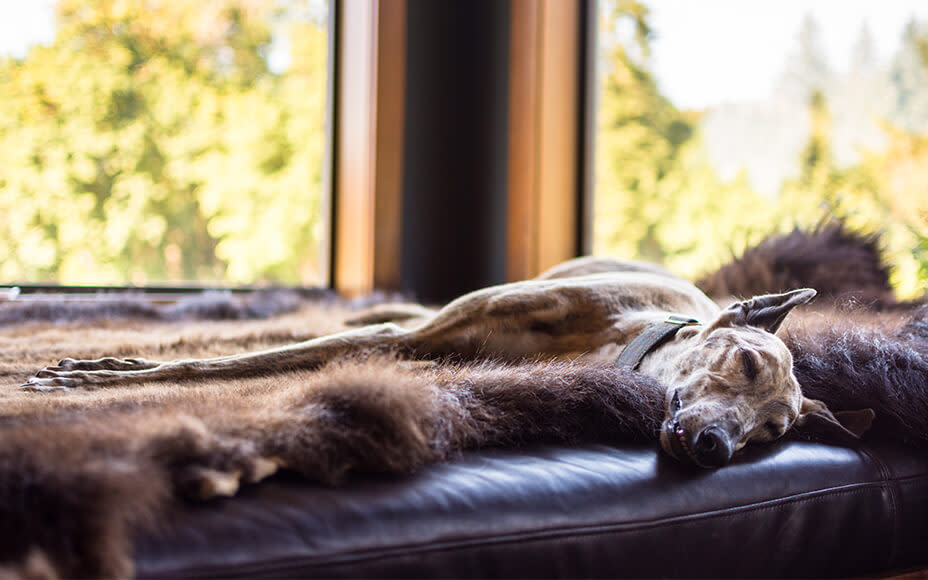
Some puppies first need to learn how to settle down and get enough sleep. That’s why rest training is especially important in the beginning.
When will my puppy sleep through the night?
Your little four-legged friend is driving you crazy at night and you wonder when he will finally sleep through? After all, it would be nice if your puppy could make up the daily amount of sleep he needs at night. Unfortunately, reality is often different, because instead →puppies often sleep restlessly, need to go to the toilet and find it hard to sleep for several hours at a stretch.
So, how long does it actually take for a puppy to sleep through the night? Mainly, your puppy wakes up at night because he can't hold his bladder for a whole night yet. Especially at first, he needs to relieve himself several times during the night, as the sphincter muscle of the bladder can only be controlled from the 14th-16th week onward. From this point on, it becomes easier for them to need to go outside less often at night. With a consistent →house-training routine you can help your puppy sleep better through the night.
Your little puppy constantly has issues with his stomachconstantly has issues with his stomach and always needs to go outside? For a healthy digestion it is important to feed a →high-quality puppy food. A first sign of good dog food is that not everything that goes in comes out again. If your puppy struggles with house-training for an extended period, have it checked by a vet just to be safe.
The tastiest for the little ones – our puppy food
Help, my puppy sleeps too little, what can I do?
You've learned that your puppy should sleep about 18 hours a day, but your little rascal runs and romps through the apartment and keeps you on your toes? For many four-legged friends, settling down is not a given at first, but something you have to teach them. That's why you should, right from the start when your puppy moves in, →practice less fun tricks and focus on lots of calm training instead.
If your dog has trouble settling down on his own and just lying on a spot you've assigned for a while, a crate, puppy gate, or another enclosed bed can help to set spatial boundaries and thus help him calm down better. The walls of a dog crate, for example, shield him from distractions and he doesn't constantly see exciting things.
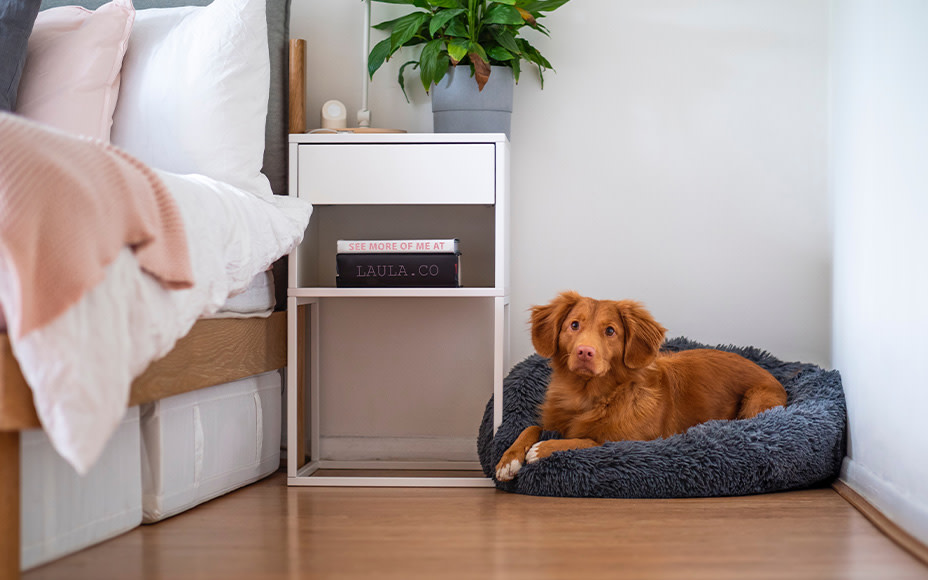
The right spot for the dog bed is very important so your puppy can truly relax. At night, your puppy can sleep in their bed next to your bed—maybe in a corner of the room?
The right place for the (puppy) bed
In general, you should make sure your puppy's bed is not right next to a door or in a spot where people are always walking by or where he can always keep an eye on you. Some dogs tend to want to constantly watch you and not miss anything and become restless if they miss out on something. The same applies if you are always looking at your puppy, talking to him or quickly touching him as you walk by because he's so cute. So for you too: Just leave your puppy alone sometimes!
A slightly more secluded retreat, maybe in a corner of the room, where he has 1-2 walls at his back, is a bit more relaxing. Some dogs also like something cave-like or a →cozy dog crate. These are quite practical, as when folded up you can take your four-legged friend's sleeping spot anywhere, such as when traveling later on.
Where should my puppy sleep at night?
The question of where your puppy should sleep is easy to answer: In a fixed sleeping spot. This serves not only as a permanent retreat, when your little four-legged friend has had enough. More importantly, a cozy spot near you allows your puppy to be with you and sleep and you can send him there when needed.
The rule is: your puppy should sleep wherever is comfortable for him. Whether that's a bed, a soft blanket, a den, or a crate is up to you. At night, it's good if your puppy can sleep near you, such as in a cozy basket next to your bed. You can also also set up several sleeping spots around the apartment.
If you're not a fan of your dog sleeping in your bedroom, you can also get him used to a fixed sleeping spot outside your bedroom. However, especially in the early days, you should leave the doors open and expect that your little four-legged friend will miss you a bit. The older he gets, the easier it will be for him to sleep without you and even stay alone sometimes.