Agility, retrieving & more – sporty tips for your dog
Border Collie Max would love to dance the tango with you 24/7, and even Pug Lilly, who really enjoys her 2-8 naps a day, is slowly but surely getting ants in her pants? If your furry friend has already given you their paw for the fourth time today, then it's definitely time for something new.
In case you've already run out of ideas or you are →sick at home and your furry friend is pestering you out of boredom, here are 7 tips on how to keep your four-legged friend entertained in new ways.
1. Refresh and learn commands
If your furry friend is one of those dogs who can do "down" but only after the sixth request, you can make very good use of your time at home for →obedience training. All you need is your dog, a room with enough space, and some tasty snacks as a reward.
If your four-legged friend already knows the basics, you can practice the →commands with hand signals by, for example, raising your finger for "sit" . New commands like spinning in a circle, sitting up on hind legs, or barking on command can also bring a fresh twist to training.
For training, always choose a healthy, sugar-free snack. With a tasty treat, training is much more effective and motivation is guaranteed!
Great rewards for hardworking dogs – our snacks
2. Intelligence and sniffing games
One way to make your furry friend's daily meals more adventurous is through →intelligence and food games. These are great for dogs who tend to gulp their food, as intelligence games make feeding take longer and help create a feeling of fullness .
They come in various versions, from complex "search boards", where treats are hidden under different wooden pieces, to homemade sniffing courses, where your four-legged friend learns to skillfully use their nose, to find the hidden food.
Feel free to get creative here. Use cups, boxes, pillowcases, and empty bottles to create the perfect sniffing adventure!
3. Agility in the living room
You want to physically tire out your four-legged friend→, but mental work shouldn't be neglected either? Mental stimulation is just as important! Not only →sporty dog breeds benefit from this type of activity, even little couch potatoes quickly find it fun.
Our tip: Turn your garden (or your living room) into an agility course! To build the different obstacles, simply use furniture and sturdy items you have at home. Suitable options include:
Chairs for balancing or to build a bridge
Boxes for crawling through
a broom placed on two stools for your dog to jump over it
a gym mat or towel where your furry friend must hold a command for 10 seconds
Stools to build a slalom line
A bottle filled with treats that must be retrieved
Take a look around your home – what else can you turn into a suitable obstacle?

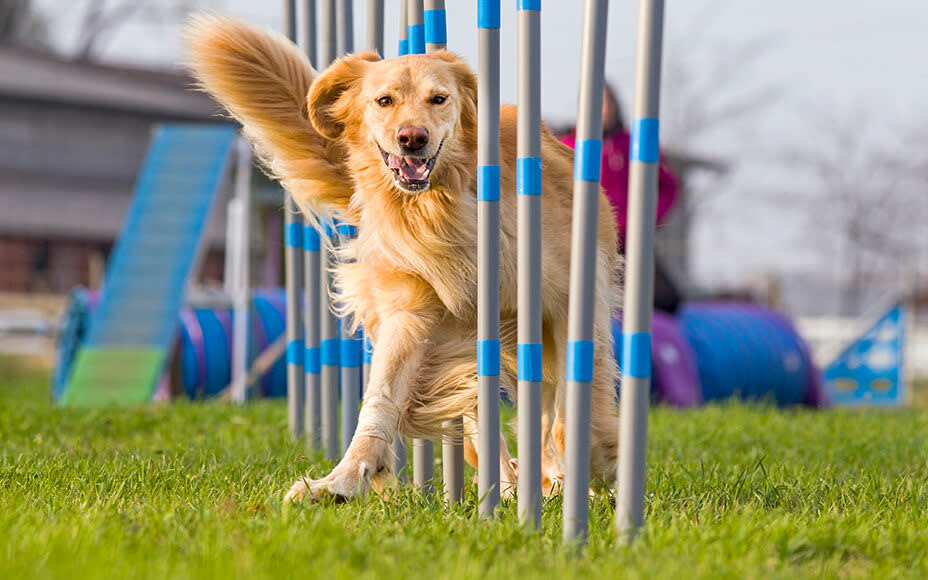
Agility is a great sport for dogs and owners. Depending on your enthusiasm and motivation, you can join a club or set up a few obstacles in your own garden.
4. Training relaxed behavior around food
Once Lilly has a pig's ear in her mouth, it's impossible to take her prize away, and she even growls at you during dinner if you come within 5 meters of her bowl? Then now is a great time to teach your dog some boundaries around food. Ideally, you →start training your dog as a puppy, but adult dogs can also learn boundaries.
A tip in advance: If your furry friend shows clear →aggression when you try to touch the bowl during feeding, don't just reach in. No matter how much your dog loves you, in such a situation, they might just snap. A good way to counteract this is to feed during training and to practice regular obedience training.
Feed a lot by hand in small portions instead of letting your furry friend eat from the bowl. This way, they will accept you as their food provider and respect you. If your dog gets pushy, barks, or jumps, stop the exercise.
Remember, your dog's food as part of a →species-appropriate dog diet should be varied and diverse, and based on the principles of a healthy meal as a guide. At Pets Deli, we focus on fresh meat, fruity fruit and vegetables, select herbs, and rich oils!
Our dog food: healthy, honest, delicious.
5. Not eating off the ground
An exercise that will also benefit you on walks: Teach your dog not to eat anything off the ground. This minimizes the risk of your pet acting like a vacuum cleaner on walks and possibly picking up a →poison bait on the street. This exercise is also great for practicing stress-free feeding with your furry friend.
To do this, scatter treats on the floor. If your dog tries to eat them, you can correct him with a firm, but not hysterical, "No!" to set boundaries. If he makes eye contact and leaves the treats alone, reward him.
You can also practice eating on command by placing a treat on your dog's nose and having him hold it until you give the command "Okay!" to allow him to lower his nose and drop the reward to the floor. If he tries to eat it, interrupt the behavior by saying "No!" again or having him sit. Reward with treats from your hand.
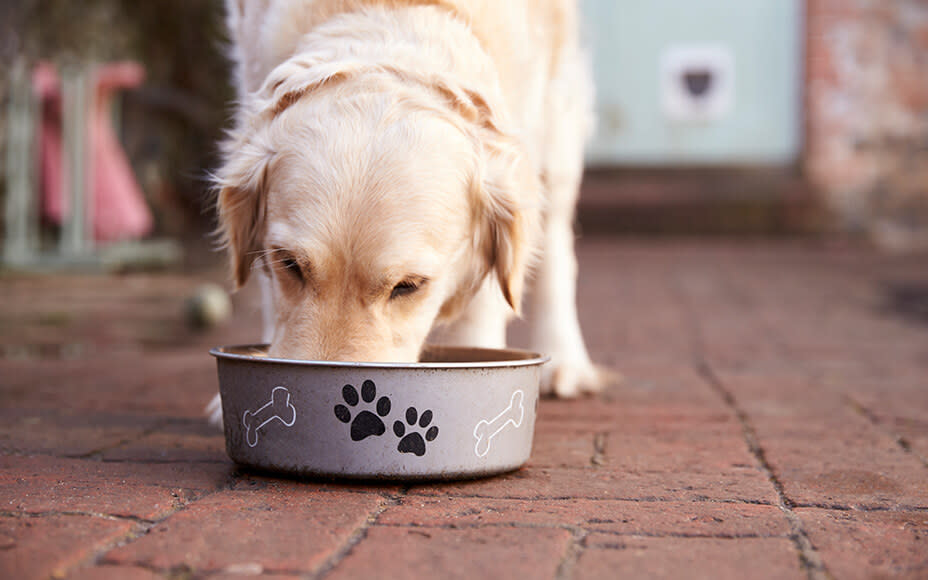
Feeding on command: You decide when your dog eats. This way, you ensure that he doesn't pick up anything from the ground and acknowledges that it is in your hands when and how he is fed.
6. Retrieving – when your dog becomes a newspaper courier
To teach your furry friend retrieving, you'll first need a treat pouch or an empty, sturdy plastic bottle to fill with treats or dry food.
The retrieving process involves picking up the treat pouch or bottle, carrying it to you and finally handing it over to your hand. Until your dog can fetch newspapers, the item should be filled with treats at first, otherwise your dog might quickly lose interest.
It's important to show your dog that he doesn't need to hide the prize and only gets the food when he brings it to you. As he heads for the treat pouch and picks it up, give the command "Fetch!".
When he stands in front of you, he should give you the treat pouch with a "Drop it!" command. Reward generously. Once your dog is confident with these exercises, you can swap the item for, say, a newspaper and have him bring it to you every morning promptly at 8:30.
7. Massage – the perfect relaxation for your four-legged friend
Belly rubs are great, but your dog will be amazed when you surprise him with a wonderful massage – after all, →he shows you his love whenever he can! What gives you total relaxation will feel just as good to your dog. After playtime, simply lay a towel or a cozy blanket on the floor and have your furry friend "lie down". First, gently massage your dog's entire body, starting with the ears, then the legs, carefully knead the paws, and stroke the back and belly.
For the perfect head massage you can gently circle your fingers on your dog's forehead and scratch the area below the snout. Then you can knead the ears with varying pressure – your furry friend will love it!.
For the back and neck massage, gently lift your pet's fur and then smooth it back down. Work your way along the whole back and make sure not to put any pressure on the spine. Because alongside all the fun, games & training, plenty of rest periods and cuddle time are also important.
You might also be able to keep your dog busy with one of our great →craft ideas (for Christmas, but why not anytime?)