Help, my dog has hypothyroidism
Hypothyroidismhypothyroidism is one of the most common diseases of the hormone-producing organs in dogs, with various symptoms. Our Pets Deli veterinarian explains in this article the symptoms of hypothyroidism, how it is diagnosed and treated.
What exactly is the thyroid?
The thyroid glands are paired organs and are located in dogs, just like in humans, closely attached to the left and right sides of the windpipe. They produce thyroid hormones, including the so-called thyroxine (T4) and triiodothyronine (T3), which are involved in many metabolic functions of the body.
Controlled is hormone production by the pituitary gland and the hypothalamus. The hypothalamus sends signals to the pituitary gland, which in turn sends signals to the thyroid, which then produces thyroid hormones. Dogs often suffer from hypothyroidism (hypothyreosis) and cats from hyperthyroidism (hyperthyreosis).
How do I recognize hypothyroidism?
Hypothyroidism is a disease that develops gradually over months to years and progresses. The disease tends to occur in older dogs. Certain breeds are more frequently affected than others. Golden and Labrador Retrievers, Dobermans, Cocker Spaniels, and German Shepherds are among the most commonly affected breeds.
Common symptoms
The symptoms are varied and often nonspecific. Signs of hypothyroidism can include:
Lethargy,
reduced performance
increased need for sleep
weight gain without apparent reason
sensitivity to cold

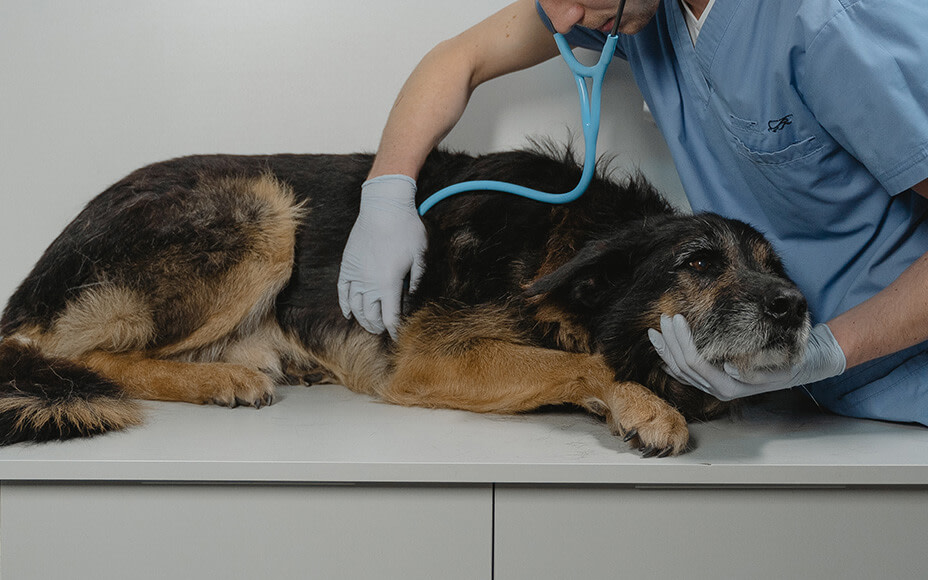
If you notice unusual behavior and any of the symptoms mentioned above in your dog, it's best to seek veterinary advice.
In 60-80% of affected pets, skin changes→skin changes also occur as symptoms. →dandruff, dry, dull or greasy coat are among the most common problems. →hair loss or, on the other hand, increased hair growth are possible. Hair loss often begins in the area of the tail and tail base, which is often referred to in medicine as a “rat tail”.
Due to fluid retention in the head area, the face of your furry friend may sometimes appear a bit swollen and they may look like they have a tragic facial expression. In some cases, dogs show neurological symptoms, such as head tilt or paralysis. Gastrointestinal symptoms such as →diarrhea and →vomiting.
As you can see, the disease can present very differently. The gradual development sometimes makes it difficult to tell whether your furry friend's symptoms are part of normal aging or if there is an actual illness behind them.
What should I do if I notice symptoms?
If you notice one or more of the symptoms mentioned in your dog, you should definitely seek veterinary advice. The signs can also indicate other diseases and only through a veterinary examination and further diagnostics will you be able to help your four-legged friend.
A little tip: →Veterinary examinations are something your dog can't stand? Our delicious snacks are the perfect reward for after a stressful vet visit:
Delicious Rewards for Brave Dogs
How is hypothyroidism diagnosed?
If your veterinarian suspects hypothyroidism based on the existing symptoms and the clinical examination they will usually recommend a blood test. Usually, blood cells and organ values, including thyroid hormones are measured. These are altered in hypothyroidism. Some dogs also have other abnormalities in the blood count such as anemia (anemia) or elevated cholesterol levels due to the disease.
Depending on how high or low the thyroid hormones are, so-called stimulation tests are often performed. In these tests, thyroid hormones are measured twice. Between the measurements, a medication is administered that normally stimulates the release of thyroid hormones to see if the thyroid responds properly to the stimulus. Additional imaging tests such as an ultrasound can also be helpful.
Don't worry, your veterinarian will explain your dog's results in detail and choose the right treatment.
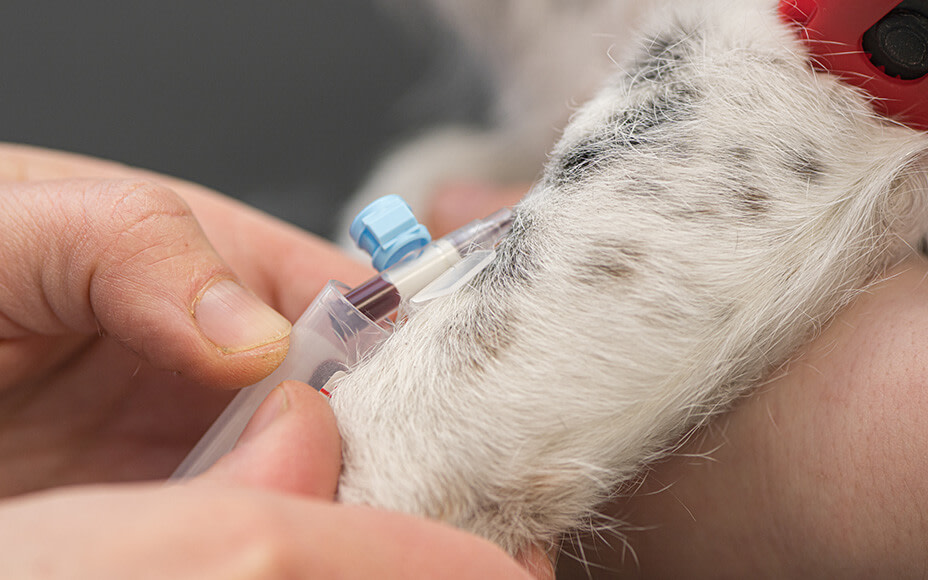
A blood test can detect abnormalities in blood values and thus identify hypothyroidism in dogs.
Changed values do not always indicate the thyroid
Thyroid hormones are also influenced by other diseases, which often makes interpreting the values a bit more difficult. For example, if there is another underlying disease, thyroid values may be low even though the problem is not with the thyroid. Medications such as cortisone, which is often used to treat skin problems, as well as painkillers can influence thyroid values. This influence on thyroid hormones by other factors occurs because the thyroid is involved in so many metabolic processes in the body and therefore quickly reacts to changes.
What causes hypothyroidism?
As you've already learned, the thyroid produces several thyroid hormones and is controlled by the pituitary gland and hypothalamus. The cause of reduced thyroid function can therefore be either directly in the thyroid or in one of the two controlling organs.
In over 95% of cases, the cause lies directly in the thyroid, which is called primary hypothyroidism. There are two main forms.
In the first form, lymphocytic thyroiditis, it is an inflammatory disease, controlled by the immune system. Inflammatory cells migrate into the thyroid and the body also produces antibodies against the thyroid hormones. This reduces function and the production of thyroid hormones drops.
The second form is the so-called idiopathic atrophy. “Idiopathic” means that the cause is unknown for something. In idiopathic atrophy the hormone-producing thyroid tissue is destroyed, without being able to find a cause for it. In rare cases, a tumor can also destroy the thyroid and thus its function.
If the cause of hypothyroidism in your dog lies outside the thyroid, this is called secondary hypothyroidism. This means that the hormone-producing cells of either the pituitary gland or hypothalamus are damaged. However, this form occurs in only about 5% of dogs.
Very rarely, there is also a so-called congenital hypothyroidism. In this case, dogs are born with a malformation of the thyroid. The prognosis is very poor in this case and the puppies often die very early, but this is really rare.
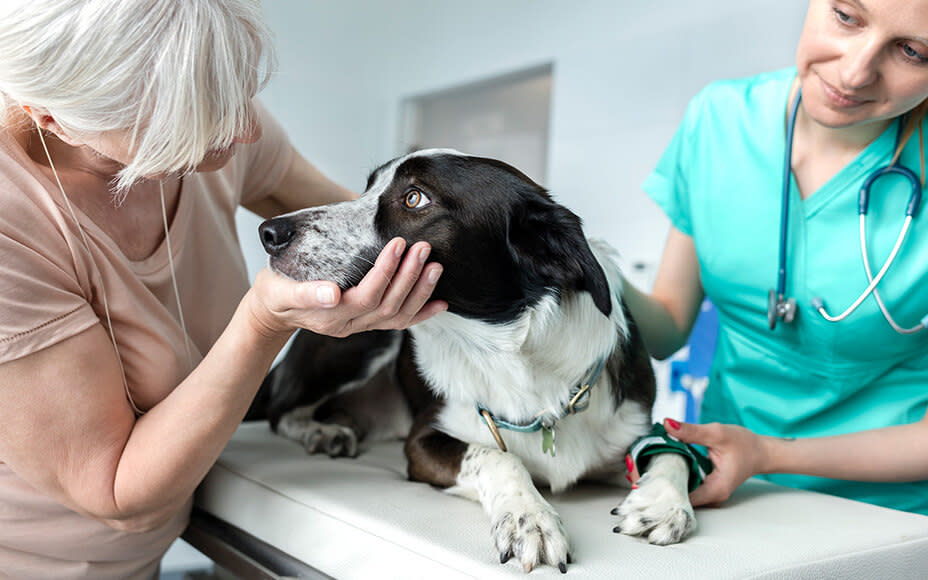
The good news: If detected in time, hypothyroidism in dogs can be treated effectively!
How is hypothyroidism treated?
Your four-legged friend has been diagnosed with hypothyroidism and you're wondering how it can be treated? Here comes the good news: In most cases, hypothyroidism is easily treatable and the symptoms disappear completely in most cases. The missing thyroid hormones are usually replaced by the active ingredient levothyroxine, a synthetic hormone. This means for you: you will need to give your dog tablets every day for life.
Your dog doesn't like to swallow tablets? Our delicious →liver pâtés in a tube are especially good for hiding tablets.
To find the right dosage of the medication, your dog will need some follow-up blood tests. Usually, the first follow-up test is done about four weeks after starting therapy. If the follow-up tests go well and your dog is well adjusted to the medication, it's enough to have the blood checked by a vet every 4-6 months.
Another good news: Your four-legged friend can have a normal life expectancy with well-managed hypothyroidism. So you can look forward to many long cuddles with your dog.
A healthy, long life for your dog starts with a →healthy diet. Have you already discovered our delicious and healthy →trial packs? Whether dry, wet or BARF: Try our wide selection and find your dog's new favorite food!