Dandruff in dogs – what could it mean?
Do you keep noticing small white or yellowish flakes in your dog's coat? These are most likely skin flakes. Even though dandruff itself is harmless, it can be a sign that something is wrong.
Just like in humans, dandruff is a common sign of dry skin. This →makes your four-legged friend itch naturally, and scratching causes white, dead skin flakes to fall off. Unlike us humans, however, you can't just wash your dog with anti-dandruff shampoo and everything is fine again. Find out what causes dandruff in dogs and how you can help your furry friend.
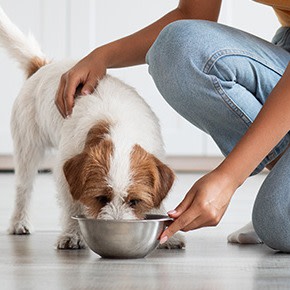
For skin and coat problems:
Food to strengthen skin and coat
Common causes of dandruff in dogs
Sometimes the reasons for dandruff are harmless, such as air that's too dry from heating. But there can also be more to it such as a skin disease or a nutrient deficiency.
The most common reasons for dandruff in dogs are:
Parasitic infestation such as →fleas, mites, or lice
Infections caused by bacteria, fungi, or viruses
→allergies e.g. to grasses or food
a nutrient deficiency due to improper diet
hormonal changes
metabolic changes, e.g. due to liver disease
→stress from the environment
As you can see, the causes of dandruff are varied and it is usually a side effect.

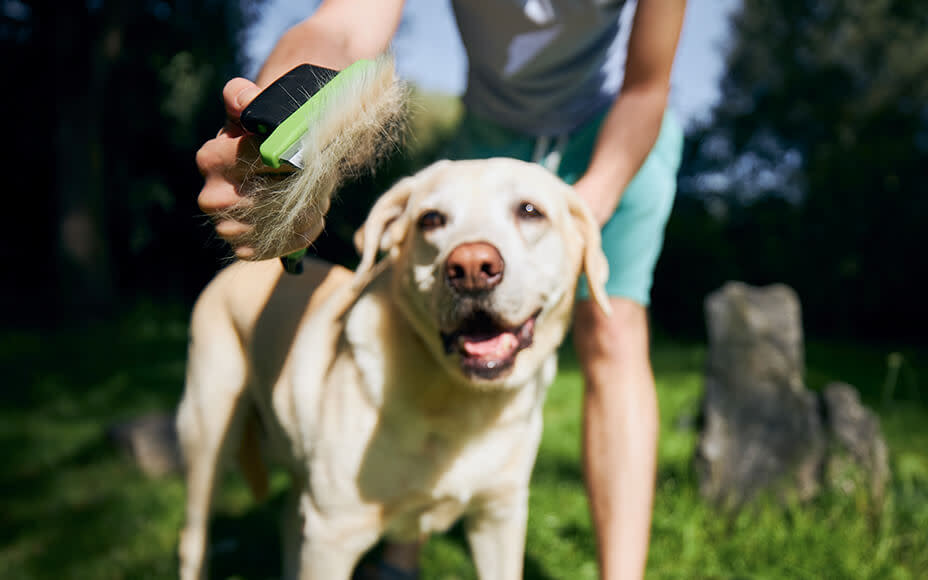
The coat is a kind of indicator of health in dogs. Especially during shedding, increased dandruff may occur.
Symptoms and diagnosis
Dandruff is usually quite easy to spot on dogs. Most of the time, it just sits on the coat or falls out when you pet or brush your dog. Frequent scratching is another sign of flaky skin. You can also try brushing your dog against the direction of hair growth to see how much dandruff he actually has and whether it is more dry and white or yellow and greasy.
The fact is, however, that only a veterinarian can tell you exactly why your dog has dandruff and how 'serious' the condition is. For this, your dog will be examined more closely at the clinic. Through a dermatological examination the vets can quickly determine whether your dog may have a parasitic or fungal infection. Hair, skin, particularly flaky areas if any, and itching are closely examined and analyzed.
You will also likely be asked about your dog's living conditions. That means, what food you give, how much stress your dog is under, whether other pets or children live in the house and allergies are known. If examination and discussion do not lead to a clear cause for the dandruff, a skin biopsy can help to analyze the cells and glands of the deeper skin layers in the lab.
When should I take my dog to the vet for dandruff?
If your dog has dandruff, you don't always have to go straight to the vet. Observe your dog for a few days. Is he otherwise behaving normally or is he showing other unusual signs such as frequent scratching, hair loss, or bald spots? What does the dandruff look like? Is it dry and white and can be easily removed by gentle brushing? Or is it more yellowish and greasy or oily and hard to get out of the coat?
If you are unsure, the dandruff doesn't get better, is yellowish and oily or your dog shows other symptoms, you should seek veterinary advice!
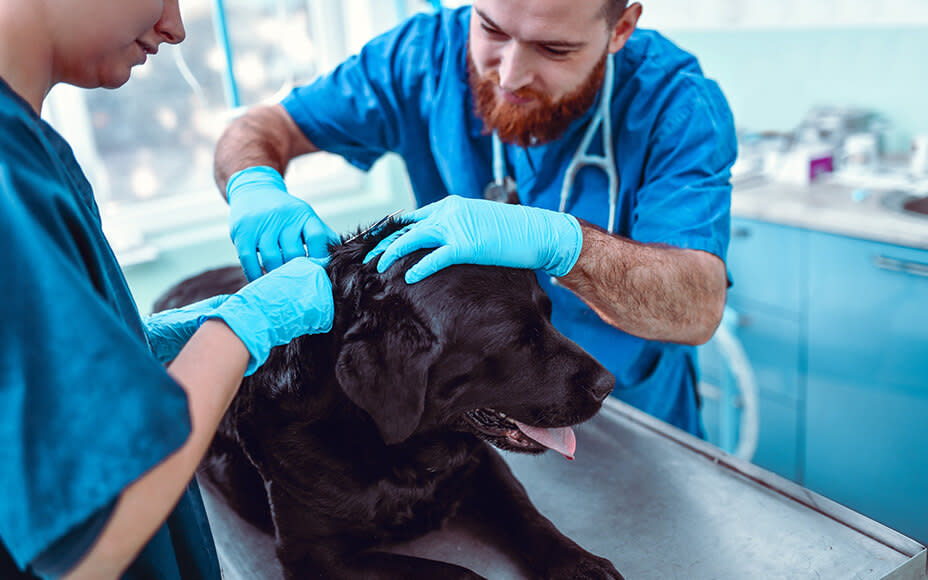
With a dermatological examination, veterinarians can determine why your dog has dandruff and how to help him.
Treatment for dandruff in dogs
Dandruff is pretty annoying for your dog and often comes with itching. Depending on the cause of the problem, an appropriate treatment can provide relief. For simple dandruff for example due to shedding or dry skin, regular, gentle brushing can help. You should also take a closer look at the care products you use for your dog. Natural products like those in our Pets Deli CARE range support skin health for your four-legged friend. Our →Deep Clean Shampoo with plantain, sea buckthorn, and lady's mantle, for example, is antibacterial, odor-inhibiting, and supports against fungi, bacteria, or lichen. Ideal for sensitive dogs!
I CARE for you - clean and well-groomed with our care products for dogs
If your dog has a fungal infection or a parasitic infestation, your vet will certainly prescribe a →suitable remedy for it. However, it is not recommended to treat your dog on your own with leftover ointment from the last flea infestation! Also, other animals living in the household such as cats, for example, should also be treated, as fleas or mites are contagious among pets. Keep in mind that parasite treatments for dogs must never be used on cats.
If the dandruff is due to improper diet or nutrient deficiency, a →change in diet can help. Consult your trusted veterinarian about this. Still unsure? Our experts →are happy to advise you free of charge about your dog's nutrition. Also, for possible allergies or intolerances a special food like our hypoallergenic food can be beneficial.
Ideal for Allergies and Intolerances - Hypoallergenic Food
Preventing dandruff in dogs
To prevent severe dandruff in your dog, the →right food is very important. A →species-appropriate diet lays the foundation for a healthy and long life for your dog. Regular coat care is also worth mentioning. However, this does not mean you should bathe your dog a lot! On the contrary: To avoid overstraining your dog's skin and destroying the natural fatty layer that serves as a protective barrier, when it comes to washing and shampooing, the rule is: as often as necessary, as rarely as possible! Instead, use a brush suitable for your dog's coat type and comb your dog's coat several times a week!