Tips & tricks to help you understand your dog's heat cycle
If the four-legged friend by your side is a female dog, then you're probably already an expert in this area. But do you really know what happens to your dog's body and mind during this time, so you can best respond to her needs? Or is your walk with her during the heat phase still a real obstacle course? Here you'll find tips and tricks on how to get through this hormone-filled time together.
Caution, she's in heat!
Depending on the size and age of your female dog, it happens to her once or twice a year: her heat cycle is about to start, and every time you find yourself facing challenges to master this phase as best as possible for both of you.
But first: this time of year can be nerve-wracking not just for you—it's at least as tough for your four-legged friend. To make this time as easy as possible, you should know what's happening to your dog and why she's acting the way she is.
No matter how much your four-legged friend drives you crazy during this time, it's important to give her a sense of security. Treat her as lovingly as always—a tasty snack now and then can help with that.
Give love with our tasty snacks
What happens to my female dog when she's in heat?
Your dog's entire heat cycle can be divided into four phases, which more or less always follow a certain pattern. These are the phases of the heat cycle:
Proestrus
In this first phase of the heat cycle, your dog starts to have a deep red, bloody and thick vaginal discharge. She begins to smell more attractive to male dogs, but is still not fertile and will fiercely chase away any interested males. The first phase lasts an average of 9 days, but varies just like the human cycle and can last between 3 and 17 days.


In proestrus, admirers may already be gathering around your female dog, but she is not interested yet.
Estrus
The second phase of your dog's heat is marked by her fertility and a watery, light red vaginal discharge. During this time, your dog's body undergoes several ovulations in a row, typically lasting up to 9 days. Again, the duration varies between 2 and 21 days.
Thin and light red blood is a clear sign of fertility and your dog will allow mating when meeting male dogs—if you don't want puppies, you should be especially careful during this phase. This is when she's truly in heat.

During estrus, your female dog will position herself in front of a male when they meet, swing her tail to the side, and signal her readiness. This is called heat or standing heat.
Metestrus
For your walks, this phase means: relaxation, your dog is no longer fertile and also shows no vaginal discharge anymore. If, after consulting with a veterinarian, you decided to let your dog mate in phase 2, it's now about 63 days until her puppies are born.
If not, this phase still lasts 2-3 months, during which a lot happens hormonally and it can also affect your dog's mood . If she becomes especially cuddly and clingy during this time, you should keep an eye on her. Seeking closeness, nest building, and hoarding stuffed animals and toys in her bed can be signs of a false pregnancy. You'll find out more about that soon!

During the afterheat, some four-legged friends settle down, while others become clingy and start nest building. If your female dog was not mated, she may be experiencing a false pregnancy.
Anestrus
Now begins the period until the next heat cycle, the current one ends with this phase. Your four-legged friend will show no more outward signs and her uterus will rest.
The first heat cycle – symptoms of the first heat
If your little dog girl starts staying out late, sneaks out secretly, spends all her time on Instagram, and the boy dogs are lining up at your door, then it's time: along with them, your dog's puberty is here.
First signs of a heat cycle can be:
Increased marking during your walks
Your dog becomes a magnet for male dogs.
Barking or snapping at pushy males.
A swollen vulva and increased licking of it.
Poor recall and increased distractibility.
Unusual clinginess and seeking closeness.
A certain lethargy combined with restlessness.
From the 6th month of life your dog can go into heat, but sometimes the first heat doesn't occur until the second year of life. This is especially common in larger breeds and is nothing to worry about. It's not uncommon for a so-called silent heat to occur, where your dog shows no vaginal discharge in phases 1 and 2 but is still fertile.
An exciting time of change begins, as this new stage of life brings some changes and also responsibility. Ideally, you will have already considered questions like "Do I want my dog to have puppies in the future?" before getting your dog.
If you are planning this, always discuss your plans with your veterinarian, who can provide information about puppy planning, genetics, and next steps.
Your Free Veterinary Consultation
Get free, no-obligation advice from our veterinarians and ask any questions about pet health.
The second heat cycle – and all the ones after
The first heat is over! But when is the second one due? Just like in humans, the heat cycle in female dogs is a cyclically recurring process. Generally, dogs go into heat twice a year. The interval between cycles depends on various factors such as size and age. Individual predispositions also influence the timing. For smaller female dogs, the heat cycle occurs about every 6 months, while larger female dogs tend to go into heat every 8 to 9 months.
Staying fit during the heat cycle: What should you watch out for?
As soon as you notice that the male dog world is showing an above-average interest in your dog, you should prepare for a few rules of behavior during walks to keep things stress-free. If your dog tends to be listless during her heat, it's especially important to go on varied walks.
Pushy male dogs are a major source of stress for your pet, so it's a good idea to move your walks to the woods and avoid contact with male dogs as much as possible to avoid them. In any case, you should immediately leave situations where a male dog is sniffing and bothering your dog too much to reduce her stress.
Since the transition from phase 1 to 2 can be gradual and your dog may seek out male dogs the next morning, you should never let her off leash during her heat cycle.
There's a high risk that she'll be hormonally overwhelmed and run off to enjoy a date with Beagle Robby—so during this time, just use long leads to still give your dog plenty of exercise. If you encounter off-leash male dogs, kindly ask other owners to put their dogs on a leash due to the circumstances.
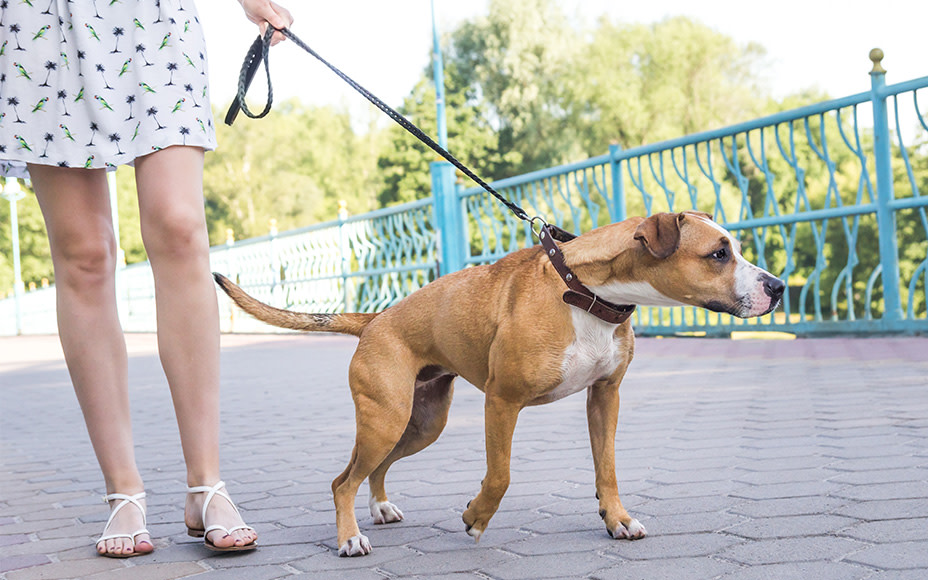
During heat, you should avoid dog parks and choose quiet paths. Do not let your female dog off the leash, as she may run away more quickly to look for males.
False pregnancy – how can I help my dog?
Are there situations when you should consult a veterinarian? Yes! Not every female dog goes through phase 3 of the heat cycle as smoothly as she should after fertility ends. You may notice that your dog seems down, is more clingy than usual and starts nest building, even though there are no puppies on the way. Some female dogs also show aggressive or apathetic behavior. This includes hoarding toys, stuffed animals, and shoes.
If that's the case with your dog, you should watch her closely, as she's very likely experiencing a false pregnancy. What does that mean? During a false pregnancy, female dogs believe they are expecting puppies, even though they're not pregnant. They make all the necessary preparations, such as nest building. The hormone progesterone is released at the end of phase 2—whether pregnant or not. This hormone stimulates mammary gland growth—under normal circumstances, milk production remains low and most owners don't notice anything. However, if your dog is falsely pregnant, her mammary glands will continue to swell and she'll experience increased milk production.
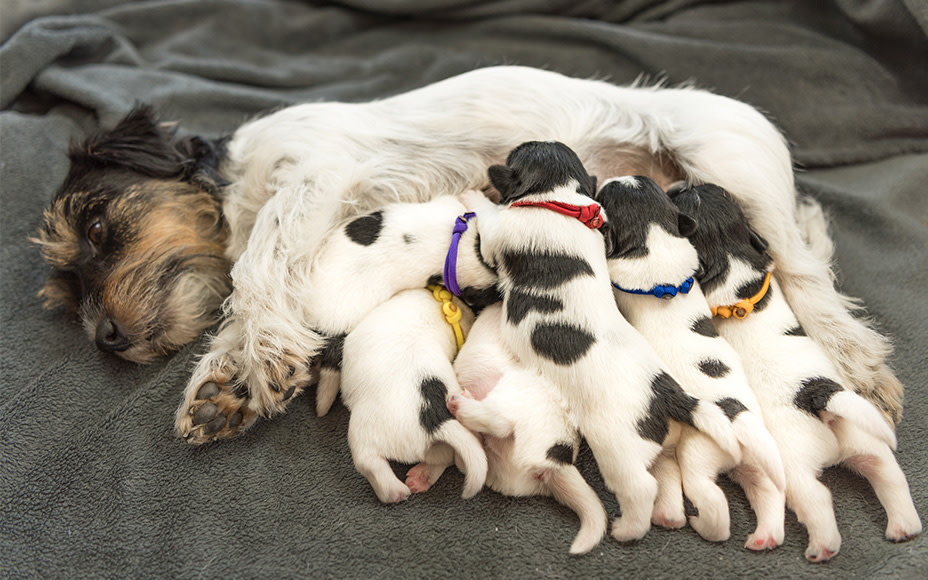
While your female dog thinks she is actually expecting puppies, she builds a nest and produces milk. If this happens, her belly should not be stroked, loose objects should be picked up, and a veterinary clinic should be consulted if necessary.
During this time, you should provide your dog with a varied daily routine. Go for lots of walks, change feeding times if necessary, and remove all toys and anything she uses for nest building. Prevent your dog from licking her teats, as this will increase milk production.
Under no circumstances should you squeeze the mammary glands, as this can also lead to increased milk production and cause infections. If your dog's condition doesn't improve, you should seek veterinary advice. A vet can end the false pregnancy by administering hormones if necessary. For female dogs that regularly experience false pregnancies, →spaying may be advisable in some cases. Keep in mind that spayed female dogs are prone to →obesity and a tailored, healthy diet is recommended.
At Pets Deli, we have food for every need—whether light, extra meaty, or for sensitive tummies, everyone will find something here:
Our cans are packed with fresh meat, crunchy vegetables, and sweet fruit!
Hygiene during the heat cycle – what does my dog need?
It's completely natural for your dog to lose more bodily fluids during this time—so don't make her feel unclean or scold her for it.
And besides: wiping blood off the tiles is a thing of the past, as many manufacturers now offer protective pants that optimally absorb the blood from your dog and are comfortable to wear as well. However, these are not intended for contraception, so a planned mating cannot be prevented this way! You also don't need to shower or bathe your dog during this time, as she will have an increased urge to groom herself while in heat. You should continue →regular coat care as usual.→regular coat care as usual.