5 common behavioral problems in cats – Information & tips
Cats are known for their capricious moods and sometimes (very) funny behaviors that are hard for us humans to understand, but for cats, with their quick and agile movements, completely normal. However, when undesirable behavior becomes a habit, the scratching post is no longer used and the sofa has to serve as a scratching pad, you’re probably wondering what you can do about such behavioral issues. We present to you the five most common behavioral problems in cats and explain how you can train your cat.
Uncleanliness and marking
Kittens and young cats already learn from their mother how to →use a litter box and usually only a little training is required. If your cat suddenly starts doing its business outside the litter box, it’s not only more work for you but also unpleasant for your feline friend.
Causes of uncleanliness in cats
Illnesses such as →urinary tract infections (FLUTD) or parasites
litter box too small or too much of a barrier
too few litter boxes
stress
To find out the cause, you should first take your cat to the vet, to rule out serious illnesses. Not infrequently, cats suffer from urinary tract infections, which are often triggered by stress and tend to recur. Problems with the litter box itself can also lead to your cat not wanting to use it. Ideally, your cat should have two litter boxes available – and with each additional cat, you’ll need another box.


Uncleanliness in cats has various causes. In addition to common urinary tract diseases, the nature and filling of the litter box can also be a reason.
What you can do if your cat is unclean
If the vet has given the green light, you should first check whether your cat is stressed and how the condition of the litter boxes is. Make sure there are good access points to the litter boxes and try to create a relaxed atmosphere. Moving, new people or pets in the household, even new furniture can be stressful for cats, who are creatures of habit.
For the litter box, you can try a change of cat litter and even remove the hood – different cats have different preferences here. With our →ecological Pets Deli natural litter you’re always on the safe and soft side: Reliably clumping, odor-neutral, and gentle on the paws.
Redefining Clean: Our Cat Litter is a Clean Deal!
Aggression towards people and other cats
Most cat parents know the scenario where the purring feline lying on its back suddenly changes its mind and shows its sharp little teeth and claws in a flash – and the next moment you have a paw on your arm. When such behavior gets out of hand and your cat is aggressive towards both people and other animals, a harmonious coexistence is out of the question.
Causes of aggression in cats
pain
illnesses
habituation
biting out of →affection (“love bites”)
triggers such as noises or another cat in the household
What you can do if your cat is aggressive
First and foremost, you should seek veterinary advice if your otherwise cuddly cat suddenly becomes aggressive. Sometimes an illness can cause pain and your cat shows this through very impulsive behavior and doesn’t want to be touched. If something is found, that is very likely the reason for her new behavior.
If everything is physically fine, you can observe when your cat shows aggression. In the wild, →cats scratch and bite, when they play. If she shows this behavior often during play, you can interrupt when it gets too intense and signal to her that such behavior leads to the end of playtime. If your cat is aggressive towards other animals, it may simply be that she’s not a fan of a new pet, there are too few litter boxes or food available, or the apartment is too small for several cats. Here you should be gentle when it comes to →getting cats used to each other. If your cat remains aggressive, cat trainers can help.


That cats bite and scratch is rooted in their natural behavior. However, aggressive behavior can result from improper training or health problems.
Scratching furniture, floors, and objects
If your cat is going after your fancy sofa or suddenly targets items that are important to you, it’s naturally annoying. But →trimming and sharpening claws is natural for cats, and by doing so, they also set boundaries for their territory. For cats, it doesn’t matter whether it’s furniture, walls, or scratching posts – they don’t destroy things out of malice.
Causes of scratching furniture and floors
missing scratching post
rejection of the scratching post
boredom and lack of exercise
inconsistency in training

Your sofa as a mobile scratching post? Some cats reject used scratching posts because of the smell. Scratching posts in different rooms can encourage your cat to scratch.
What you can do if your cat scratches furniture
If you don’t want your cat to scratch furniture and would rather she use the designated scratching post, then consistency from day one is necessary. Cats naturally trim their claws wherever it suits them. If you show her that she should use her scratching post, she can definitely learn it. Lead your cat to the scratching post when she goes for your furniture, guide her paw over the material on the scratching post and reward your feline friend. This way, you reinforce the behavior, that you want: using the scratching post.
For training, choose a healthy snack, free from sugar, grains, and artificial additives. Our Pets Deli snacks are not only irresistibly tasty and very popular with cats, but also guaranteed without any nonsense!
Delicious Cat Snacks for Training or In-Between Meals
Excessive grooming behavior
It’s undisputed that cats have a unique and effective cleaning system, but when this routine is carried out excessively, it’s called over-grooming. Does your cat groom herself even though she’s clean, and does so several times a day?
Causes why your cat over-grooms
What you can do if your cat grooms too often
First: cats groom themselves frequently and thoroughly, which is normal. If there are bald spots, your cat is scratching herself or seems unwell, you can seek veterinary advice . Most often, allergies or parasites are behind it, for which there are effective remedies that work quickly. As a preventive measure, a →powerful anti-parasite treatment is recommended to reduce the risk of infestation.
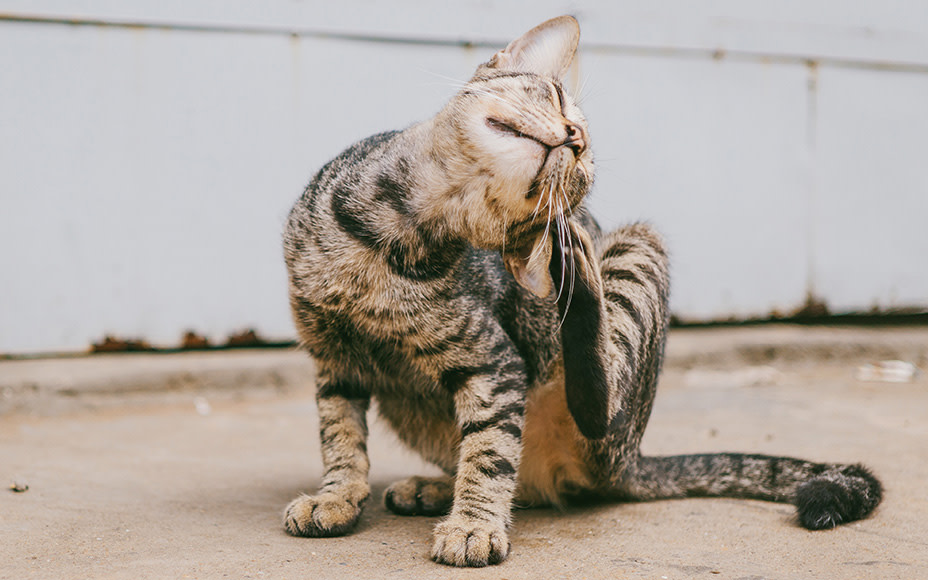
Cats are very meticulous animals, so cleaning themselves several times a day is normal. However, excessive grooming or scratching may be caused by parasites, allergies, illness, or stress.
If your cat is under stress, she will start to groom much more intensely than necessary. Cats get stressed very quickly when their living conditions change and some pets get worked up even if a piece of furniture changes its place. Try to make changes like moving, new roommates, and redecorating gradually and give your cat a sense of security.
Loud and impulsive behavior
"Meow" – that cat wailing. While your cat serenades you night after night and even the neighbors are tired of the cat music, you wonder where it comes from and how you can train your cat out of it.
Causes why your cat constantly meows
pain or illness
boredom
What you can do if your cat is loud
If you want your →cat to stop meowing all the time, the first thing you should do is rule out illnesses. Maybe your feline has a →toothache or gum problem or she has a stomachache.
Many unspayed cats also tend to go into heat continuously, which means: ready to mate 24/7. Here, a →spaying is advisable if you don’t plan for your cat to have kittens.
It’s also possible that your cat is bored. Do you play with her regularly, does she have a four-legged friend by her side, or does she live in the apartment as a single cat? Your cat may be longing for more attention, even though we often think our cats are very independent and can manage well on their own.

The cat chaos never ends? Sometimes the trained eye of a cat trainer can help, offering targeted support exactly where you’re having trouble with training.
Addressing behavioral problems in cats properly: With love, patience, and understanding
Your cat doesn’t act a certain way to annoy you. On the contrary: Many pets and humans are real teams and it’s normal to have to invest time and effort every now and then.
In any case, you should avoid violence and any training methods that cause fear in your cat. Training based on fear is never sustainable – at least not if you want your cat to be a confident feline who feels comfortable at home.
Instead, use the principle of reinforcement, by rewarding behaviors you want to see. If things don’t go as planned, be patient. Learning processes take quite a bit of time and →consistent training forms a foundation for success.