
The most common illnesses in young cats
Your young cat has probably only been with you for a few weeks – so it's completely normal to worry if your kitten seems unwell, stops eating, or is obviously in pain. Not every case of your kitten refusing food or having diarrhea means something serious. Here’s an overview of the most common problems during kittenhood.
Parasites in kittens
In addition to →ear mites, which can be recognized by dark, crusty spots in the ear and cause severe itching at the ear, your kitten can also become infected with →fleas. These also cause your kitten to scratch, and fleas can additionally transmit various diseases. Also, →worms are among the parasites. You can recognize them by white rods in your cat’s stool.
Coat problems, vomiting, and weight loss can all be signs of a parasite infection. For mites and fleas, veterinarians usually prescribe a →prophylactic treatment that protects your kitten from infestation. Regular deworming treatments prevent recurring infestations. It’s important that you never choose anti-parasite treatments on your own, as this should be left to veterinarians to avoid incorrect dosing.

Deworming kittens
Information about deworming in young cats
Colds and feline flu
A cold can also affect your kitten especially often during the first few months. Due to a fluctuating body temperature, your cat can catch a chill more quickly than an adult cat. Make sure your kitten is always exposed to a consistent temperature and that rooms are not too cold. Usually, your young cat will recover well from a mild cold.
Sometimes, however, it can last longer and the symptoms get worse. Due to their susceptibility to infections kittens without vaccination can catch →feline flu more easily. If your cat has fever, →sneezes and coughs and is more lethargic than usual, you should act quickly. The eyes are also affected by this illness: They →water and sometimes show a yellow discharge. Feline flu is a serious disease and if left untreated, often leads to blindness and chronic respiratory problems. To prevent your cat from catching it, you should have her vaccinated.

Have your cat vaccinated
When & how often should kittens & cats be vaccinated?
Digestive problems and diarrhea
Your kitten’s digestive system stabilizes over time and is initially still easily thrown off balance. This is why young cats →get diarrhea more often, when they try new food for the first time or pick up something from the floor their stomach isn’t used to. Stomach and intestinal upsets are common during kittenhood, but in most cases harmless.
Sometimes, however, serious problems are behind the diarrhea, such as a parasite infestation or an infection. If your kitten loses weight and the problems persist for several days, you should immediately take your cat to the vet.

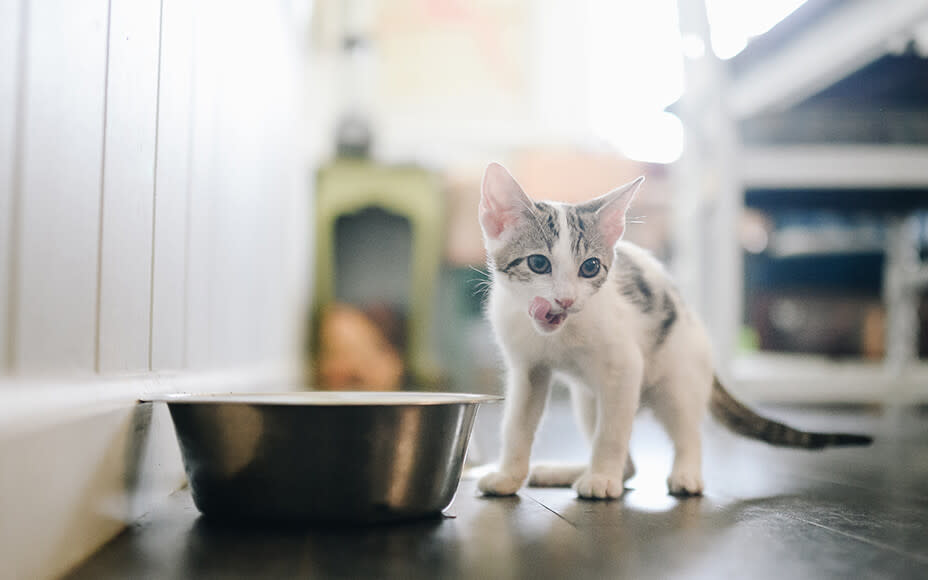
The right food and a gentle transition to it are very important for young cats.
Make sure you feed your young kitten →special kitten food and transition gently to the new food. To best support the rapid growth of your cat’s bones and organs, choosing a good kitten food is essential. This contains certain nutrients in higher amounts than adult food; for example, the protein content is up to 10% higher than in food for adult cats. Our →healthy kitten food offers the optimal support for your little one’s development.
At Pets Deli, we recommend feeding junior food until the 12th month. By then, the most important growth processes are complete and your cat’s body no longer needs higher doses of nutrients.
The Best Start to a Four-Legged Life: Discover Our Healthy Junior Food
Your kitten isn’t eating
If your young →cat has no appetite and even ignores her favorite food, this may be due to initial stress . Little ones discover something new every day and sometimes there’s just no time to eat. However, the cause may also lie in the following points:
Teething: If your kitten refuses dry food or harder snacks, teething may be the reason. During the phase when your kitten loses its baby teeth and new teeth are growing in, it may have trouble chewing hard food. During this time, you can offer food in a softer consistency.
Too much of a good thing: Some kittens seem like they could eat two more portions, while others are more than satisfied. If your kitten generally eats but always leaves some food in the bowl, you can slightly reduce the amount of food and instead feed several small portions throughout the day.
The wrong bowl: If your kitten won’t eat from the bowl but will eat from the floor or your hand, the type of bowl may play a role. Your cat may find it difficult to eat from the current bowl. Cats generally prefer very shallow dishes, both for food and water. Also, make sure to place the water far away from the food, as this is a preference for cats.
Training: You can rarely resist your kitten’s big eyes and she gets everything she wants? This can backfire, especially with feeding. If your kitten learns that rejected food is replaced by something else, she’ll remember and hope for a food change if the bowl isn’t touched. To prevent your cat from becoming picky, first reduce the amount instead of switching to a new food. If your kitten gets hungry, she’ll eventually eat the food and realize that the decision about the food is yours.