Can dogs eat oranges?
They are juicy, they are sweet, and full of vitamins! Just peeling the citrus fruits releases a distinctive, delightful scent that might also attract your four-legged friend. But can you give your dog a piece of your orange? In principle, yes, because fruit is also one of the delicious vitamin suppliers for our furry companions. However, there are a few things to keep in mind when feeding.
How to properly feed orange to your dog
If you want to feed your dog a piece of orange, you should rely on unwaxed fruits. Even though he won't be [→poisoned by unwaxed orange peel](/magazin/hunde/hunde-gesundheit/diese-dinge-sind-giftig-fur-deinen-hund), it’s better to peel the fruit beforehand and only feed him the juicy flesh. The white skin around it can be eaten but many dogs don’t find it particularly tasty.
If your four-legged friend finds orange delicious, you can offer it to him as a small snack in between. Make sure to choose pieces without seeds and not give him too much. Does your furry friend wrinkle his nose at the sight of fruit? Pureed and mixed into the food, you can sneak almost any vegetable or fruit into most dogs.
Already prepared and tailored to the needs of dogs, you can find orange in our →dry food "Sensitive" duck with sweet potato. If you are more a fan of fresh ingredients, you can also take a closer look at BARFing. This involves mixing fresh ingredients like muscle meat with fruits and vegetables, minerals, and oils – there’s hardly anything fresher for the bowl!

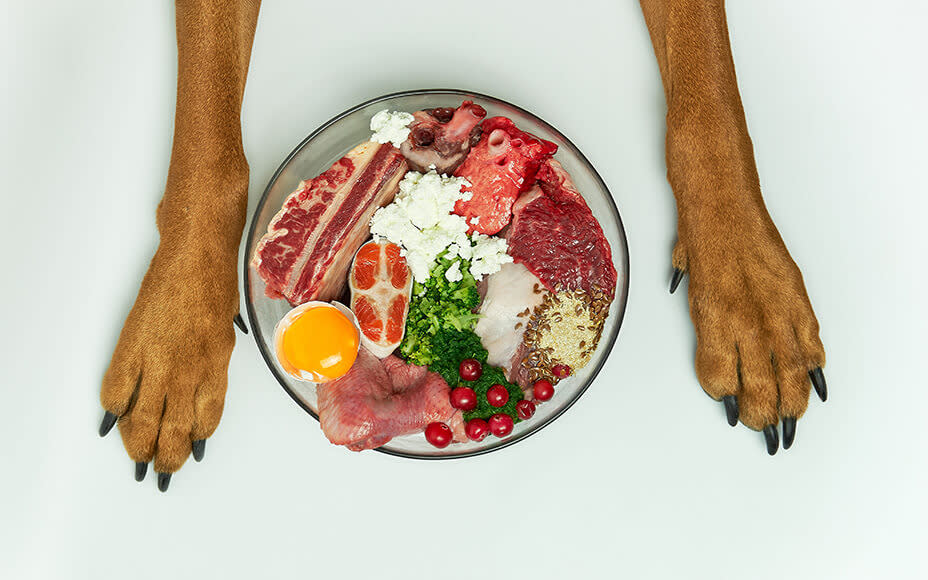
[TRANSLATION ERROR] Vor allem beim BARFen wird viel frisches Gemüse und Obst verfüttert. Dabei gilt es jedoch einiges zu beachten.
Are citrus fruits bad for dogs?
Just like for us humans, oranges are also real vitamin bombs for our four-legged friends. In addition to the well-known vitamin C, they are also rich in vitamin B12, vitamin B6, beta-carotene, as well as magnesium, calcium, and potassium.
However, as citrus fruits, they also contain comparatively high acidity. Depending on the size and body weight of your dog, you should not give him too much of this southern fruit to prevent possible digestive issues. If your dog is used to getting fresh fruit, you can feed up to one orange a day for a →large breed. →For smaller breeds, however, 1-2 pieces of orange can be completely sufficient. If your dog has eaten too much citrus fruit, it can lead to →vomiting or →diarrhea.
Which fruits are not good for dogs?
So you see: There are a few things to consider when feeding fresh ingredients. Fruit varieties like →apple or →banana are quite uncomplicated and are well tolerated by most furry friends. If you are unsure about feeding fresh ingredients, why not try our "BARF Complete"? The menu already contains everything your dog needs daily. So you don’t have to add any fruits or vegetables, oils, or a mineral mix, and you still feed fresh like with BARFing.
Für Einsteiger & Zeitsparer! Unsere Komplett-Menüs sind deine beste Wahl. Vollwertig & sofort im Napf!
But which fruit varieties should definitely not end up in your pet's bowl? Fortunately, most fruit varieties are edible for dogs. Often it’s the peel or seeds that can be toxic. However, the following should not be in your dog's bowl: Elderberries and rowan berries, as they are considered toxic to dogs. Also, →grapes are said to have a toxic effect, although this is not scientifically proven. There are dogs that show symptoms of poisoning from grapes, while some furry friends tolerate the fruit very well. We say: Better not to experiment, instead give your dog a fruit variety that he likes and knows or a handful of our [→delicious snacks](https://www.petsdeli.de/collections/fur-hunde-snacks)!