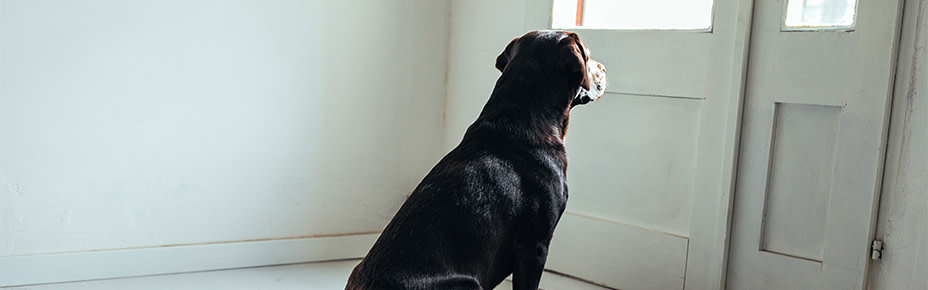
Help, my dog can't be left alone!
If your dog can't relax when left alone, then this not only severely restricts your daily life, it's also pure stress for your pet and for you as well. It's important that you recognize the signs of stress and don't just ignore the problem and hope that your dog will eventually get used to being left alone.
Signs of stress when leaving dogs alone
As soon as you grab your house keys, does your dog get restless and won't leave your side? When left home alone, does he bark or whine, pace around, seem restless or destroy things instead of sleeping calmly in his bed or on the sofa? It's not always obvious that your dog is stressed when left alone. However, many behaviors are quite clearly recognizable:
loud →barking, whining, squeaking
restless pacing, jumping up at the door, looking out the window
chewing / destroyingchewing / destroying objects
urinating in the →apartment, pooping
heavy panting and drooling
excessive →licking and chewing paws or scratching
exhausted, tired behavior, as soon as you get home
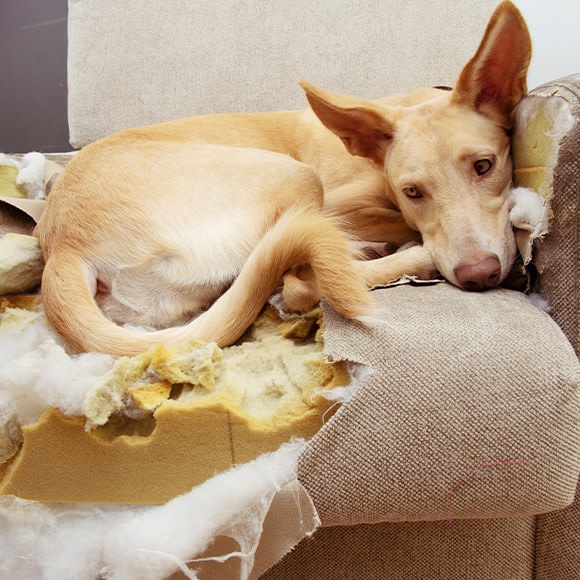
Stressed dog?
Read more now about causes & tips against stress in dogs
Dogs are pack animals, which is why many of them find it difficult to be left alone. If your four-legged friend shows clear signs of stress, then he is going through a tough time during your absence, which can also affect his health. The good news is: being alone can be trained. Even if your dog is no longer a puppy and is a bit older!

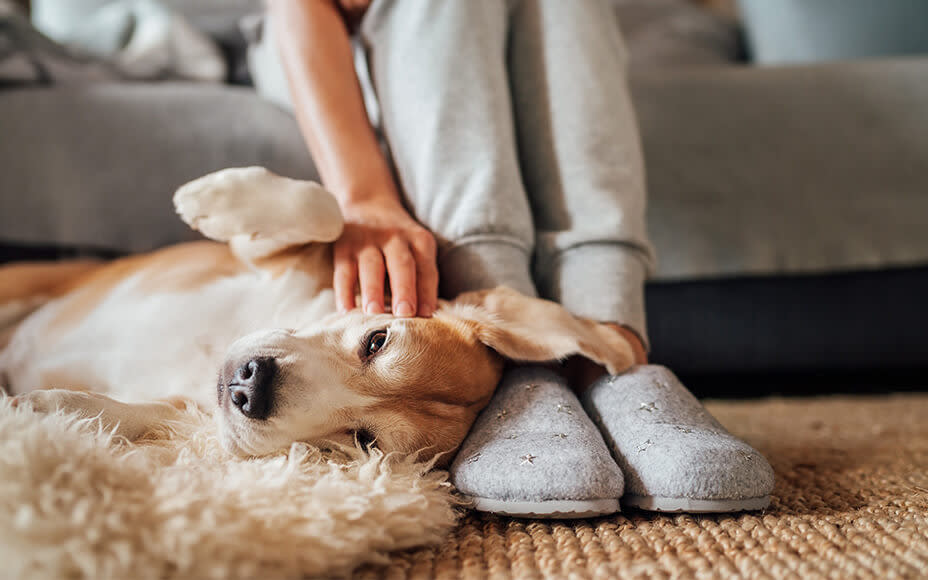
Many dogs would love to be with us around the clock. Unfortunately, that's not always possible, which is why getting them used to being alone is very important.
Why can't my dog be left alone?
Many owners surely ask themselves this question when their dog, despite all efforts, simply can't relax when left alone. To help your dog in the long term and to practice so he can stay alone calmly, it's important to first find the cause of the problem. It's very helpful to have experts come to your home to get a picture of the situation. Because, as with many training topics, leaving a dog alone is a very complex subject, which can be addressed with a wide variety of training approaches.
Dog trainers or behavioral therapists will come to your home and take a closer look at your dog's behavior. They can explain what the causes of the problem are and discuss possible training approaches with you, which are tailored specifically to you and your dog. If you don't make progress in training, have questions, or experience setbacks, they will support and guide you until you reach your goal!
With a bag of tasty treats, training becomes much easier. Even when leaving your dog alone, a long-lasting chew treat can help make the time without you sweeter for your dog.
Great rewards for hardworking dogs – our snacks
Possible causes
The causes of difficulties when leaving dogs alone can vary greatly. Below, we present 3 common reasons, but keep in mind that there are many other possible causes. It's also possible that there are several reasons at once.
Separation anxiety
As the name suggests, →separation anxiety is the fear of losing their caregivers. This already manifests itself through a physical or spatial separation, usually when the dog has to be left alone. The origin of this fear can be due to being separated from the mother too early, as is often the case with →rescued dogs, or if being left alone was not gradually introduced, but the puppy was left alone for too long too quickly.
Loss of control
Separation anxiety is often confused with loss of control. Both conditions show similar symptoms. With loss of control, the dog goes into a kind of panic and overwhelm as soon as his people are no longer there and he can no longer control them. Owners are often unaware that their dog is monitoring their every move and that the dog also has difficulties in everyday life letting go of control.
Lack of / insufficient stimulation
A walk in the park in the morning and evening and a bit of fetch—surely that's enough for your dog, right? Some dogs develop problems being left alone because they are not sufficiently stimulated for their breed needs. A French bulldog might be happy and content with two walks in the park two walks in the park happy and content, while a German shepherd needs a bit more activity—also for mental stimulation!
Especially working breeds are nowadays often kept as family pets. However, it's often forgotten that these breeds once had a job and therefore come with more energy and cleverness. If they are understimulated, they tend to develop bad habits like barking, scratching, destroying things, or even develop →aggressive behaviors like leash reactivity.
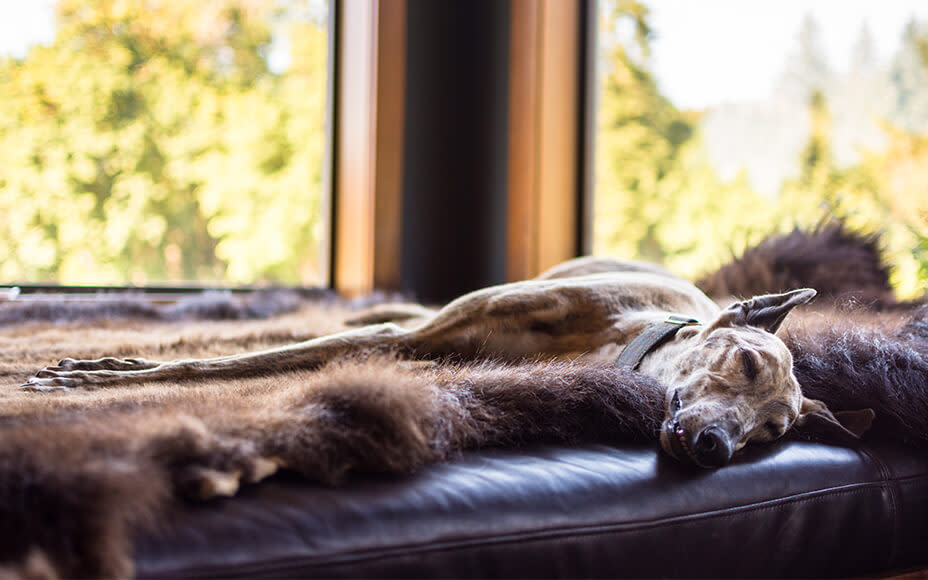
A dog relaxing in its bed and sleeping – that's the ideal way to picture leaving your dog alone. The good news: with the right approach, you can train it!
Possible solutions for helping your dog stay relaxed when alone
As already mentioned, training approaches for practicing being alone are very diverse and should always be tailored to the cause of the problem, that is, to your dog and to you, and be customized. That's why we recommend working on this topic together with experienced trainers.
Based on the causes mentioned above, here are 3 possible training approaches. Since dog training and education are very individual and practicing being alone should be built up in small steps, unfortunately we cannot provide a step-by-step guide.
For separation anxiety
If your dog suffers from separation anxiety, it's important to train very gently, with discipline and patience. Usually, you start with a spatial separation without actually leaving the apartment. Key triggers like picking up the house keys, putting on a jacket and shoes, or applying your favorite perfume should be incorporated more often into daily life. A designated resting spot and a routine for being left alone can also give your dog security and help him relax during your absence.
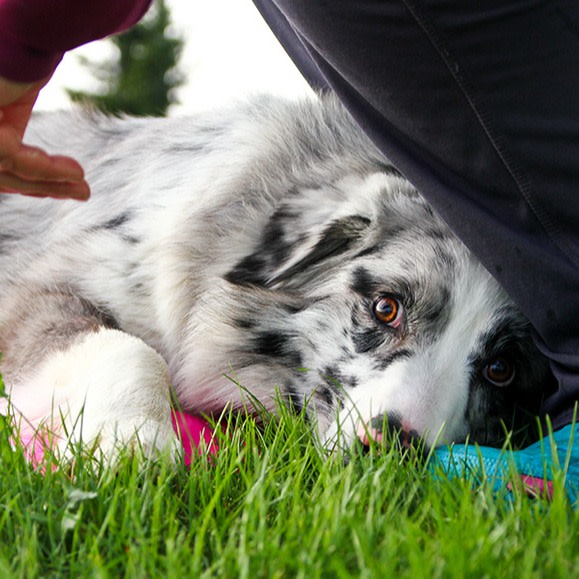
Anxious dog?
How to recognize anxiety and help your dog
For loss of control
The topic of control and letting go of control must definitely be considered holistically. The main thing here is to first clarify some basic principles in the human-dog relationship, before starting actual training for being left alone. Dogs that control their owners tend to constantly watch and follow them and are also more prone to behavioral issues during walks.
One option is to work with spatial boundaries and thus signal to your dog, "You're on break now, I'll handle things." A →designated resting place like a dog crate is helpful here. When walking you should make sure that the dog →walks well on the leash walks and doesn't make too many decisions on his own.
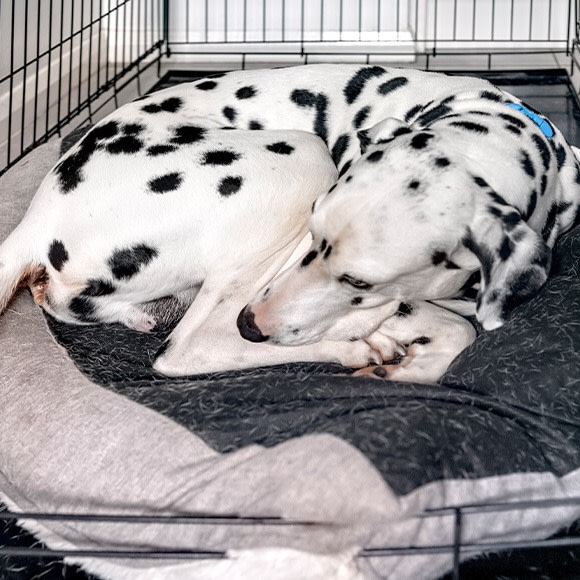
Helpful tip:
That's why a dog crate can help your dog relax when left alone.
If lacking / insufficient stimulation
If your dog isn't properly stimulated, you should take a closer look at the breed and consider what your dog enjoys. It's not about cycling with your dog for 3 hours until he collapses from exhaustion and therefore doesn't make a sound while you're away. Mental stimulation is the key here, as well as breed-appropriate activity.
Depending on preferences and breed, there are numerous different ways to stimulate your dog beyond a simple walk. Learn about agility, mantrailing, obedience, canicross, bikejöring, dummy work, luring etc., try out a few of these things and start a shared hobby with your dog. You don't have to join a club for every sport; often, "amateur" training in the garden or courtyard is enough to keep your dog stimulated. Of course, you can also work together with trainers.
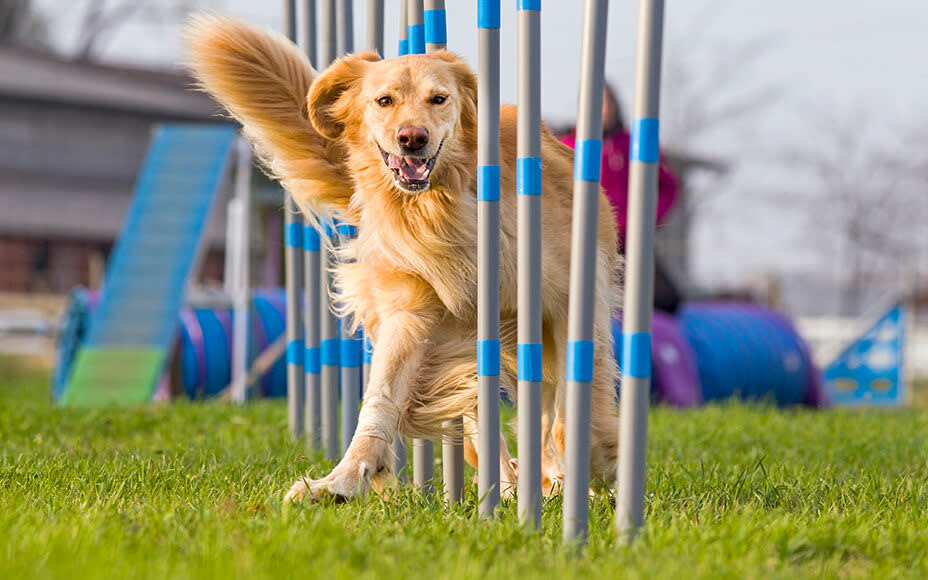
Consider whether your dog is getting enough activity for its breed and what activities you could both enjoy together.
When can I leave a puppy alone?
Start early—this also applies to your puppy. That's why you can →start right when your puppy moves in with your new companion and begin teaching him to be alone. Of course, this doesn't mean he can stay alone for an hour while you go shopping. But even small spatial separations help him stay calm later when you leave the apartment.
Depending on your puppy's temperament, a puppy gate can be helpful. This way you can set spatial boundaries for your dog without closing doors and at the same time make sure he doesn't follow you. Start with very small steps and first leave your dog alone in the living room while you make tea or start the washing machine. Gradually, you can increase the duration and close the door more and more.
Also for →puppy training it's a good idea to attend a →puppy school, especially if you notice difficulties or have questions.