
What is Cushing's Syndrome in Dogs?
Cushing's syndrome, also known as hyperadrenocorticism, is a hormonal disorder. It primarily occurs in older dogs and is more common in breeds such as Poodles, Dachshunds, various terrier breeds, and Boxers. The disease was discovered by neurosurgeon Harvey Cushing, hence the name.
In simple terms, the body in Cushing's syndrome produces an excessive amount of cortisol, a hormone you might know as the "stress hormone." Signs of the disease include behavioral abnormalities such as excessive thirst and hunger, as well as hair loss and a pot-bellied appearance.
Cause: How does my dog get Cushing's Syndrome?
In detail, the cause of Cushing's syndrome fundamentally lies in an increased production of glucocorticoids. These are part of the corticosteroids, a class of steroid hormones produced by the adrenal cortex. Essentially, there are three different forms of Cushing's syndrome in dogs:
1. Primary or adrenal Cushing's syndrome (AT): This involves a disorder in the adrenal cortex.
2. Secondary or PDH Cushing's syndrome: This involves a disorder in the pituitary gland, which regulates the body's hormone balance.
3. Iatrogenic Cushing's syndrome: This form arises from the excessive administration of corticosteroids. These are found in cortisone-containing medications and are used, for example, in the treatment of →allergies in dogs.

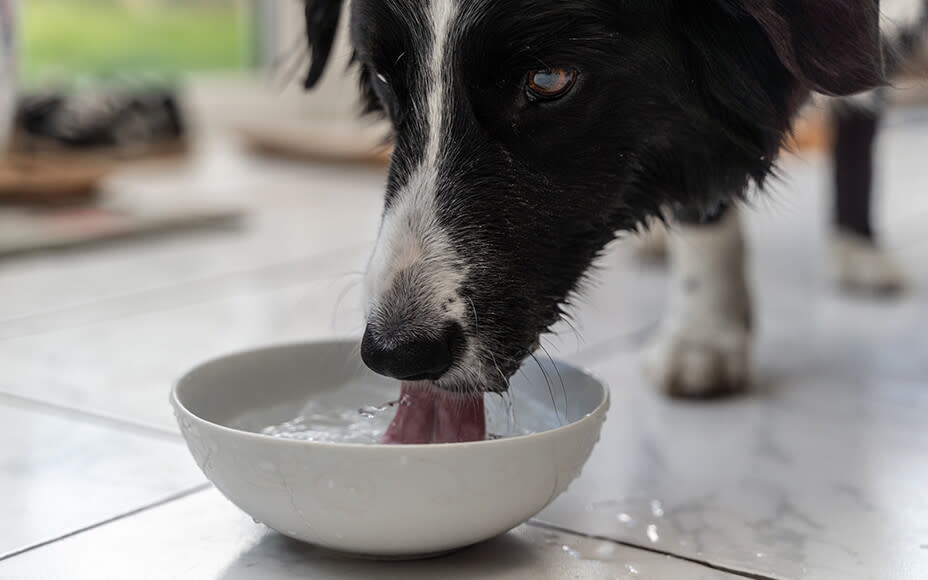
[TRANSLATION ERROR] Großer Durst, Haarausfall und ein dicker Kugelbauch können Hinweise aufs Cushing-Syndrom beim Hund sein.
Symptoms of Cushing's Syndrome in Dogs
Like many disease patterns, Cushing's syndrome also manifests differently in each dog. Common signs that something is wrong and perhaps Cushing's syndrome is behind it include:
- Excessive thirst
- Increased urination, sometimes uncontrollable
- Increased appetite or ravenous hunger
- Round, pot-bellied appearance
- Hair loss, especially on hind legs, tail region, back, head, and paws
- Lethargy or decreased activity, sluggishness
Often, Cushing's syndrome remains undetected for a long time, as the symptoms can also be →typical signs of aging and older dogs are more likely to be affected. However, if the disease remains untreated for a long time, it can lead to serious consequences and, in the worst case, be fatal. If you notice any of the above symptoms or other abnormalities in your dog, it is better to visit a veterinarian and have your dog checked out.
Diagnosis and Therapy for Cushing's Syndrome
To initiate the appropriate therapy, veterinarians need to determine what the cause of the disease is and which form of Cushing's syndrome it is.
Examinations
This involves conducting blood and urine tests as well as creating a chemistry profile for your dog. Some veterinarians also take an X-ray. If the initial results indicate Cushing's, further examinations are then performed to determine the form of the disease. This can include a so-called ACTH test (adrenocorticotropic hormone test). In this test, a substance is injected into the dog that stimulates the adrenal glands to produce cortisol. Based on the hormone increase in the body, it can then be determined whether your dog produces too much cortisol and may suffer from PDH Cushing's syndrome.
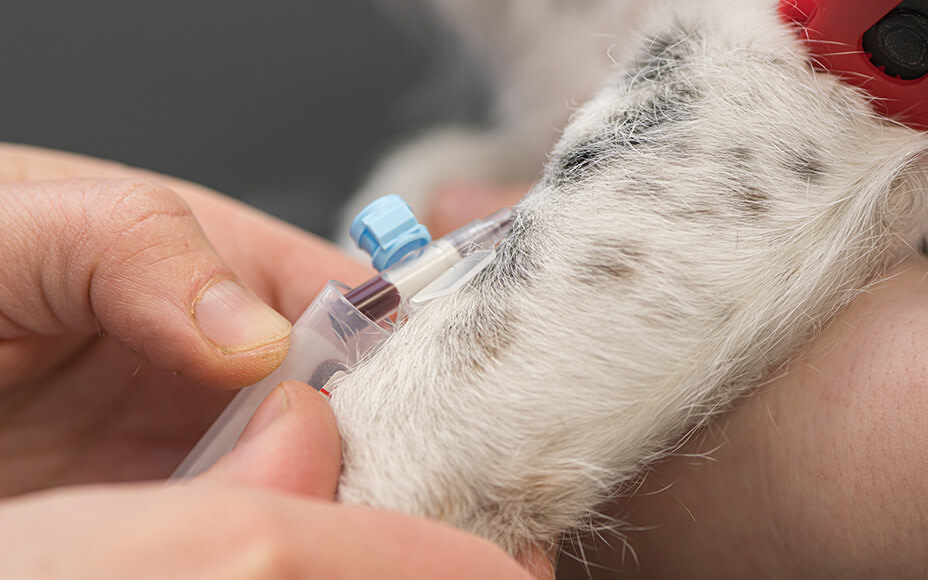
[TRANSLATION ERROR] Blutuntersuchungen und weitere Tests sind notwendig, um das Cushing-Syndrom eindeutig festzustellen.
Treatment of Cushing's Syndrome
In cases of adrenal disease, the surgical removal of a benign tumor can be curative. Unfortunately, Cushing's syndrome is not completely curable in most cases, but the symptoms can be medicated to alleviate, allowing your dog to live well despite the disease. Typically, treatment involves the active ingredient Trilostane. This inhibits cortisol production and can restore your pet's vitality. If there is also a malignant adrenal cortex tumor that has not yet metastasized, it will be surgically removed. Radiation therapy may also be part of the treatment.
A liver-friendly and easily digestible diet is often recommended. Our wet food "Vet" Liver & Kidney Fit, for example, relieves the liver and kidneys of your dog due to its reduced protein and phosphorus content.
Behandlungsbegleitend an eurer Seite: Pets Deli VET


How long does a dog with Cushing's Syndrome live?
The good news is: With daily medication, careful monitoring, and regular check-ups by veterinarians, your beloved pet can be well treated for many years. Although your dog will be permanently dependent on treatment, you will notice that the quality of life for your pet significantly improves again.