
Hip Dysplasia in Dogs: How to Help Your Four-Legged Friend
Hip joint dysplasia or simply hip dysplasia (HD) is primarily a topic concerning →large dog breeds like the German Shepherd. Significant limitations in movement and severe pain that can lead to immobility are just a fraction of what dogs with such a joint disease can expect. Learn here how to recognize hip dysplasia, how veterinarians treat it, and how you can support your dog.
Cause: How Does Hip Dysplasia Develop in Dogs and What Is It?
In almost all cases, dogs are born with hip dysplasia when it is genetically predisposed, and it is very rarely "acquired" through poor posture during their lifetime. A malformation in the hip joints leads to the hip not developing properly, being deformed, and thus not being able to allow normal movements.
Where in healthy dogs the femoral head lies in the joint socket and glides there during movements, it regularly slips out of the socket in cases of HD. The reason: Due to the malformation, both joint parts are anatomically mismatched. Consequently, the cartilage is also affected, which wears down quickly and severely due to friction, leading to further diseases, such as →osteoarthritis with joint wear.

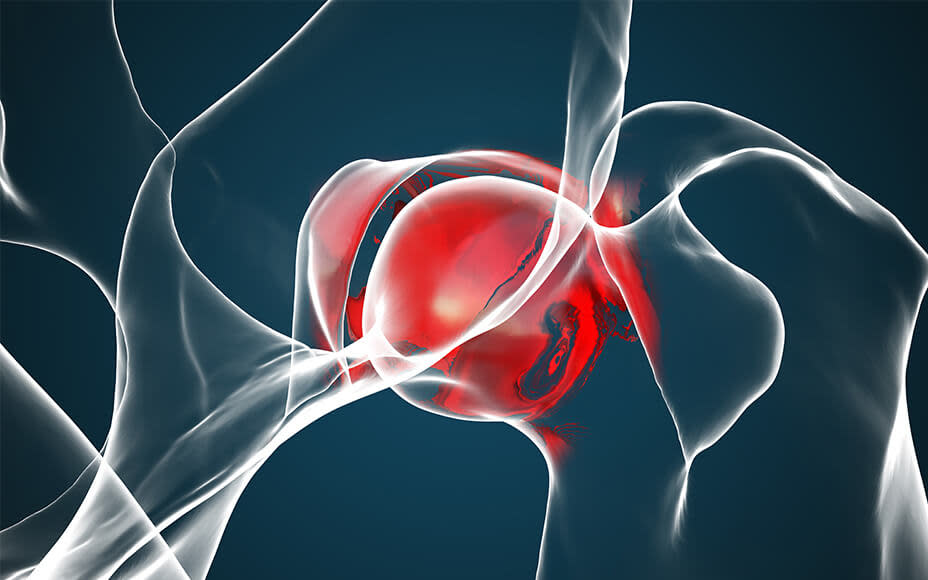
[TRANSLATION ERROR] Bei einer Hüftdysplasie springt der Gelenkkopf regelmäßig aus der Gelenkpfanne im Hüftgelenk. Die Folge sind starke Schmerzen, Schwellungen und Entzündungen.
Symptoms: How Can You Recognize Hip Dysplasia in Dogs?
How does hip dysplasia actually manifest? Hip dysplasia causes pain in dogs, which often initially manifests as refusal to move. It is important that you listen to your four-legged friend and consult your trusted veterinary practice if you notice the following signs:
- Strongly swinging gait: What may look like a practiced hip swing and could make some belly dancers envious is a serious symptom. In technical terms, this swing is also called LSÜ-Twist.
- Cracking of joints
- Tension
- Pain sensitivity when the back or hip area is touched
- Warm hip joints
- Avoidance of running, climbing stairs, jumping
- Sitting down, even in the middle of a walk
- Difficulty lying down and getting up
- Pain expressed through howling or whining
- Hopping: Your four-legged friend can no longer use its legs alternately in a brisk walk and hops with both hind legs simultaneously
- Muscle atrophy
Does My Dog Have Hip Dysplasia?
If you notice several symptoms in your dog, there is a possibility that your dog suffers from hip joint dysplasia. However, only your veterinarian can accurately determine this, as the disease literally lies beneath the skin and requires a comprehensive diagnosis.
Diagnosis of Hip Dysplasia
Upon arriving at the veterinary practice, your four-legged friend will first be thoroughly examined. Initially, veterinarians will palpate the body and stretch the hip joint using specific methods. This allows them to determine whether this causes pain in your dog and whether the joints are still flexible. Using the Ortolani test, the professional provokes the joint in such a way that the femoral head briefly jumps out of the socket intentionally.
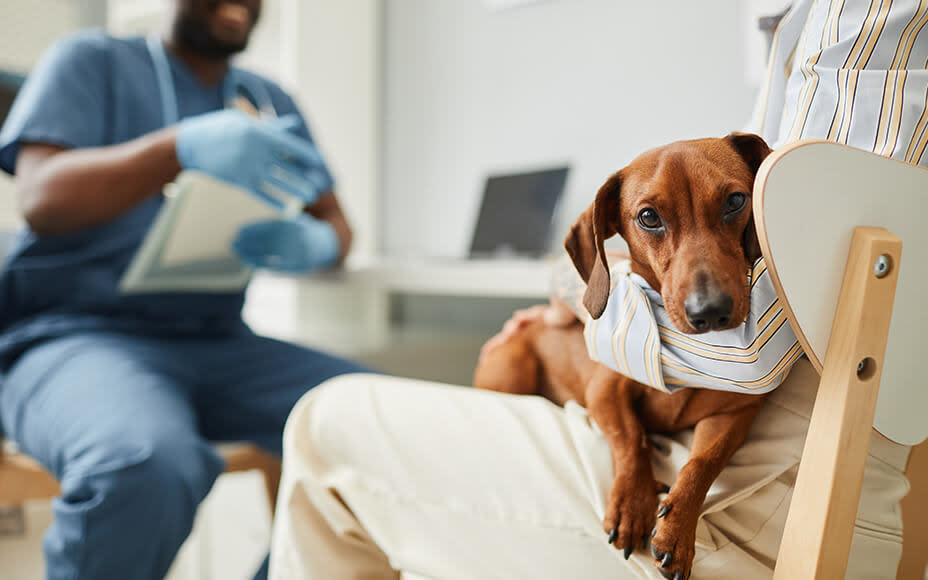
[TRANSLATION ERROR] Tiermediziner*innen wissen genau, wie sich eine Hüftdysplasie äußert und können oft schon auf den ersten oder zweiten Blick einschätzen, ob eine HD vorliegt.
Due to the distinctive gait that dogs show when affected, a trained eye can already determine through observation whether there is hip joint dysplasia present. The suspicion can then be confirmed through a radiographic examination. The faulty development of the hip joint becomes clearly visible.
How Is Hip Dysplasia Treated in Dogs?
Conservative Methods
Surgery is not always immediately necessary. Although, according to current knowledge, hip dysplasia - just like osteoarthritis - cannot be completely cured, there are some options to help your dog regain its usual quality of life.
If the HD is not too advanced, the veterinarian will prescribe physiotherapy for your dog. The goal is to maintain and build muscle and freedom of movement. Pain relievers and anti-inflammatories alleviate the pain and make it easier for your dog to walk. With the help of bandages or casts, the head of the joint can be fixed in the joint socket. The bandage remains for a while to prevent it from slipping out and to strengthen the muscles accordingly.
A Healthy Diet Is Essential
In the next step, the diet of your dog is usually adjusted. A →healthy diet should be your top priority, as it has a significant impact on your dog's health. You can support your four-legged friend with important minerals for joint and cartilage health.
With our →Pets Deli Wet Food VET Joint Fit, we are also by your side in tough times. Fresh salmon is rich in valuable omega-3 fatty acids, such as EPA, which can support both joint health and brain function. The green-lipped mussel, which is important for joint diseases, contains the glycosaminoglycans chondroitin and glucosamine, which can support cartilage metabolism and cartilage health.
Behandlungsbegleitend an eurer Seite: Pets Deli VET
Additionally, you can support your dog with a suitable oil, such as our →Omega Joint Oil or →special joint tabs. Supporting joints with oil and tabs, how does that work? Essential active ingredients like New Zealand green-lipped mussel, fish oil, MSM, and hyaluronic acid have been shown to promote joint metabolism.
When Is Hip Dysplasia Surgery Necessary for Dogs and What Does It Cost?
If the hip dysplasia is advanced and the genetic predisposition is so strong that your four-legged friend is constantly in pain and conservative methods do not yield the desired success, surgery is the best option for your dog. The goal of surgery is to reposition the constantly dislocating femoral head back into the socket and ensure that it remains there.
The spectrum of surgeries is diverse. Which one the veterinarian performs depends on the age, size, and weight of your dog as well as the extent of the disease. Options include:
- Artificial hip joint (THR)
- Gold implant
- Denervation
- Femoral osteotomy
- Triple pelvic osteotomy

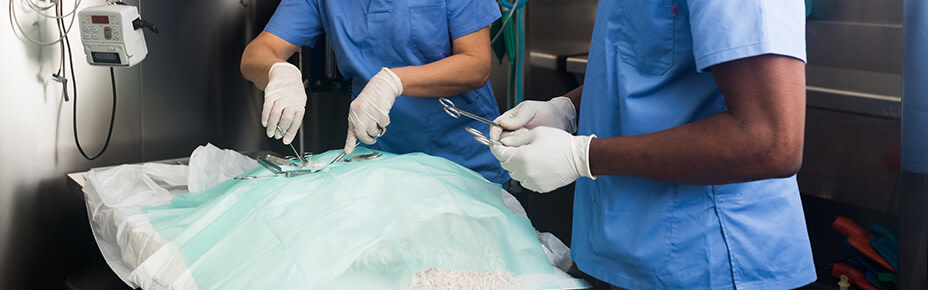
[TRANSLATION ERROR] Manchmal ist eine HD so weit fortgeschritten, dass mittels einer OP das Hüftgelenk ersetzt oder der Gelenkkopf in der Pfanne fixiert werden muss.
The costs of surgery depend on the necessary method. The artificial hip joint is the most expensive option here. Including anesthesia, overnight stay, and aftercare, this method exceeds the €5,000 mark. Methods like the triple pelvic osteotomy can be done for €1,200-1,500 per hip side. The range varies widely. If you want to avoid having to pay such sums, we recommend a dog health insurance - especially for →predisposed large dog breeds like German Shepherds, Bernese Mountain Dogs, Boxers, and Golden Retrievers.
What Is the Life Expectancy of Dogs with Hip Dysplasia and How Long Do They Live?
Are you worried that your four-legged friend suffers from HD and wondering what that means for your future together? The disease itself is not responsible for shortening your dog's life. However, if HD is not properly treated and your dog is not well managed with medication, it will experience pain due to wear and tear in old age. It is more about maintaining quality of life through the best possible treatment over the long term.
What Helps My Dog with Hip Dysplasia?
There is also a lot you can do yourself to help your dog. This includes ensuring that your dog with hip joint dysplasia does not jump. Movements like climbing stairs should ideally be off-limits for your dog. Important are targeted movements like during a normal walk and during physiotherapy. Anything that compresses and overloads the joints can worsen the symptoms.
Moist wraps and frozen gel packs can alleviate painful areas and reduce swelling when your dog's hip causes problems.
It is also important that your four-legged friend does not suffer from →overweight. To relieve the joints, it is essential to adjust the food and the →feeding recommendations so that your four-legged friend does not take in too much energy** that cannot be utilized due to restricted movement. If your dog is a bit overweight, you should initiate →weight loss measures in consultation with the veterinary practice.
Additionally, prevention is better than cure: If you →adopt a puppy, make sure to inform yourself well about →where to get it. Hobby breeding without permits and papers should be avoided, even if there are puppies available next door. Undetected hereditary diseases are passed on and sometimes only become visible after years. Reputable breeders must have the parent animals tested for HD and may only breed when they are fully healthy.