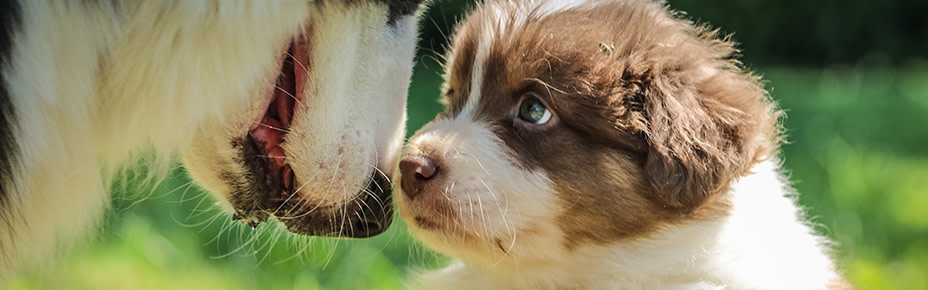
How to safely introduce your puppy to other dogs!
A little →puppy has moved in with you and now you’re wondering how best to introduce them to other dogs? Reactions to a young dog can vary. To make sure nothing goes wrong and neither the puppy nor the other dogs are overwhelmed, there are a few things you can keep in mind:
Safely introducing puppies to your own dog(s)
You already have one or more dogs and now they’re supposed to meet the new puppy? There are plenty of cute videos online about this, but let’s be clear: putting the puppy in a box and surprising your dog with it is not a good idea! Instead, you should pay attention to the following things:
Choose a neutral location for the introduction. Ideally, this should be near your house or apartment.
Depending on the temperament of the puppy and/or your other dog, additional safety with a leash and even a muzzle can be helpful. For the puppy, always use a harness instead of a collar.
Ideally, both dogs should be on a leash at first. Take a walk together and gradually bring the dogs closer together step by step until they can walk side by side.
If everything is relaxed, you can let the dogs off leash or switch to a long line and let them play or sniff around.
If there is a tense atmosphere, keep walking a bit further. Standing still can create additional tension.
If everything goes well, you can go into the garden together with the dogs or into the house together.

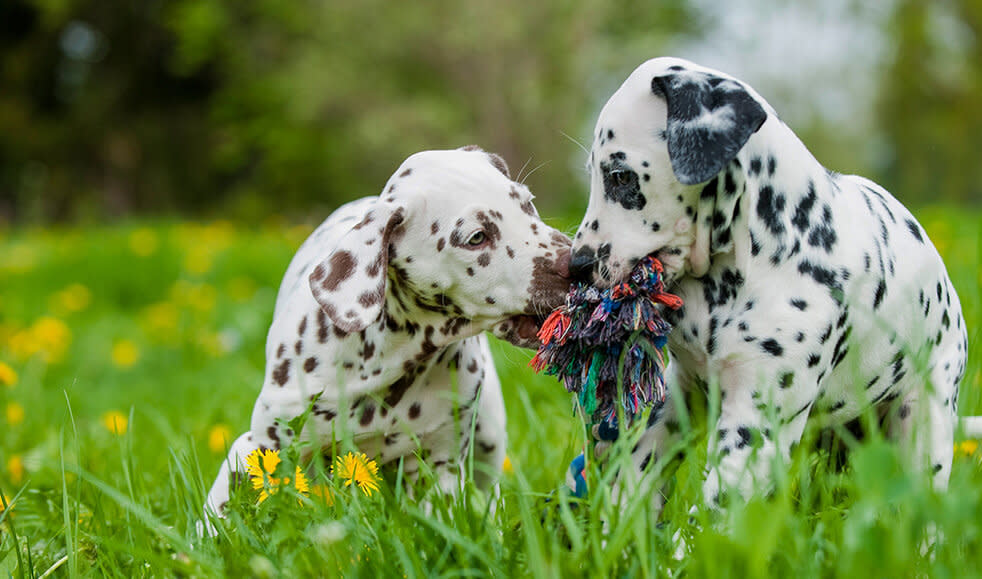
Try to act as relaxed and calm as possible. Even if you’re excited and want to encourage the dogs to play and become best friends right away—don’t talk at them. Some dogs need to warm up to each other a bit first. Other dogs may be more open. Others are more neutral.
Everything you need: Our starter kit for puppies
Introducing puppies to family or friends’ dogs
If you want to introduce your puppy to the dogs of your parents, siblings, or friends that’s a bit different than if your little one meets a strange dog on the street. Chances are the family dog already knows you and will be a bit surprised to see who you’re bringing along. An introduction in the home garden or house can be a bit overwhelming for the older dog. After all, everyone is excited, which can rub off on the dogs.
It’s best to play it safe and meet beforehand at a neutral location. Even the side street is enough. Here, both dogs can meet on neutral ground and get to know each other and sniff around calmly. If either dog is a bit unsure, follow the steps above in the article and take a walk together. This lightens the mood and gives both dogs a chance to keep the necessary distance from each other.
If the dogs are relaxed with each other, you can go into the garden or house. Again, try not to stand around staring at the dogs. This increases pressure and can create tension. Watch the dogs and above all, →keep an eye on the puppy, but otherwise act normal. Walk around, talk to each other and try not to talk at the dogs too much.

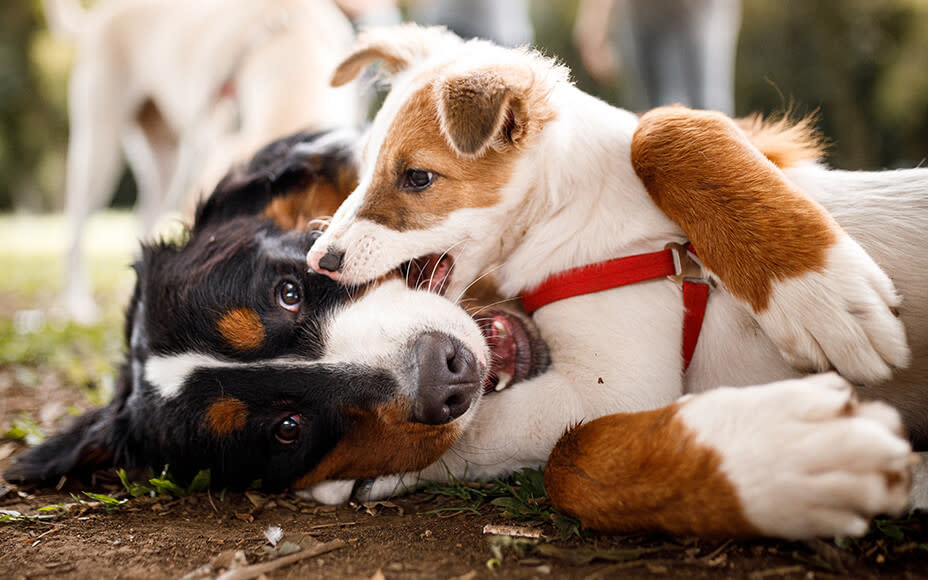
What if your own dog reacts aggressively to the puppy?
Your dog finds your puppy really annoying and would love to give them a piece of their mind? That can happen, which is why the introduction of the dogs should always be well thought out and secured. If your dog reacts like this to a strange dog or puppy, they have probably already shown some difficulties dealing with other dogs before. That means you can take some safety precautions in advance:
A well-fitting muzzle is nothing bad. On the contrary: thanks to it, you can let your dog interact safely with the puppy without anything happening.
Get a puppy gate. Especially in the beginning, this can help separate the dogs spatially and slowly get them used to each other. With a puppy gate, the dogs can see and smell each other. At the same time, the puppy can’t get into the older dog’s personal space and vice versa.
Give both dogs equal attention. Especially if the puppy suddenly gets lots of cuddles and affection and your other dog only hears “stop that” and “leave it,” that’s not great for your furry friend. By giving both dogs equal attention, your dog learns that they won’t be neglected even with a puppy around. This also applies to your visitors, by the way.
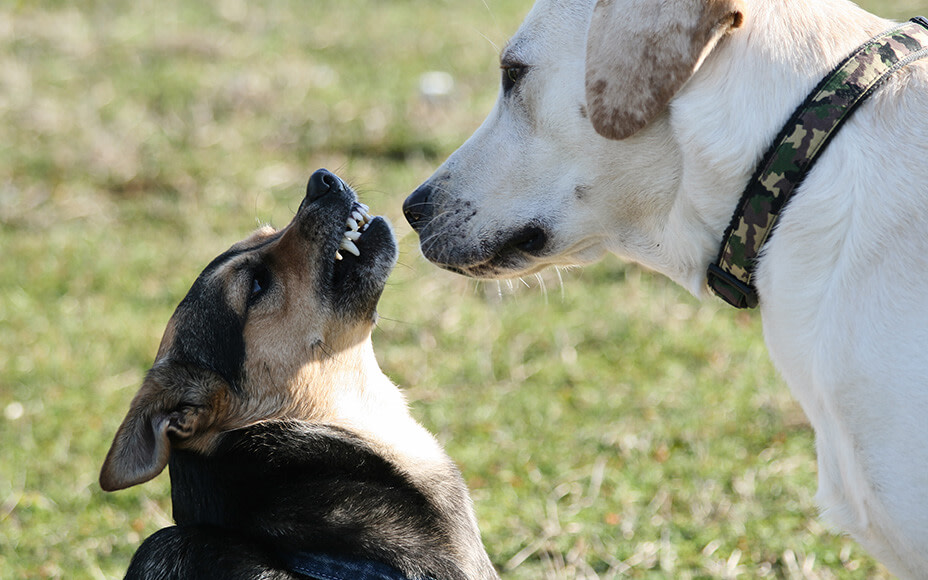
Puppy protection – how much does it really protect your puppy?
It’s often claimed that a puppy enjoys so-called →puppy protection and therefore won’t be corrected or even attacked by older dogs. That’s not entirely true. If a young dog has puppy protection at all, it’s only within their own “pack”. That means with dogs that are blood relatives and usually only until the 14th week of life. This behavior serves to protect and preserve the species.
When a puppy moves in with you at home, there is often a higher tolerance level among the resident dogs, which is mistakenly seen as “puppy protection.” But even here, disputes can arise among the dogs too. It’s not uncommon for older dogs to correct the puppies. Depending on how cheeky and confident your little one is, such a correction can sometimes be a bit more forceful.
If your puppy meets unknown dogs, they usually enjoy no puppy protection. Most older dogs recognize a puppy though and let them get away with things more often. But even here, you can expect corrections from older dogs if the puppy misbehaves or crosses boundaries. There are also dogs who can’t stand a puppy’s cheeky behavior and will immediately set them straight.