
The most important vaccinations in the first year
Already in the first weeks of life your puppy needs the protection of vaccinations. They protect him from dangerous diseases such as distemper, parvovirus, hepatitis, and rabies.
The vaccination schedule usually starts like this:

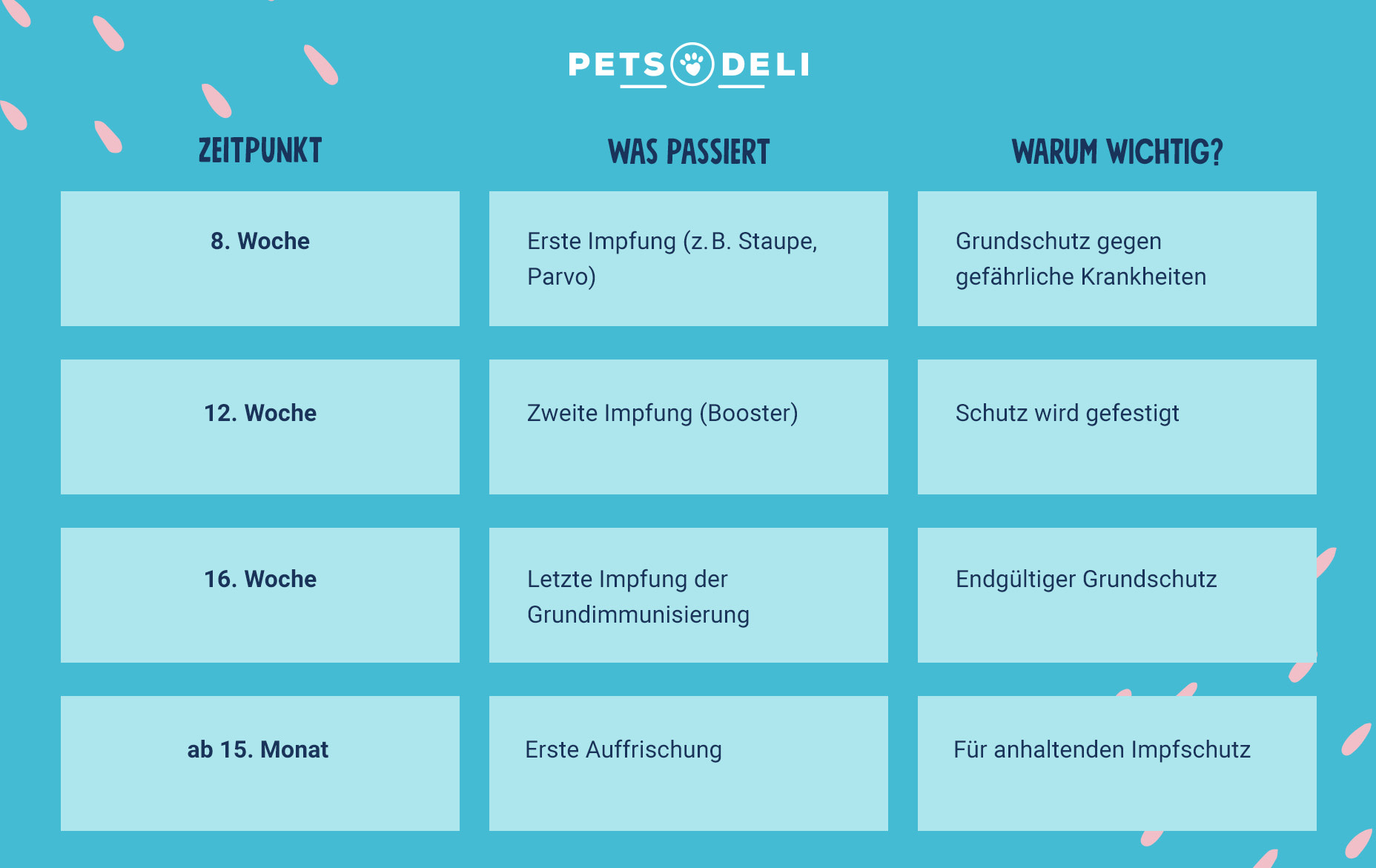
Vaccination schedule for puppies: When each vaccination is due – and why it is so important for your little one's health.
Important: Some vaccinations are mandatory (e.g. rabies), others depend on where you live and what you plan to do with your dog (e.g. traveling, lots of contact with other dogs). It's best to discuss this directly with your vet.
Deworming – the right rhythm
Worms (e.g. →roundworms, hookworms, →tapeworms) can really take a toll on your puppy – that's why regular deworming is so important! Protection should begin as soon as your puppy moves into their new home, and you should continue regular deworming.
In the first 6 weeks of life:
Puppies and the mother should each be dewormed 3 times at 14-day intervals.
From the 7th week of life up to 6 months:
Animals that are weaned from their mother's milk should be dewormed every 4 to 6 weeks.
From 6 months to 1 year:
Deworming at the ages of 9 and 12 months.
Whether roundworms, hookworms, or tapeworms: Most products cover all common types of worms. What matters is that you give your puppy the treatment regularly – even if you don't see anything.
If you're unsure, it's best to ask your vet (female) or your vet (male). They will help you find the right product and the best schedule for your little adventurer.
Chipping and neutering – important decisions
Besides vaccinations and deworming, there are a few other topics that are important for the protection of your puppy.
From the 12th week it's time to consider →chipping: A small chip under the skin stores an individual number. This means your dog can be clearly identified if he ever gets lost.
From the 6th month many people also ask about →neutering or →spaying. When the right time is depends on many factors: breed, size and character of your dog all play a role. For large breeds, many vets recommend waiting until after the first year to avoid interfering with healthy development. For female dogs it is often recommended to neuter between the first and second heat, as this can slightly reduce the risk of breast cancer (mammary carcinoma). So it's worth discussing this topic individually with your vet.
They will help you find the right time – always with your pet's health and well-being in mind.

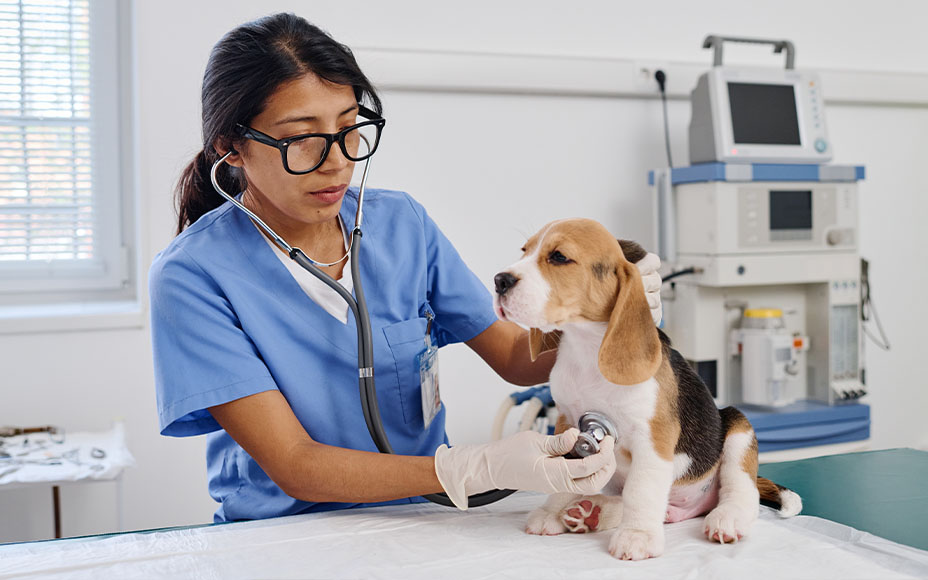
Growing up healthy: Veterinarians help you make the right important decisions for your puppy.
How to start life healthy
Now you have everything important in view: vaccinations, deworming, chipping and the question of neutering. So that your puppy grows up healthy and happy, →regular check-ups with your vet are also important. Especially in the first year, it's worth keeping an eye on weight, coat, and overall development.
The right food also plays a big role: puppy food provides everything your little rascal needs to grow – and ensures that he feels completely comfortable. Of course, this also includes paying attention to good hygiene: clean bowls, fresh water and a cozy sleeping spot make a big difference.
This is how you make sure your puppy starts the adventure of life strong and healthy – and that you enjoy many wonderful years together!