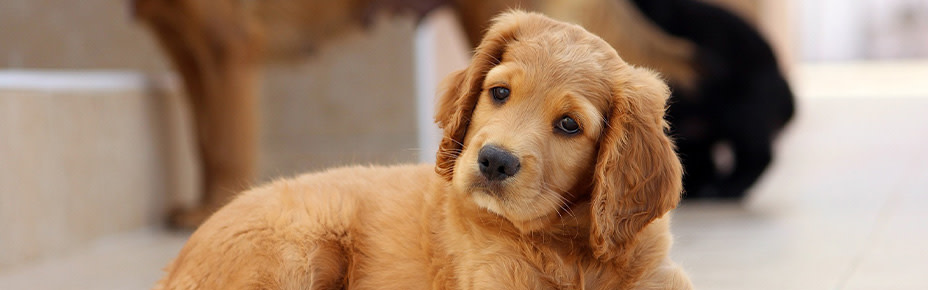
Why do puppies vomit?
Our little four-legged friends curiously explore the world. This includes putting all sorts of things in their mouths, licking stones and grass, and sampling various pieces of earth. It's no wonder that sometimes something can upset their stomachs. In such cases, vomiting is a protective mechanism to get rid of things that don't belong in a dog's belly. Nevertheless, vomiting in puppies is always a warning signal and should be carefully observed. Perhaps there's something else going on?
Vomiting with diarrhea and other symptoms
If vomiting is accompanied by →diarrhea and other symptoms, such as loss of appetite or lethargy, you should take your puppy to the veterinarian. Puppy stomachs are quite sensitive, and especially with diarrhea, it can quickly happen that puppies become dehydrated. Veterinarians will examine your furry friend and can then tell you exactly what the issue is and initiate treatment.

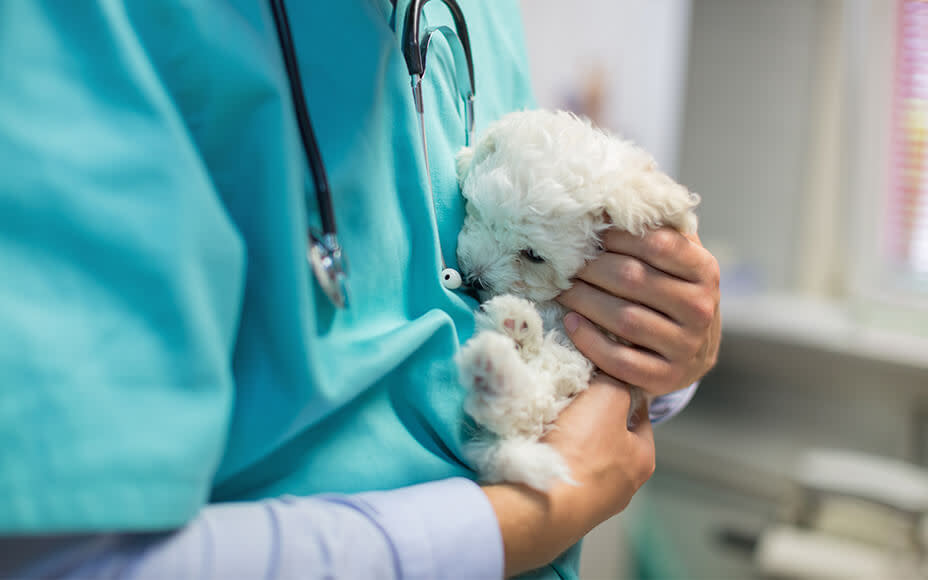
[TRANSLATION ERROR] Bei Erbrechen mit Durchfall solltest du sicherheitshalber tierärztlichen Rat aufsuchen, da die Kleinen ein sensibles Immunsystem haben und schnell dehydrieren können.
Possible causes of vomiting in puppies
Puppy eats something wrong
If your →dog vomits once but otherwise seems healthy and fit, it may be that he has eaten something wrong. Puppies especially like to lick and nibble on all sorts of things and can therefore sometimes ingest something inappropriate, such as clumps of dirt, tissues, →a lot of grass, or →feces from other animals. Since their stomach is still quite sensitive, they can quickly vomit. If the vomiting is limited to 1-2 times and your puppy is otherwise doing well, it may just be that he ingested something inappropriate. However, if the vomiting does not improve or gets worse, you should seek veterinary advice.
Caution! If your puppy's condition deteriorates drastically, you should quickly go to a veterinary clinic. Perhaps your puppy has eaten something toxic. In such emergencies, quick action is required! Even if you're unsure, you can always call veterinarians for advice.
Puppy eats too quickly
If your little darling is a real food vacuum and inhales his food, it can sometimes be just as quickly outside again. If your puppy gulps down his food, it's up to you to train him out of it. You should avoid giving large amounts of food at once and make it clear to your dog that relaxed and slow eating is desired. You can do this by ensuring that your puppy is calm and relaxed before eating and perhaps even feeding him by hand. An anti-gulp bowl can also be helpful.
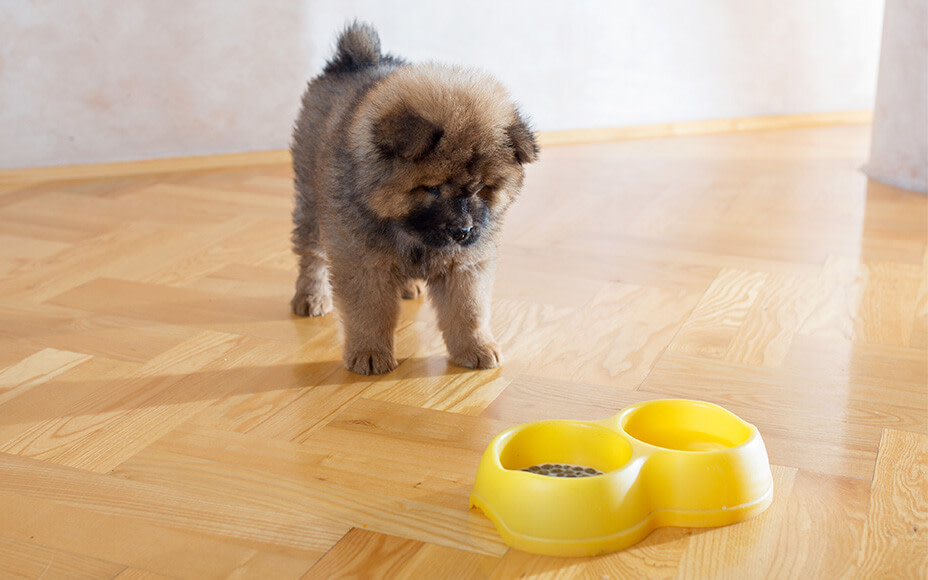
[TRANSLATION ERROR] Schlingt dein Welpe und erbricht danach wieder sein Futter? Dann solltest du trainieren, dass dein Hund entspannter wird beim Thema Futter und üben, dass er langsamer frisst.
Too much stress or excitement
Also, with →stress or a lot of excitement, for example when he has been playing with another dog, puppies can sometimes vomit. This is not a major issue at first. However, prolonged stress should be avoided, which is why you should not forget the rest training alongside all the wild play sessions, so that your little →puppy gets enough sleep.
Too rapid food change
A possible cause can be switching to a new type of food. Puppies should only receive →special puppy food. If you want to change the food, pay attention to a [gentle transition](/magazin/hunde/hunde-ernaehrung/umfutterung-von-hunden) and gradually acclimate your dog to the new food, otherwise, it can quickly lead to vomiting and diarrhea in puppies.
You can ensure a healthy food that optimally supports the rapid growth of your furry friend and provides enough energy for exploring and discovering with our special puppy food for dogs from 2-12 months. Honest, high-quality food with a lot of meat, healthy fruits and vegetables, rich oils, and fresh herbs, tailored to the needs of a puppy and for healthy growth.
Für die Kleinen das Leckerste - unser Welpenfutter


Intestinal parasites in puppies
Another common cause of diarrhea and vomiting in puppies are intestinal parasites (→worms), which they can acquire even in the womb. These parasites damage the mucous membrane of the gastrointestinal tract, leading to vomiting, as well as diarrhea, →flatulence, and other digestive disorders. You can also recognize a worm infestation in puppies by an enlarged puppy belly**.
Viral or bacterial infections
In a viral infection, diarrhea is usually one of the main symptoms, which can also accompany vomiting. Possible viral diseases in puppies include herpesvirus infections, distemper, and parvovirus.
But bacterial infections in puppies can also occur and are especially life-threatening in the first 10 days of life. The infection can occur during birth or afterward through the mother's milk or germs from the environment. These usually involve E. coli, staphylococci, or streptococci. Here too, diarrhea and vomiting are common symptoms.
Gastrointestinal obstruction or gastric torsion
In a →intestinal obstruction, the intestine of your dog is blocked, causing only part of the ingested food or, in the worst case, nothing at all to pass through the intestine. In addition to vomiting, other symptoms include unsuccessful attempts to defecate and abdominal pain. A gastrointestinal obstruction must be treated promptly by a veterinarian!
In a gastric torsion, the dog's stomach twists around its longitudinal axis, cutting off the stomach entrance and exit. Increasing restlessness, excessive salivation, and repeated vomiting are early signs. This is a veterinary emergency, so you should seek a veterinary clinic with your puppy as soon as possible!

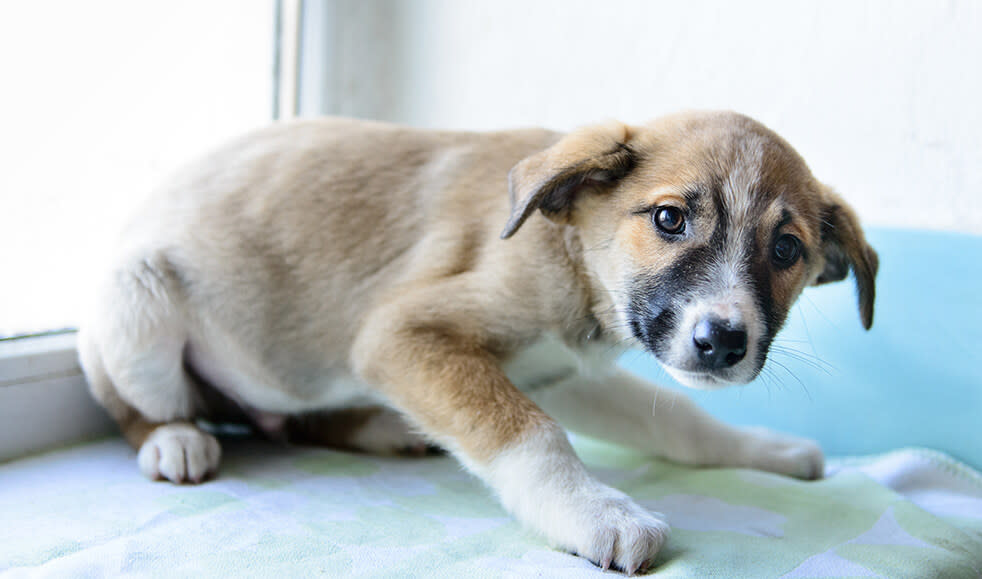
[TRANSLATION ERROR] Erbrechen mit anderen Symptomen wie Abgeschlagenheit, Durchfall, starkem Hecheln oder Speicheln sind Warnsignale und sollten ernstgenommen werden!
Puppy vomits in the car
If your puppy always vomits while driving, it is a sign that he is feeling sick. This behavior can resolve with the development of your four-legged friend, as often the reason is the balance center in your puppy's inner ear, which is not fully developed yet.
Just like in humans, there are also dogs that feel sick while driving and therefore struggle with it throughout their lives. In such cases, you can only experiment to see how driving in the car is most comfortable for your four-legged friend. Some dogs find it helpful to look out the window during the ride, while others prefer to be as isolated as possible in a →dog crate.
Treatment of vomiting in dogs
Depending on how often your dog vomits and whether other symptoms occur, you should take him to the veterinarian. There, your little four-legged friend will be examined and a therapy will be initiated depending on the cause of the vomiting.
In the case of a parasite infestation or a viral or bacterial infection, certain medications are usually necessary. These are often administered in the form of tablets, and your puppy should soon feel better. In the case of more severe infections, it may also be that your puppy needs to be treated intravenously and stay for a few days for observation in the clinic. Here, your beloved pet is in the best hands and can be monitored around the clock to act quickly in emergencies.
Vomiting usually takes quite a toll on the stomach, which is why a few days of a bland diet are often advisable. Depending on what the treating veterinarians recommend, you can give your puppy soft-boiled rice with some cooked carrots and cooked chicken breast for a few days. You can also find everything that is good for a sensitive puppy belly in our [wet food "Vet" Stomach & Intestine Fit](/products/nassfutter-vet-magen-darm-fit-fur-hunde) with chicken, cottage cheese, and rice.
Behandlungsbegleitend an eurer Seite: Pets Deli VET


Special puppy food has a higher protein content and more minerals for the growth of your little four-legged friend. Therefore, make sure not to give your puppy the bland diet for more than a week at a time and then feed him according to his needs. If symptoms do not improve, contact your veterinarian again.
Home remedies for vomiting in puppies
If your puppy is vomiting but otherwise seems healthy and fit, you should first let him go without food for a few hours. After that, you can try to give him some bland food, but divide it into several small portions. Also, make sure that your puppy drinks enough, as young four-legged friends dehydrate faster than adult dogs.
As you have read, the causes can range from harmless grass eating to life-threatening viral infections. You know your pet best. Especially if other symptoms such as diarrhea, fever, reduced general well-being, or weakness occur alongside vomiting, or if there is blood in the vomit, you should seek veterinary advice. Even if you are unsure, it is better to call once too often than once too little.