How much should your cat weigh?
The weight of cats can vary depending on gender, breed, and age. On average, a normal cat weight is about 3.5 to 5.5 kg. However, there are also breeds like the Maine Coon for example, that can weigh up to 10 kilos and for which this is completely normal. Ideally, you should look into your cat's breed and refer to the breed-specific weight. If you're unsure, just ask a veterinarian.
How to tell if your cat is overweight: 3 steps
If you're not sure what breed your cat is and can't ask a vet, there are a few tests you can do with your cat. Whether your cat is overweight or in top shape can be checked in 3 steps:
You can no longer feel the ribs: When feeling your cat, you should be able to easily feel the ribs. If they are very prominent and also visible, your cat is too thin. If they are surrounded by a thick layer of fat, your cat is possibly overweight.
A waistline is not visible: When you look at your cat from above, the figure should resemble an hourglass. This means the waist should be the narrowest part of the body, though not too narrow. If the hip bones are visible, your cat is too slim. If no waistline at all can be seen, your cat probably has too much weight.
Belly swings back and forth: For many cats, the belly swings back and forth when walking. We almost see this as normal, but actually it's a sign that your cat is overweight. Your cat's belly should not stick out too much at the sides when viewed from above.

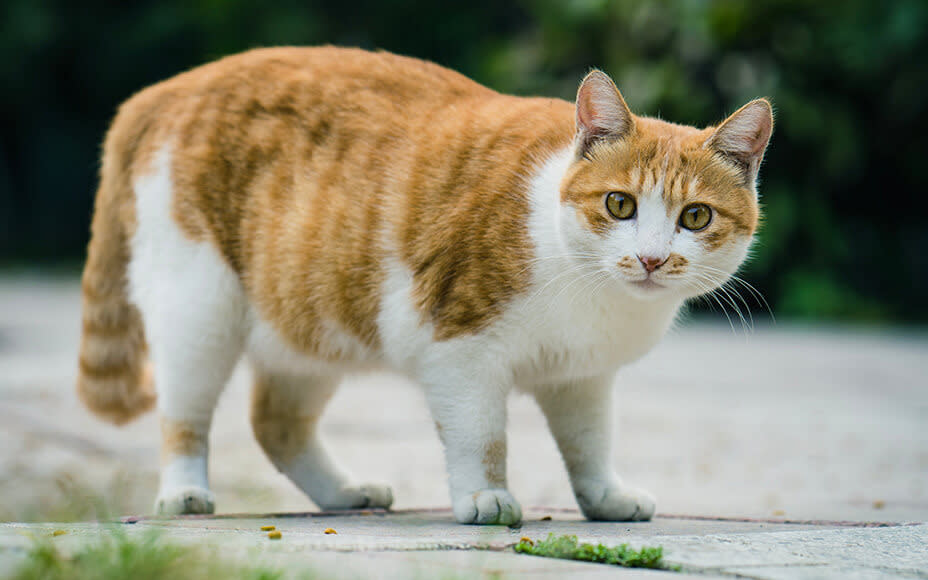
If your cat is not pregnant but her belly is clearly visible, this could be a sign of overweight.
Is your cat too thin?
But even if your cat weighs too little, that's not good. Being underweight in cats can be caused by various reasons such as during →heat, stress, dental problems, or parasites. If you notice your cat suddenly losing weight, you should consult a veterinarian. Sometimes it's just a phase, but it should never last long.
You can recognize underweight in your cat by the following signs:
When petting, you can strongly feel the ribs and sometimes the spine.
The waist is very visible or very pronounced.
The abdominal wall is tightened and has little to no belly fat.
Your cat isn't eating and is losing weight because of it? Don't worry! Take a look at our →article about food refusal in cats and find out what could be causing it.

Outdoor cats are more active and therefore usually slimmer.
Good food & enough exercise for optimal weight
If your cat is too thin or too fat, this can have health consequences. Achieving and maintaining the ideal weight for your pet is no problem with the right food, the right →amount of food and enough exercise.
A →healthy and species-appropriate diet for a cat consists of food with high-quality ingredients and without unnecessary additives like grains, sugar, or flavorings. But it should not only be healthy, it should also taste great too. For cats with special needs, such as being overweight, we offer a specially tailored solution: Our →food for overweight cats helps your darling stay fit and still enjoy their bowl. Pets Deli wet food, dry food or BARF is packed with good ingredients and brings joy to your cat's bowl!
Extra meaty, grain- & sugar-free, and suitable for allergy sufferers
Besides food, exercise also plays an important role. Especially many indoor cats tend to be overweight. You're at work all day and your kitty is therefore alone a lot and sleeps? In the evening, she gets spoiled with a few treats and those extra pounds are inevitable. Instead of just stuffing her with cookies, →spend a little time with her! Teach her some →cool tricks, buy her some exciting cat toys or play some food searching games with her. This is not only good for her figure, but it also strengthens the bond between you!