Ear Mites in Cats: What Are They and How Are They Treated?
Mites are often encountered in our daily lives - even when we cannot see the tiny parasites. Unlike →ticks or fleas, these little creatures sneak in unnoticed, and often you only see them when they appear in large numbers. Due to the optimal, moist climate in the ear of cats, mites spread more frequently and are found as so-called ear mites. This is not only unpleasant but can also pose a danger to the →health of your cat. Here you will learn how to recognize ear mites in your cat, how to get rid of them, and what can be done in terms of prevention.
Cause: Where Do Ear Mites Come From?
Ear mites feed on skin cells and cellular components in the ear. The tiny arachnids cling to the skin. By laying eggs on the skin in the cat's ear, a few mites can quickly turn into a whole horde, leading to itching in the ear canal for cats.
Cats can get infected wherever there are contacts. Whether through humans, dogs, or objects - infection occurs in various ways. Although free-roaming cats have a higher likelihood of infection due to more contacts, indoor cats can also be affected.
Symptoms: How to Recognize Ear Mites in Your Cat
If your cat's ear is infested with mites, they cause an ear scab, technically known as Otitis externa parasitaria. The consequence and thus the main symptom of ear mites is severe itching and scratching at the ear. Additionally, cats suffering from ear mites may show the following symptoms:
- Dandruff on the skin
- Deposits in the ear flap
- Red, inflamed spots
- Hair loss
- Crust formation
- Bacterial infections from sore spots
- Inflammation of the middle and inner ear, meningitis (rare)

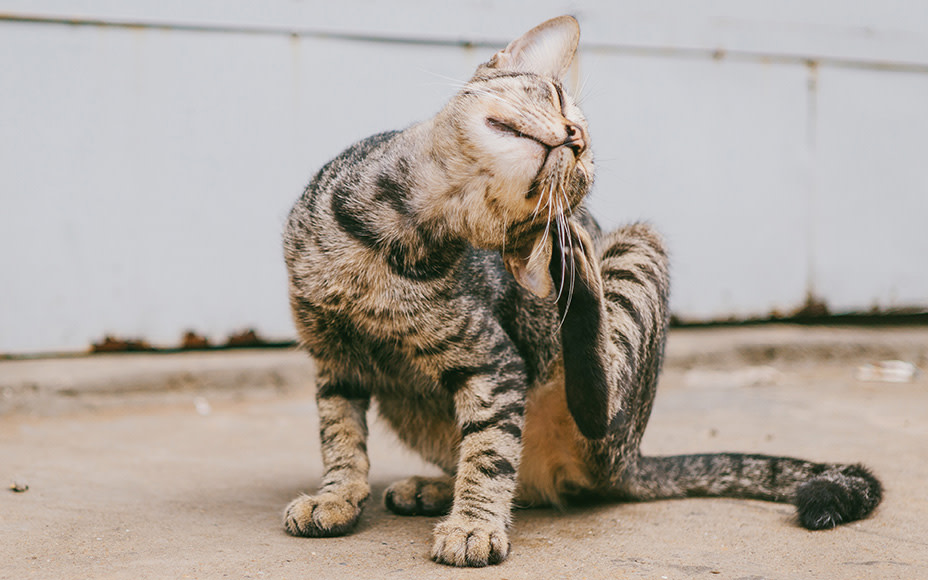
[TRANSLATION ERROR] Der starke Juckreiz am und im Ohr ist das häufigste Anzeichen für Ohrmilben bei Katzen.
Are Ear Mites Dangerous for Cats?
Dangerous ear mites are generally not harmful to cats - but they are certainly unpleasant. Only in exceptional cases do inflammations occur that can spread to the middle and inner ear. However, with timely treatment, these inflammations rarely occur.
Diagnosis: How Are Ear Mites Diagnosed in Cats?
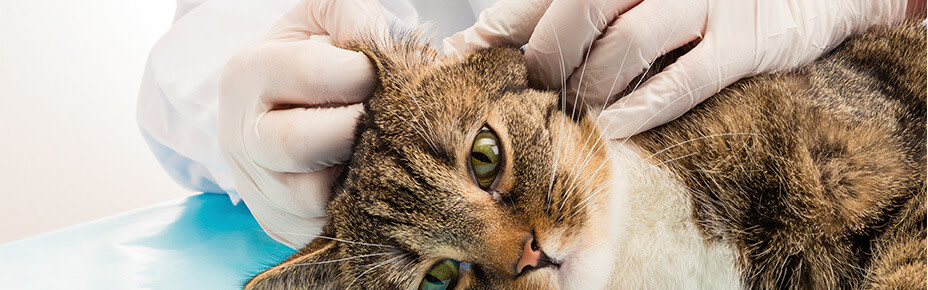
If your cat is excessively scratching its ears and the surrounding area, you should seek veterinary advice. With the naked eye, you cannot recognize the tiny parasites similar to →giardia, and at the veterinary practice, the ear of your cat can be examined with an otoscope. The magnifying lens combined with very bright light makes ear mites easily visible and can be professionally confirmed. If a typically dark deposit has already formed, a small swab will be taken for analysis. After a microscopic examination, it can then be precisely determined whether the itching in your cat is caused by ear mites.
After an intensive examination, your furry friend has earned a treat. Brave cat, delicious snack! With our snacks at Pets Deli, you not only provide your four-legged friend with the highest culinary delights but also reward them in a healthy way.


Therapy: How Your Cat Will Get Rid of Ear Mites
Once the diagnosis is made, treatment by veterinarians is the next step. The therapy for ear mites in cats is not very complex, and with the right approach, your cat will notice a significant improvement in symptoms. With the help of special ear ointments or drops, ear mites are usually fought off quickly.
To do this, you will need to massage the prescribed medications several times a day into your cat's ear flap - this is important because shaking and scratching will cause them to try to remove the liquids. However, with precise application, sufficient active ingredient remains in the ear. Depending on the severity of the mite infestation, the drops or ointments are administered for 2-3 weeks to ensure mites in all stages are eliminated.
Since the parasites also like to cling to brushes or resting places, a hot and thorough cleaning of potentially contaminated surfaces is recommended.
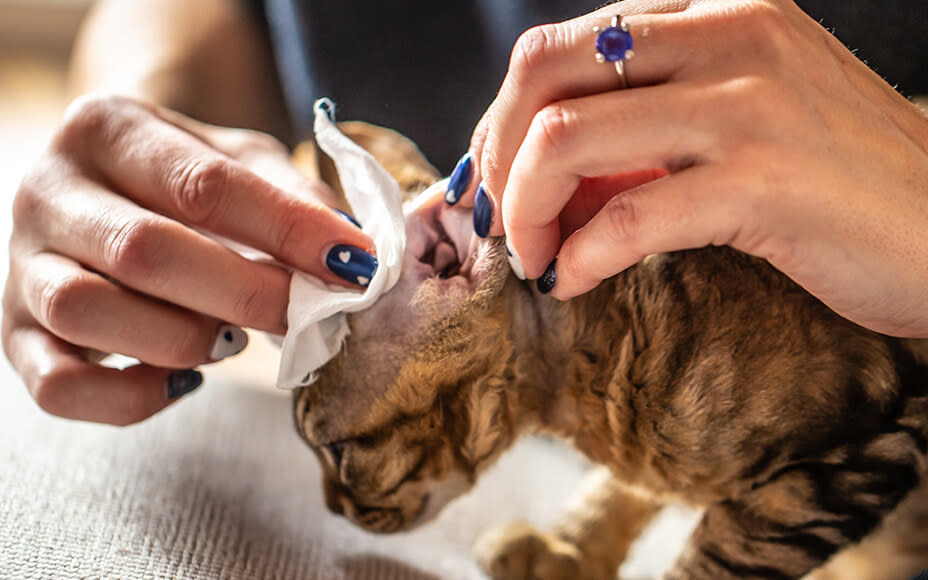
[TRANSLATION ERROR] Neben der Reinigung der Ohren werden Salben oder Tropfen verabreicht, um die Ohrmilben abzutöten und den Juckreiz zu lindern.
Preventing Ear Mites in Cats
To prevent your indoor cat from ever experiencing severely itchy ears, there are several measures you can take to prevent ear mites. Similar to prevention against ticks and fleas, spot-on preparations or collars are helpful in keeping the parasites away. Typically, these are combination products that work against fleas, ticks, and mites. Regular grooming of fur, ears & co. as well as cleaning of bowls, sleeping places, and brushes is also important, as mites thrive in moist environments with high amounts of organic particles. Normal mites can also be stirred up in household dust and may trigger →sneezing in cats.
Diagnosis of Allergy? Not all itching is due to mites or other parasites. If the examination reveals that your cat is allergic to certain food components, a diet with hypoallergenic meat varieties is recommended. Our →wet food Sensitiv Pure Meat in the kangaroo variety is highly compatible, incredibly tasty, and a perfect meal for cats with food allergies.