What you can do if your senior cat keeps losing weight
The first gray hairs adorn the coat of your cat, her once agile leaps aren't as effortless as before, and she's already missing a tooth or two. When cats become seniors, there are some signs of aging, which, just like for us humans, are completely normal and simply part of life. But if your kitty is losing weight, you might be worried and want to know why this is happening and how you can help her. We’ll provide you with helpful tips so your four-legged senior can continue to enjoy her nine lives even in her golden years.
When is a cat considered old?
What actually marks the starting point for aging in cats? Does the coat have to be gray, or is it enough if a certain age limit has been reached? Just like with humans, the aging process varies quite a bit. Poor nutrition, →severe overweight and other factors can shorten the lifespan of cats so that some cats show signs of old age even when they’re still young.
Generally, a cat is considered to be aging from 9 years old onwards. Not every feline is immediately less mobile at this age—some cats are still doing triple somersaults at 13 and are as active as ever. From the age of 9-10 years however, it’s important to adapt your cat’s food to the aging process, as fewer calories and minerals in different compositions are needed. With our Pets Deli food, even well-aged felines can still feast, because our →dry food with salmon for cats provides your house cat with low-fat salmon, healthy omega fatty acids and the best taste!
Do you already know about our healthy range for cats?
Thin or too thin? How much should cats weigh
We can reassure you: it’s completely normal for cats to lose weight as they age. Muscle mass and connective tissue decrease, making your cat appear lighter and slimmer. If you want to find out if your cat might be too thin, you can refer to the guidelines for specific cat breeds. There are especially delicate breeds, whose ideal weight is 3-5 kg. Large breeds like the →Maine Coon on the other hand, often weigh 5-10 kg on the scale. If you have a cat that doesn’t belong to a specific breed, you can compare with a similar breed in terms of body type and size to see what weight is appropriate.
Additionally, you can check with your trusted veterinarian if your cat is too thin or within the normal range. You should go straight to the clinic if her weight suddenly drops significantly and your cat refuses her food, →isn’t drinking enough or has →severe diarrhea for several days.

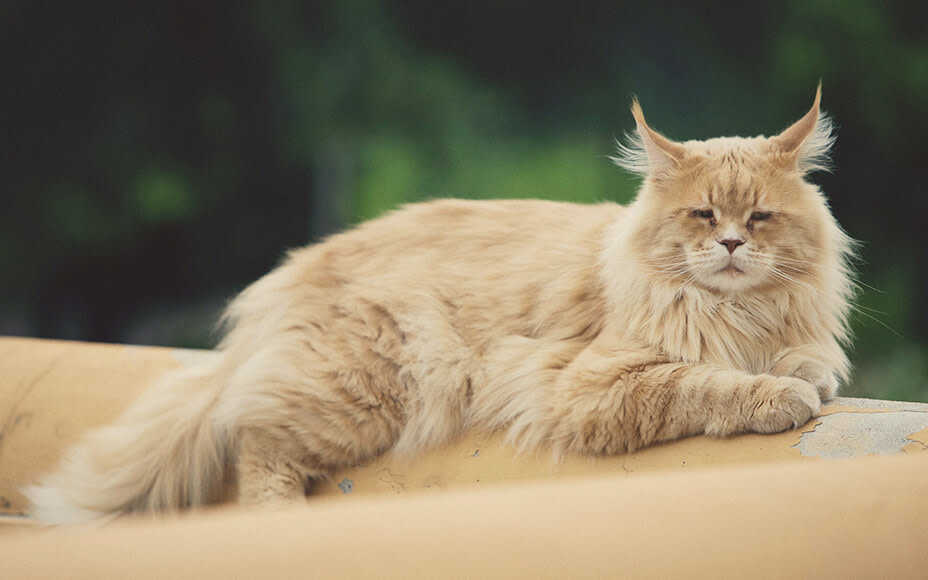
The Maine Coon, as a large cat breed, brings a considerable weight to the scale. The ideal weight of a cat depends on its size and body structure.
Reasons why older cats lose weight
The reasons why your senior cat is getting thinner are varied. They can be related to nutrition, but physical problems can also quickly affect your senior cat’s weight. Common causes include:
Parasites such as →roundworms or →tapeworms: If your cat is infected with worms, she can lose weight in a short time. The reason: the worms deprive the food pulp of nutrients and as a result, your cat can’t sufficiently nourish her body. A parasite test at the vet’s office will provide clarity.
Too little food: Check the →feeding amount recommendations that you’ll find on the back of the can or food pouch. Do you weigh the amounts or just estimate? To ensure your feline is getting all the nutrients she needs, you should always follow these recommendations. →A healthy diet for your cat should always be the top priority even in old age.
Thin cats can also occasionally have an extra treat or two. Give your four-legged friend a healthy snack—with our Pets Deli snacks, you’re on the safe side, because we always avoid grains, sugar, and artificial colors and flavors.
Give Love - with our Snacks for Cats!
Stress: Stressful situations don’t just affect us humans—our four-legged friends can also struggle to cope. Changes like moving, new pets, or a new partner often make cats restless, because they are creatures of habit through and through. As a result, they may eat less and lose weight.
Dental problems: Regular →dental care is important for cats too. Plaque and tartar can lead to →gum inflammation or tooth loss in cats. Due to pain, hard pieces of food can’t be chewed as well and the food stays in the bowl. During a veterinary checkup the mouth can be examined for inflammation and tartar.
Kidney disease: Some cats develop →kidney problems. Symptoms of such illnesses can also include loss of appetite and weight loss, so you should always consult a veterinarian. In addition to medication, a special diet can support your cat. Our →VET Liver & Kidney Fit wet food for cats features a reduced protein and phosphorus content, which is very important for the affected organs. At the same time, it covers the increased vitamin needs caused by illness of your beloved pet.
Loss of sense of smell: What’s life if your favorite food can’t be enjoyed by smelling and tasting anymore? Some cats lose their sense of smell or simply can’t smell as well as they used to. Here too, refusing food plays a role, leading to weight loss.
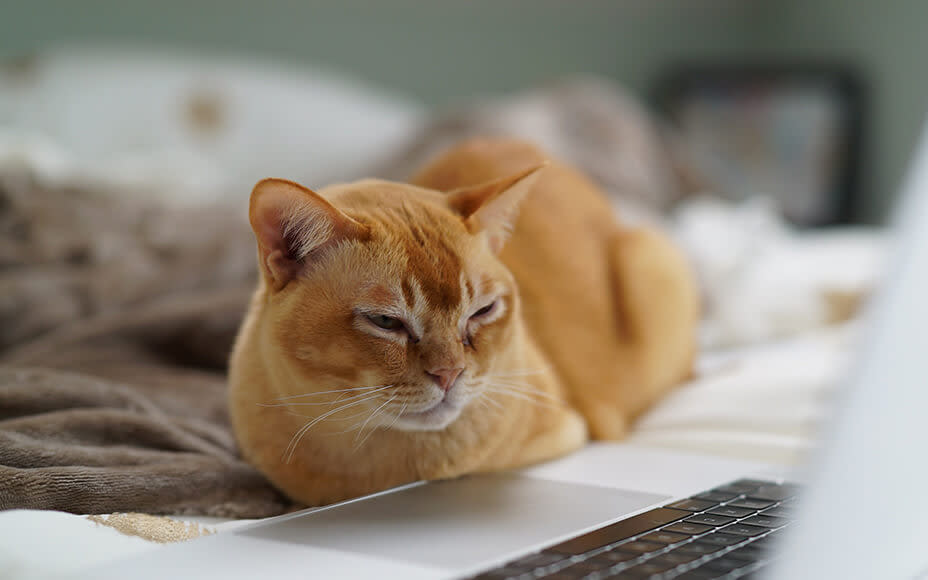
The reasons for weight loss in older cats are varied. Often, food plays a role, but sometimes the teeth are no longer as healthy as they used to be.
How to help your cat when she’s old and losing weight
Even though you (unfortunately) can’t stop your cat from aging, there’s a lot you can do to help your cat who keeps losing weight. First and foremost, you should have the situation checked by a vet.
There may be serious illnesses behind it and more intensive treatment may be necessary. If your vet gives the green light, you can use the following measures to effectively help your cat:
High-calorie food: Even though older cats generally need fewer calories because they move less, in this case you can switch to a high-calorie food instead. Suitable meats include beef and some types of poultry. Our irresistible →beef mousse provides your cat with plenty of calories. Our →Extra Meat dry food with poultry is not just for true meat lovers, but is also ideal for cats who can benefit from a calorie-rich diet. In our →Pure Meat range you’re sure to find the right food for your house cat.
Mixed feeding with dry food: Dry food is more energy-dense than wet food. If your senior cat has no dental issues and can handle crunchy pieces, you can try mixed feeding.
Oil or boosters to enhance the food: When you enhance the food with, for example, →salmon oil, you not only achieve maximum taste enjoyment, but also easily increase the calorie content of the food. Salmon also shines with valuable omega fatty acids, which are proven to support coat health and metabolism. With our →Acceptance Booster you can also help your cat with food intake by using it as a topping for her food.
High-calorie medications: Your vet can also provide you with special supplements to help your cat gain weight . You just need to clarify how long the pastes should be given and how sustainable the feeding of these is.
Does your four-legged friend generally refuse her food and you’re struggling to stimulate her appetite? Check out our →article on food acceptance in cats.