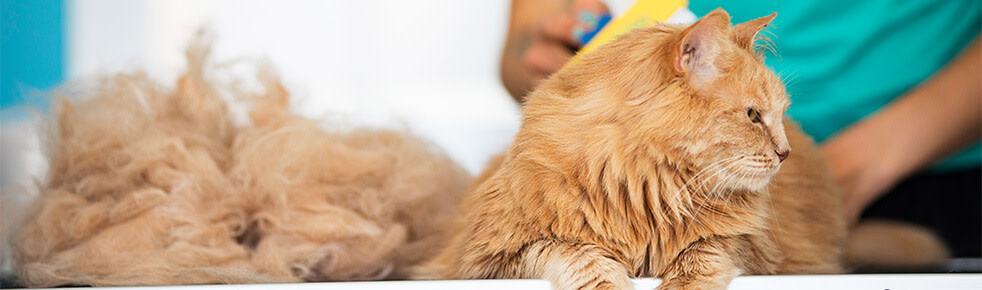
Why do cats shed their fur at all?
You just cuddled with your cat and petted her, and already countless hairs are sticking to your clothes. That's actually quite normal. The fact that your indoor tiger loses even more fur at times is due to shedding. All cats experience shedding, not just those with long fur. Their internal clock and hormonal changes, caused by altered light and temperature conditions, lead to changes in your kitty's hair growth.
Shedding occurs in spring and autumn and ensures that your cat has the optimal adaptation to the weather. This way, she is not too hot during the warm summer months, she is protected from UV rays, and she also does not freeze in the colder winter months. The dense, warming fur of winter with pronounced undercoat grows back in the cold season and is shed before the warm season. The colder it is, the denser and warmer your cat's winter coat becomes.
The process of hair growth in your kitty is always the same and occurs regularly:
- Anagen phase: The new hair grows from the hair follicle in the so-called growth phase.
- Catagen phase: In the transitional phase, the hair continues to grow and is supplied with nutrients.
- Telogen phase: Once hair growth is complete, the hair is in the so-called resting phase.
- Exogen phase: Nutrient supply is stopped, causing the hair to fall out.
The cycle of hair growth is significantly accelerated during shedding – so your kitty loses noticeably more hair than usual.

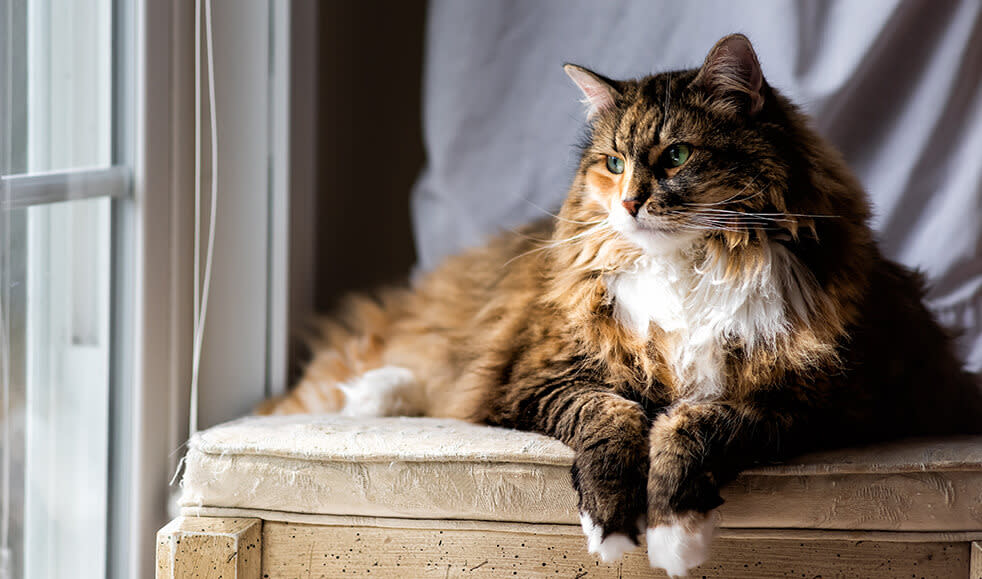
[TRANSLATION ERROR] Das Fell deiner Katze kann bis zu einem Viertel ihres Körpergewichts ausmachen, dieser Anteil verändert sich je nach Jahreszeit stark.
How often do cats shed their fur?
Since shedding occurs in spring and autumn, cats shed their fur twice a year. During this time, your cat loses even more hair than usual when she grooms herself, rubs against things, plays, or is petted. Because your cat's fur grows continuously and falls out again.
Your cat's natural shedding can also be influenced by special external circumstances: If your kitty spends a lot of time outdoors and is therefore exposed to greater temperature fluctuations, her shedding will be more pronounced. For indoor cats, shedding may be significantly weaker due to reduced temperature differences. The artificial lighting conditions and mostly constant temperature can lead to your kitty shedding consistently throughout the year.
When does shedding end?
In autumn, your cat's fur becomes denser and longer as protection against the cold. In spring, on the other hand, the guard hairs become shorter, and your kitty loses the dense wool hairs of winter again. This transitional period in spring and autumn lasts about 6 to 8 weeks. After that, the rate of hair growth stabilizes again, and the perceived hair loss is somewhat more limited, depending on your cat's fur length. Over the course of the year, your kitty loses the most hair between April and October, that is, during the warmer months.
Difficulties during shedding: How to support your cat
The time of shedding can be especially exhausting for your cat. Because she licks off the falling hairs from her body even while regularly grooming herself. The swallowing of hair also increases hairball formation in your kitty, leading to increased gagging and vomiting. We will tell you what you can do to make the shedding period easier for your cat.
How to support your cat during shedding:
1. A balanced, healthy diet is essential
The →balanced diet of your cat is not only important for her health. Because sufficient vitamin supply positively affects the cycle of hair growth. Vitamins and nutrients taken in with food stimulate hair growth. They also ensure healthy skin and a smooth coat, which additionally makes shedding easier for your cat.
Our treats for cats are packed with high-quality proteins, crunchy fruits and vegetables, and important nutrients. So that your cat feels good all around.
Unser Futter für Katzen: ehrlich, gesund, lecker.
2. Oils as dietary supplements for the coat
The addition of high-quality oils, such as →salmon oil or →flaxseed oil, promotes hair growth due to the unsaturated fatty acids contained. Additionally, the oils help with the expulsion of swallowed hair, which your kitty has particularly many of during shedding.
3. Cat grass fights swallowed hairballs
The structure and composition of cat grass promote the gagging process in your cat and serve as a digestive aid. This helps your kitty to expel swallowed hair and counteracts hairballs. At the same time, planting cat grass will make your kitty happy. You can give her free access to cat grass, as cats intuitively eat only as much of the plant as needed.
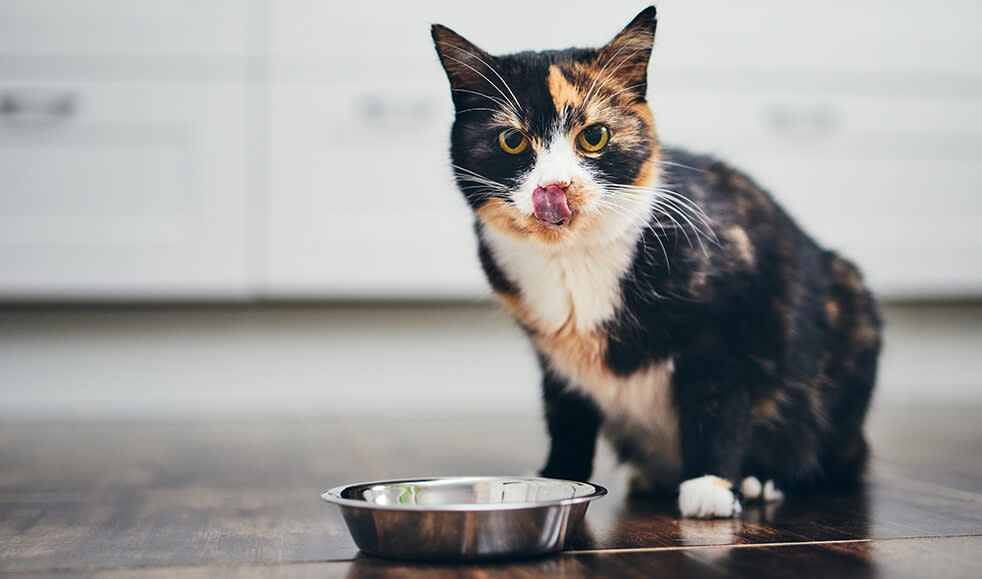
[TRANSLATION ERROR] Bei der gesunden Katzenernährung gibt es einiges zu beachten: Unsere Fütterungsempfehlungen geben dir den Überblick!
4. Daily brushing cares for and cleans
Daily brushing of your cat not only serves her grooming, health, and strengthening your bond. Daily brushing also promotes shedding, as it stimulates circulation, makes the hair grow faster, and removes already dead hairs. This especially helps long-haired cats and outdoor cats, which have a denser undercoat due to greater temperature fluctuations. You also simultaneously prevent matting.
As a positive side effect, regular brushing at least partially prevents the spreading of falling hairs throughout the apartment – which means less vacuuming or sweeping for you, making it a win-win situation.