Can I feed my dog a vegan diet?
A topic that has divided dog owners for years: Can you feed a →dog a vegetarian diet or even a vegan diet? Science confirms that a purely vegan diet, and thus providing sufficient nutrients for dogs, is possible. However, many dog owners rely on the argument that dogs are simply carnivores and therefore only a meat-based diet is truly →species-appropriate.
The fact is, at the end of the day, your four-legged friend must be supplied with all the essential nutrients to avoid deficiencies and keep your dog healthy. The quality of the individual ingredients in the food also plays a key role. So even if you're on Team "Carnivore", you should take a →look at the ingredients in your dog's food. Things like sugar, flavorings or low-quality meat by-products have no place in any high-quality pet food.
The main counterargument: "Dogs are carnivores!"
As you may know, the dog is descended from the wolf. So if we take a look at the wolf's menu, it's clear that it contains a lot of meat. Wild animals like deer and rabbits are eaten here. Bones, cartilage, organs, and even the plant remains in the prey's stomachs are eaten by wolves. But what many people don't realize: wolves don't eat meat every day. They also enjoy fruits like berries or other greens. For this reason, dogs are classified as both carnivores and omnivores, "carni-omnivores" as they're called.
So yes, dogs are carnivores, but they're not wolves (anymore). Over many years, they have been domesticated. Our dogs today are highly adapted to living with humans, including to a different diet. Dogs didn't always get premium pet food in the past. Often, human leftovers were on the menu, including vegetables, fruit, and carbohydrates. This led to the dogs' digestive systems adapting over time, so that now, unlike wolves, they can better metabolize vegetables, carbohydrates, and the starch contained in foods.


It doesn't always have to be meat: Many dogs also love a piece of fruit or vegetable as a tasty snack in between!
A vegan diet tailored to the needs of the dog is therefore possible for our dogs today. Provided that all essential nutrients are covered.
Important nutrients in a vegan dog diet
The →nutritional needs of dogs don't just change because you feed your four-legged friend with or without meat. Therefore, both in a vegan and in any other type of diet you should ensure that all required nutrients are included.
Which ones these are, and which suitable vegan sources exist, we've listed for you:
Proteins / protein: Legumes such as lentils, chickpeas, beans, hulled hemp seeds
essential amino acids: Legumes, →nuts, seeds, green vegetables like →broccoli
essential fatty acids: algae oil, linseed oil, hemp oil, olive oil, flaxseeds, pumpkin seeds
Vitamins, minerals, and trace elements: various types of vegetables and fruit
Carbohydrates: →sweet potatoes, →potatoes, →rice or pseudo-grains like quinoa, amaranth, millet, or buckwheat
Most of these nutrients can be well covered by feeding certain foods. However, some of them must be added as nutritional supplements in the form of powders or oils as an addition, including: vitamin B12, vitamin D3, arachidonic acid, iodine, L-carnitine, and taurine. In our →wet food "Green Vegan" you'll find everything your four-legged friend needs. Just open the can and dig in!
Give GREEN a Try
What challenges are there with a vegan dog diet?
Just like with any other dog food, you also have to make sure that all essential nutrients are included when composing a vegan meal for your dog. Just because a can of wet food contains meat doesn't automatically mean that it's high-quality food. The same applies if you want to BARF your dog, i.e., feed with fresh ingredients.
The biggest challenge in feeding our dogs is probably to cover all essential nutrients tailored to your dog. An important step is therefore not to →buy the cheapest supermarket food only, but also to pay attention to quality, whether it's →wet, dry food, or BARF.
Especially with a vegan diet, it can be helpful to get advice from nutrition experts. Also, if your dog may have certain →intolerances or food allergies has, it's definitely wise to consult with nutritionists or veterinarians beforehand.
By the way: Did you know that a vegetarian or vegan diet can be especially well tolerated by dogs with many intolerances and sensitive stomachs? It can be particularly digestible. For example, there are also dogs that are allergic to meat and can greatly benefit from a tailored meat-free diet.
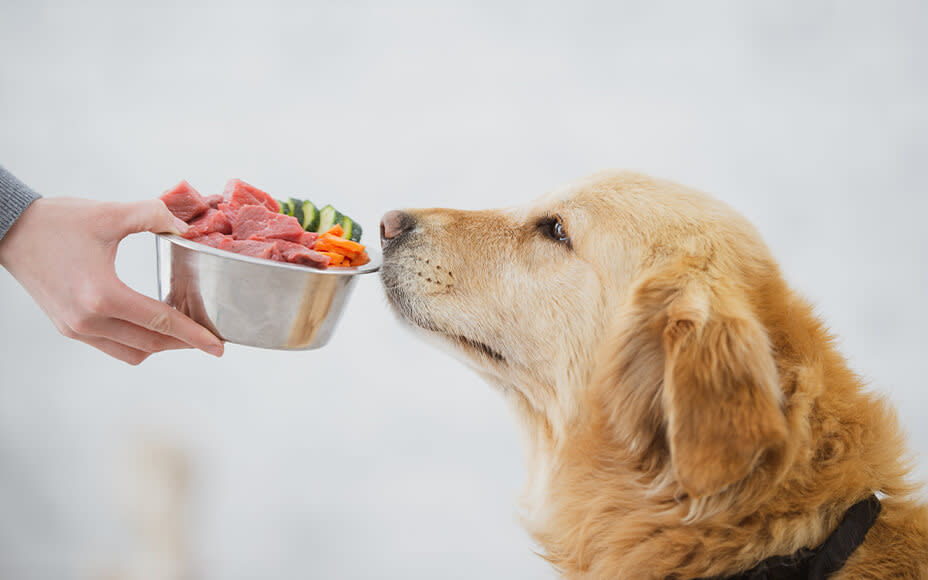
Meat or not meat, that is the question? In the end, what matters is that all essential nutrients are covered by the food!
One vegan day a week
It's also important to mention that your dog has its own CO2 paw print. Especially feeding meat has a significant impact on our environment and the climate. You're not completely convinced about feeding your dog a vegan diet, but you want to take advantage of the benefits for our climate and environment? Then maybe one meat-free day a week would be a great compromise.
We at Pets Deli have done the math for you:
With just one meat-free day a week you reduce your dog's CO2 footprint as well as water and land use and do something good for our planet! With one day a week feeding Pets Deli Green:
You save nearly 426 kg CO2 per year (that's enough to fly from Frankfurt am Main to Lisbon by plane).
You reduce the land used for livestock farming by 1.8 square kilometers (that's more than 252 soccer fields).
You save 128 liters of water.
Every little bit helps: Take it slow at first and try our vegetarian and vegan snacks based on insects. Even by choosing meatless treats you can make a big difference!
Tastes Great Even Without Meat - Our Insect-Based Snacks
How do I properly switch to vegan food?
Of course, vegan dog food also needs to be tailored to your dog's needs and nutritional requirements. For this, you can use a high-quality complete food, such as a →wet food from our Green Line, or you can put together your dog's food yourself, similar to →BARF, just without animal products. For this, you can get help from nutrition experts and have an individual feeding plan created. Also, →our experts are happy to assist you with advice and support.
Just like with any other food, you should →transition to vegan food slowly. Even if you only want to feed vegan food 1-2 times a week. So gradually reduce the amount of meat-based food in your dog's bowl and add more and more vegan food. During the transition, pay attention to changes in weight, coat, energy level, and digestion of your dog. If you notice anything unusual, contact your nutritionist or consult your veterinarian for advice.
Feed your dog vegan or with meat, which is better?
In the end, every dog owner has to answer for themselves, whether a vegan diet is suitable for their own furry friend. No matter how you look at it - there are pros and cons to both a vegan diet and a meat-based food. Every dog is unique, and what works wonderfully and is well tolerated for one dog may not be true for another—even though they both descend from the wolf.