Why is a change of food necessary for dogs?
A change of food or re-feeding is necessary when you switch from one food to another. The reasons why you might want to acclimate your dog to a different food can vary greatly:
• You adopt a puppy and have chosen a different food than the one that the breeder provided.
• You are dissatisfied with the quality or composition of your current food.
• Your old food is no longer being produced and you need an alternative.
• The composition of the old food has changed and you are not satisfied with it.
• Your dog has developed a →intolerance or allergy to certain food components.


The reasons for changing your pet's food are varied. Because the gastrointestinal tract and gut flora adapt only slowly to a new food, patience is required here.
A change of food is not always easy
...but doable - with the right know-how. Dogs sometimes have difficulty with new food. Different smell, different taste, different consistency, and what the dachshund doesn't know, he won't eat (at first) - or something like that.
These are many things that an animal must first get used to. The disappointment is therefore great when you want to do something good for your beloved pet and he then rejects it. If you hope that you can simply use up all the cans and then start directly with the new food, we must unfortunately disappoint you: This not only causes confusion for your dog but can also quickly upset your dog's stomach and intestines.
Before you can get started, the question of the right food in the →species-appropriate and healthy nutrition of dogs remains open. When choosing, pay attention to a transparent composition. Ingredients like sugar, →grains, as well as color, flavor, and preservatives have no place in healthy food.
We stake our hands and paws on the fact that we want exactly that for your four-legged friend: A truly healthy, complete →premium food with controlled and high-quality ingredients. Pets Deli provides your four-legged friend with fresh food - you won't find grains, sugar, or color, flavor, and preservatives here. Whether →senior or →junior, picky gourmet or grumpy belly: Our tasty food has something for every dog.
Our dog food: healthy, honest, delicious.
How does the change of food proceed for dogs?
And how long does it take for a dog to get used to its new food? To allow your dog's gastrointestinal tract to optimally adjust to the new food, you should give him enough time for the transition. Gradually replace the previous food with the new one - this way, the change will be particularly well tolerated. A too-quick transition can end with →stomach pain or →digestive problems. This may give the impression that your four-legged friend cannot tolerate his new food. However, it often turns out that the transition is happening too quickly.
Refer to our scheme for changing the food so that your dog can gradually adjust to the new meal:
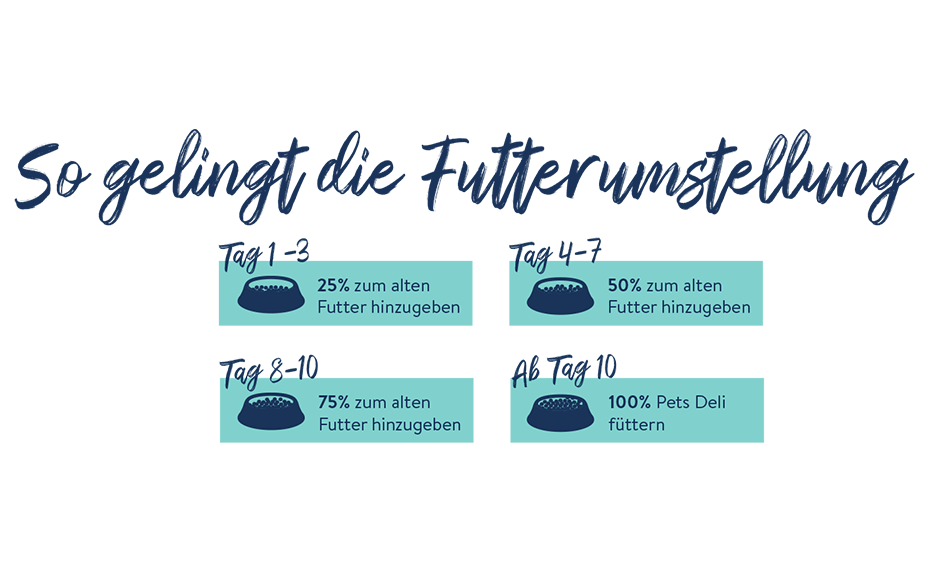
As a rule, the change of food should take place over a period of 10 to 14 days. You can also take more time, but do not shorten the period.
With our four tips, the change of food will succeed
1. Mix the food
As you just learned, it is advisable to present your dog with the old food mixed with the new. This way, he recognizes a familiar smell and taste, allowing your four-legged friend to have a smooth transition between both foods.
2. Increase acceptance
Re-feeding can indeed take several weeks for particularly picky animals. However, this can be easily accelerated with natural aids.
For example, with our →"Fancy Filets" toppings or our flavor-intensive →salmon oil. Simply added to the new food, it enhances the natural smell and taste of the food, making it hard for your beloved pet to resist.
3. Use snacks consciously
Do you love to spoil your doggo with a snack in between? Understandable - but during the transition to a new food, restraint is required. The greater the appetite, the higher the chance that food that initially isn't at the top of the favorites list will also be accepted.
Important: Snacks are not a substitute for a balanced main meal - they should never make up more than 10% of daily calories. This keeps the diet balanced and the bowl sensibly filled.
However, you don't have to completely forgo snacks. On the contrary: Our →pastes or →toppings can be used strategically to increase food acceptance - for example, as an add-on to dry food. The extra flavor kick makes every meal more attractive and helps introduce new varieties stress-free.
Once everything is well tolerated, of course, snacking can happily resume. And ideally, the right bag is already ready: Our snacks are crunchy - with plenty of meat, long-lasting chewing fun, and valuable nutrients. Which doggo can resist that?
The tastiest reward for your four-legged friend!
4. Create a pleasant environment
Make sure that nothing else changes apart from the food. Serve the food in the familiar bowl and place it in the usual spot. Keep in mind that if you want to switch to dry food, the sounds of the food in a metal bowl may be perceived as disturbing. In this case, a change of bowl would be advisable. The background is that you want to offer your four-legged friend the new food as "normally" as possible, so he is not additionally stressed by changed environmental stimuli.
Making the change of food easy
Especially when dogs have received food of inferior quality before, which often contains flavor enhancers, artificial flavors, or sugar, the transition to natural food is difficult - but not impossible. With patience, consistency, and our tips, re-feeding can be done quite easily.
How to Feed Correctly!
Get our free feeding guide delivered straight to your email now
Any questions?
We are →by your side and find the best solution with you for all questions regarding the topic of nutrition and health for dogs.
If you have any concerns about Pets Deli, our products, or your dog's healthy feeding, feel free to contact us Monday - Friday from 9 AM - 6 PM: