
Deworming kittens: How to prevent a worm infestation
For a healthy life for your kitten, there’s a lot you can do: pay attention to the →right and healthy diet offer enough opportunities for exercise, and give them love. Some →illnesses can’t always be avoided 100% for sure, and good prevention is important in these cases – for example, with worms.
While adult cats with their intact and fully developed immune system can often overcome a worm infestation even without symptoms, infection with parasites is problematic for kittens and young cats. Their bodies are still in the growth phase and can’t defend themselves as well, so such an infestation can sometimes become dangerous for your young cat. That’s why you should know the necessary facts and ideally prevent a worm infestation in time.
How do kittens get infected with worms?
Whether tapeworm or roundworm: the myth that only outdoor cats can get infected with worms isn’t true. While worm eggs can be transmitted here, for example, by sniffing grass or the feces of other cats, even indoors your kitten isn’t completely safe.
To understand why transmission is also possible indoors, it’s worth taking a →look at the ways cats can get worms: Depending on the type of worm, the eggs can be transmitted via parasites like fleas (→cucumber tapeworm), by birds and mice (lung tapeworm), by dirt on the street that sticks to shoes and is brought into the home, or even through the mother’s milk (→roundworms) or placenta. Foods like →raw, spoiled fish and →ground meat or other raw meats can also transmit worms to your cat. Maybe a cat already living in the household has worms and unknowingly infects your young kitten.

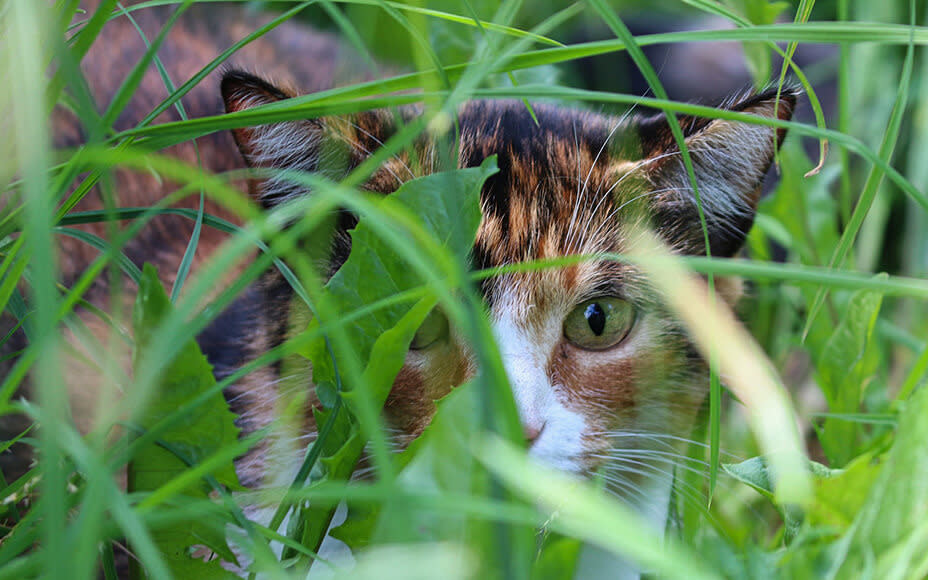
Outdoor cats in particular can quickly become infected with worms, although indoor cats can also be affected.
Because even indoor cats can get worms from eating raw meat or spoiled food, always make sure to maintain good hygiene with your cat’s water and food bowls and feed fresh, high-quality cat food. There’s no need to use raw supermarket meat if you want something fresh for your pet, because at Pets Deli we focus on natural, fresh ingredients that create a special and healthy taste experience.
Our cat food: honest, healthy, delicious.
Symptoms: How to tell if your cat has worms
Different types of worms infest different areas of the body. Remember, a worm doesn’t always settle classically in the intestines, but can directly attack organs like the lungs, which can be nerve-wracking. Early detection of worms is especially important for young cats, because they steal nutrients from the food pulp and your cat can’t gain weight properly. The missing nutrients can disrupt healthy growth and lead to serious
But don’t worry – if noticed in time, you can quickly get rid of the worms. Watch for the following symptoms that can indicate a worm infestation:
Worm belly: A severely bloated belly can be a sign of a worm infestation.
Digestive disorders: →Diarrhea and other →digestive problems are not uncommon with a worm infestation. Even if your little cat is already →house-trained, she might suddenly go outside the litter box. Also, though it’s not very pleasant: Your cat’s stool can provide clues to a worm infestation. For example, you might see individual segments, white, rice-sized pieces or even whole worms. If you suspect an infestation, collect a stool sample for your vet.
Vomiting and coughing: Some worms are expelled when coughing or vomiting and can be seen whole in the vomit. Here too, it’s important to secure a sample for examination at the clinic.
Itching: Your cat is struggling with diarrhea? This can cause severe itching around the anus, which kittens try to relieve by constant licking or scooting on the floor.
Weight loss and →loss of appetite: This can be life-threatening for young cats. If you notice your kitten is getting thinner, visit a clinic immediately. Because of the lost nutrients, which the worms feed on, your cat can no longer nourish her own body. Quick action is crucial here.
Treatment: How is a worm infestation in kittens treated?
If you suspect a worm infestation, you should not hesitate. At the clinic, the vets will examine the stool or vomit for worms. Even from the mother, young cats can get infected with worms, so you should look for breeders or previous owners who deworm their cats regularly.
So what does my cat get for worms? In the case of an acute worm infestation the vet will give you a medication. This can be tablets or pastes containing a worming agent (anthelmintic) and is given as a course over a certain period of time.
Your pet refuses to take the tablets voluntarily? That’s where our →cream snack comes in as a loyal assistant, letting you easily hide the tablet and give it to your cat.
Deliver tablets & medication to your cat in a tasty way – thanks to our snacks!
Prevention: When and how often should kittens and young cats be dewormed?
For prevention, it’s important that worms don’t even get the chance to multiply in large numbers. Since your cat can theoretically get infected at any time, regular deworming is important – and that goes for the mother cat during →pregnancy. Good to know: this doesn’t generally prevent infection, but it does ensure that any worms in different stages of development are killed off immediately.
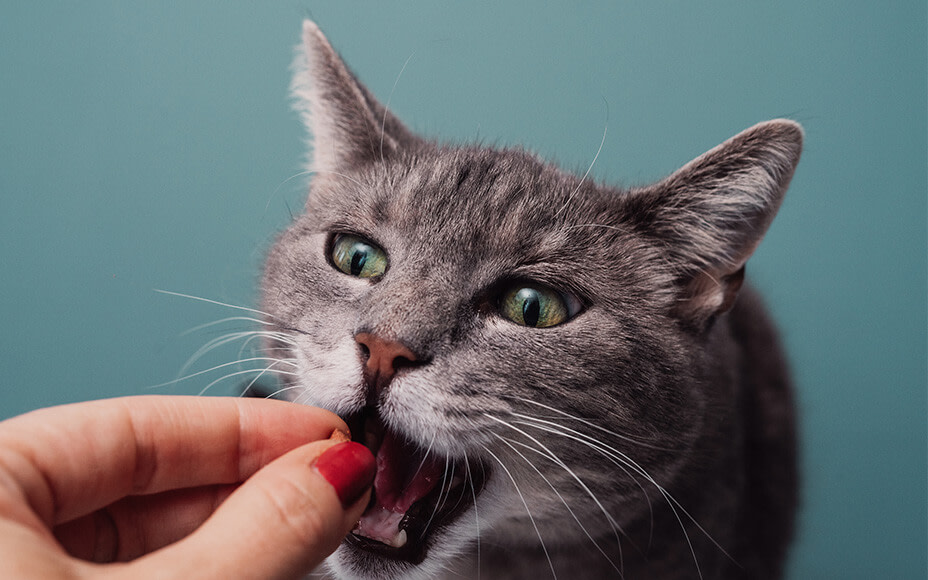
Regular deworming can protect your cat from tapeworms and other worms. It’s best to discuss the treatment with your veterinarian!
Your young cat will get her first deworming while she’s still with her mother, at the age of 3-4 weeks. Up to the 7th week of life there’s then, depending on the risk of infection, a deworming every 14 days. By carefully choosing reputable breeders you can trust that they will fulfill their deworming duties. It’s different with unreputable breeders and "village kittens", where breeding is uncontrolled. If you adopt such a kitten, you should immediately take it to the vet for deworming.
Even after your kitten has settled into its new home, regular deworming treatments are important. At 16 weeks the next deworming is due, followed by another at six months, nine months, and finally at one year, to refresh the protection. In connection with a →vaccination it’s important that this is always given a few days after deworming. This ensures your cat is worm-free and her body can focus on the formation of antibodies after vaccination without distraction. From one year of age, your cat should continue to be dewormed in consultation with your vet. For outdoor cats, a rhythm of 4 deworming treatments is recommended, and for indoor cats, once or twice a year.
In addition to deworming, preventing parasites like →fleas is also very important. There are suitable products available to protect your cat well.
Are deworming treatments harmful for kittens and cats?
A medication that destroys other organisms in my cat’s body – is that really safe for my four-legged friend? Yes – you can absolutely trust that the deworming treatment targets only the worms. Depending on your young cat’s weight, she will receive exactly the right amount, so she usually has no side effects from it.
Alternatively, you can also have a regular stool sample check done, where you simply collect some of your cat’s stool and have it examined at the vet’s office. This way, worms can be fought even more specifically if there’s a reason to do so. Note that for kittens and young cats, you should still stick to the plan of giving deworming treatments, as otherwise, if infected, severe symptoms can develop more quickly.