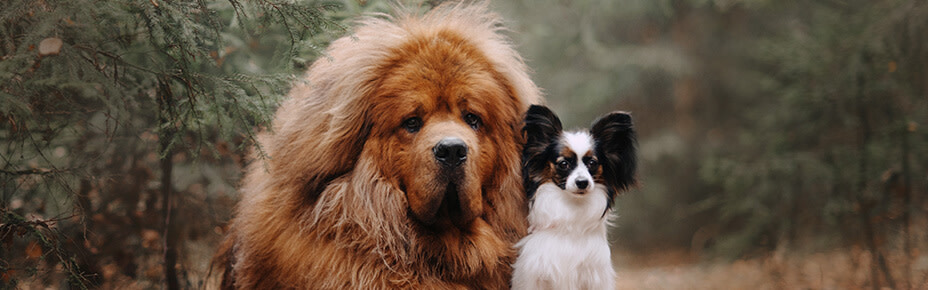
Which dog breeds are very large?
When a dog is referred to as very large, breeds like the Labrador or Ridgeback are excluded. While they can certainly be counted among the →large dog breeds, the true giants start at a height of 70 cm. Among the world's →largest dog breeds are:
- Great Dane
- Irish Wolfhound
- Newfoundland
- Saint Bernard
- English Mastiff

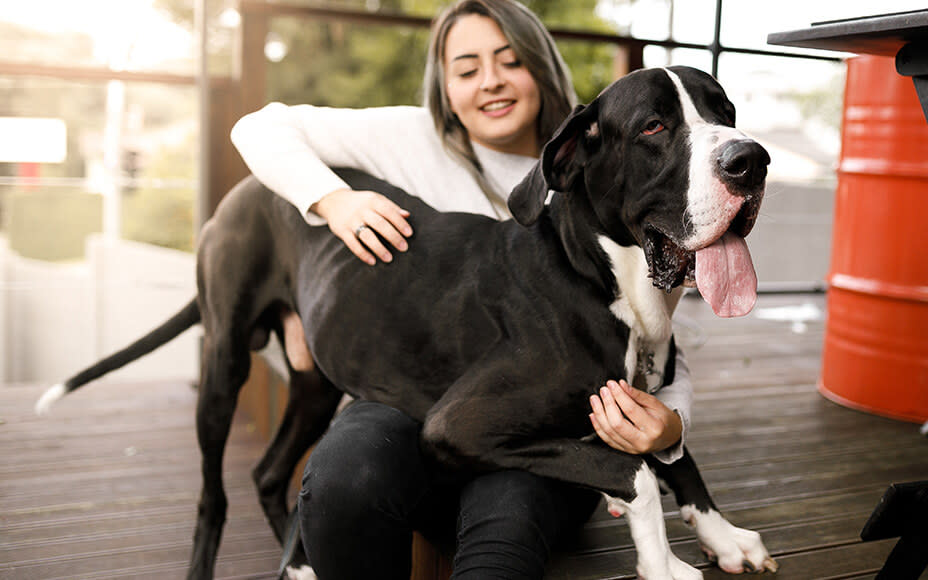
Risks from overbreeding
Of course, not all of these breeds are sick just because they are very large. Nevertheless, you should, as with any other animal, pay attention to a trustworthy breeding and not support unusually large breeds for the breed.
Just like with →very small dogs, very large dog breeds have quickly developed due to increased demand. However, extreme breeding and the desire for special characteristics and a specific appearance of the animals often come with health risks.
Common complaints and health problems of very large dog breeds
A large, muscular build, beautiful ears, and a shiny coat - the desire for the perfect large dog brings with it some complaints and health problems. Joint problems are the most common. In the case of overbreeding, joints and skeletons are stunted, which can lead to various complaints in later years.
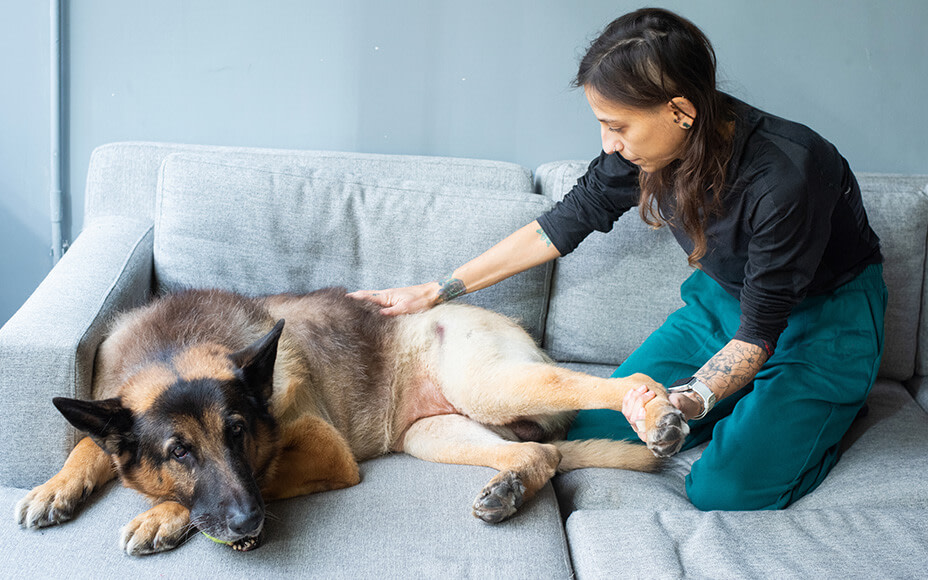
Osteoarthritis - the "common disease" of very large dog breeds
A stunting of joints and skeleton can lead to chronic joint disease osteoarthritis. In this condition, the joint cartilage is broken down or even completely destroyed, leading to joint wear and loss. Consequently, your four-legged friend experiences unpleasant pain during movements and may no longer be able to climb stairs, for example. Osteoarthritis has become so widespread that it is referred to as the "common disease" of very large dog breeds.
Hip and elbow dysplasia
Equally widespread is hip dysplasia and elbow dysplasia, which can partly also be inherited. Very large dog breeds grow very quickly. However, if the body does not have sufficient time to fully develop bones and joints, it can lead to disorders of the musculoskeletal system at a later point. In combination with malnutrition or improper nutrition, such joint complaints are even exacerbated.
You want it extra fresh, natural, but still uncomplicated? With our →3-2-1 BARF concept, you provide your four-legged friend with a fresh, balanced diet with a bite!
You'll love to try BARF!
How can I prevent diseases?
The good news: Many diseases of very large dog breeds can be easily prevented. You just need to know how:
The right food
Since large dog breeds grow quickly, they require a →healthy and balanced diet. Only in this way will the body be supplied with all necessary nutrients and can build a strong skeleton. If you are unsure, consult experts such as a veterinarian. There are also specially trained nutritionists for dogs. Our veterinarians are also happy to answer your questions about your four-legged friend in our →free feeding consultation.
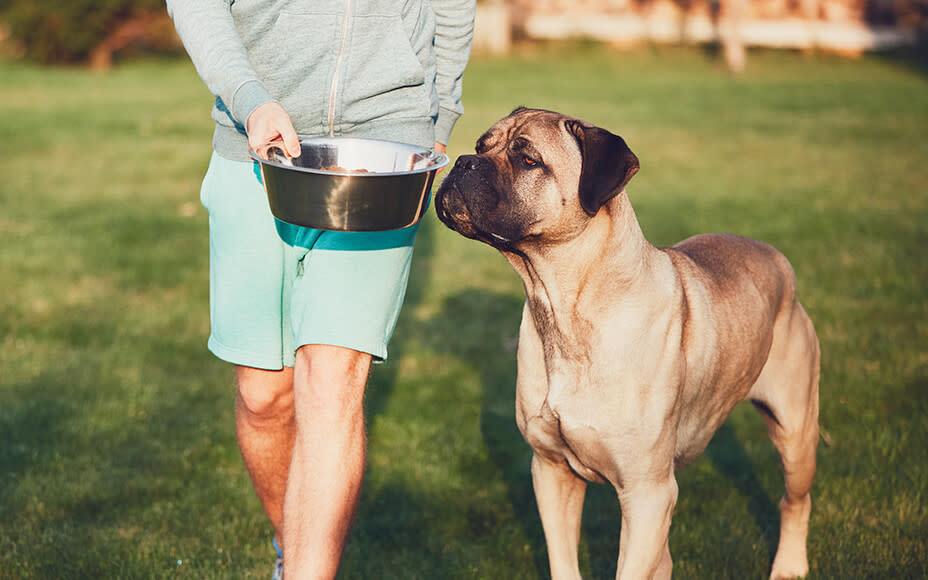
Pay attention to an appropriate weight
The larger the dog, the more weight it carries - logically. Nevertheless, you should ensure that your four-legged friend does not weigh excessively. Especially with large dogs, we quickly tend to give a snack here and add a little extra there. "He's big, he needs it" - or maybe not. All that additional weight must be carried by your four-legged friend with every step. This places additional strain on the joints and can accelerate wear or even lead to a →cruciate ligament tear.
Especially with snacks, you should pay attention to a natural composition without sugar, grains, or preservatives.
Gesund snacken war nie so lecker!
Avoid excessive strain too early
Also, ensure that your large darling does not run and jump too much during the growth phase. In the first months and years of life, bones and joints are only fully developed. Early excessive strain can favor later complaints and diseases. For some very large dog breeds, this can already mean climbing stairs, while others should not run too much and definitely not jog alongside a bicycle.
The right activity
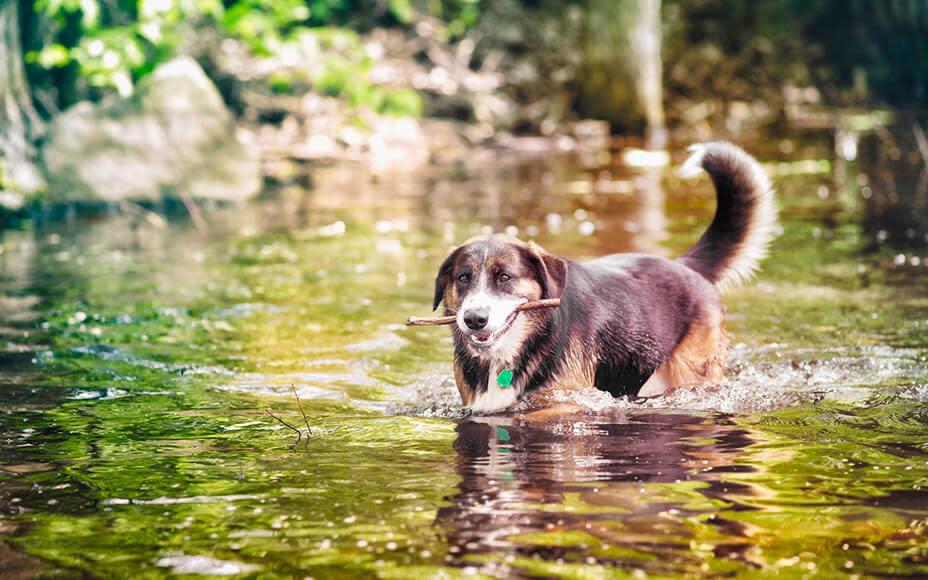
Even though many very large dog breeds naturally bring a certain →calmness and tranquility, none of them want to just lie around lazily all day. Due to their size and weight, you should, however, be cautious with activities like agility or other dog sports. A Saint Bernard is not a Border Collie - perhaps "body-friendly" activities like a round of swimming or scent games are a more appropriate form of exercise.