
BARF - biologically appropriate raw feeding
BARF - this stands for Biological Appropriate Raw Feeding, which translates to German as biologisch artgerechte Rohfütterung. The basic idea behind BARF is the return to the original form of nutrition, as our cats originally descended from wild animals. In the wild, wildcats hunt other animals and eat their meat and innards. This is what BARF is based on, →especially for dogs.
The breeding of our current furry friends has led over time to the digestive enzymes of cats adapting to other food components. So, there has been a development here - not just externally - and the return to natural feeding methods does not happen like: "Here, grab your rabbit!" Those who want to BARF their cat according to their needs must consider several factors and should inform themselves well beforehand. Because besides animal proteins, which make up the largest tier in the nutrition pyramid for cats, fats, fiber, carbohydrates, minerals, and vitamins are also included. Thus, ingredients like oils, optionally fruits or vegetables, and herbs belong in your furry friend's food.

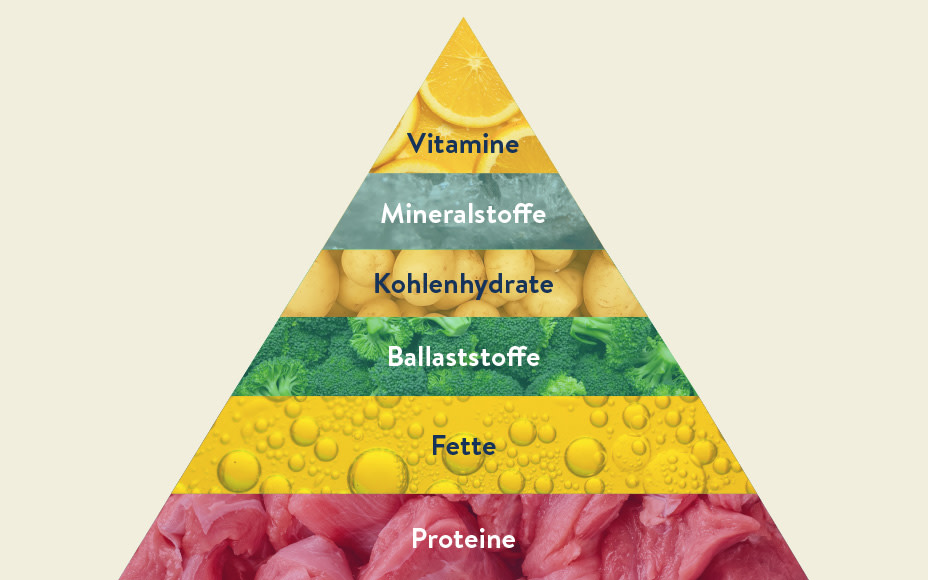
[TRANSLATION ERROR] Unabhängig von der Fütterungsart sollten die Mahlzeiten deiner Samtpfote dem Aufbau der Ernährungspyramide für Katzen entsprechen.
Can you BARF cats?
In principle, it is possible to provide cats with a balanced diet through raw feeding. However, a look at the nutrient requirements reveals that wildcats and house cats differ quite significantly: While wild animals hunt for their food and move a lot, our furry friends often spend most of the day lounging on the sofa when they are not outdoor cats. Even an exhausting hunting game with a teaser is not remotely comparable to the movement of a wildcat.
To ensure optimal nutrient supply for your cat with the BARF feeding method, a good basic knowledge, a professional nutrition plan, and a little practice are required. This feeding method is often more time-consuming, requires sufficient storage space for fresh ingredients, and ideally a large freezer - at least if one relies on conventional BARF methods.
The thought of doing something good for your furry friend by feeding them natural food components is very commendable - but not always necessarily required. Much more important is the right composition and quality of the ingredients in →species-appropriate nutrition for cats. The freshest ingredients are of no use if the composition is wrong or vice versa, if the food components are of inferior quality. We at Pets Deli therefore rely on real →premium quality in all our products and serve your beloved pet a tasty and healthy menu.
Unser Futter für Katzen: ehrlich, gesund, lecker.


How to properly BARF cats?
BARF is about serving our four-legged friends the individual food components as fresh and high-quality as possible in their bowl. The exact dosage of the BARF ingredients always depends on the size, age, and activity of your cat. Therefore, it is nearly impossible to recommend a universally applicable feeding amount, as this must be very specifically adjusted to the needs of your cat. However, it is obvious that the →nutrition of a young kitten, who explores the apartment and garden adventurously, likely requires a different composition than →the food of an elderly senior paw, who wants to spend her retirement relaxing on the sofa.
If you want to BARF your cat, a menu typically consists of:
- about 90% meat (mostly muscle meat, lung, kidney, tripe, liver)
- about 5% vegetables and possibly fruits, with the vegetable portion being significantly higher
- about 5% healthy fats or unsaturated fatty acids (omega-3 and omega-6 fatty acids)
Note, however, that there are numerous approaches to BARF feeding and not only the ingredients but also the compositions of the menus can vary greatly.
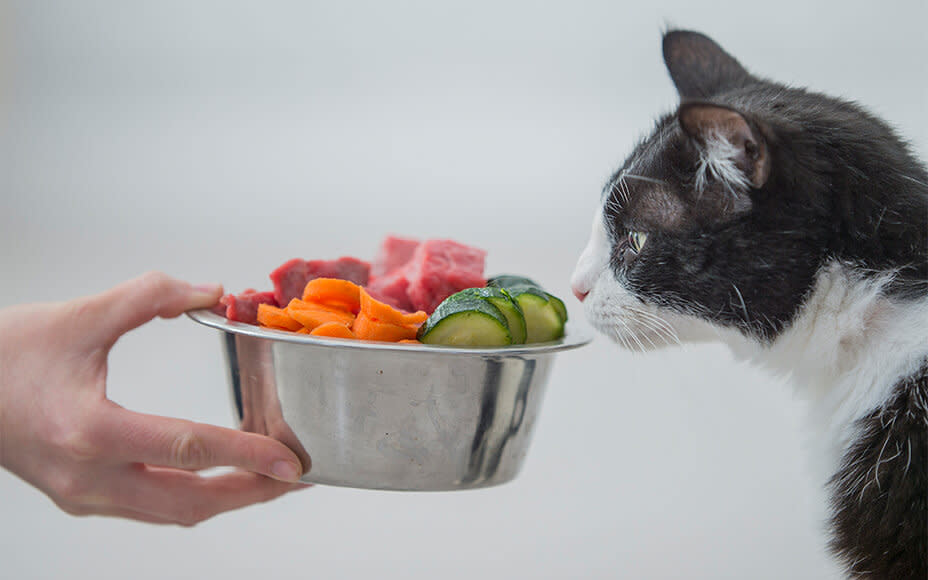
[TRANSLATION ERROR] Die Rohfütterung gestaltet sich bei Katzen etwas anspruchsvoller, da diese viel mehr Fleisch benötigen als Hunde.
The composition of a BARF menu for cats
Unlike our dogs, cats are true carnivores, known as obligate carnivores. The necessary main ingredient in a healthy cat menu therefore consists primarily of meat. Of course, vegetables and fruits are still important components in the →nutrition of kittens and cats, as well as minerals and oils.
Muscle meat
Whether BARF or →wet food or dry food - a cat's menu should have a meat content of 95%. This high meat content covers almost all the nutrients needed during the day. Meat (especially muscle meat) provides your four-legged friend with valuable energy from proteins and fats. Through innards like liver, kidney, lung, and tripe, which should make up a maximum of 35% of the meat content, your furry friend is supplied with vitamins. Also, 1/3 bones should be included in the meat content, as they provide your pet with important minerals. Alternatively, these can also be fed through a mineral supplement.
The taurine contained in meat is vital and essential for cats, meaning they cannot produce the substance themselves, which is why it must be supplied or supplemented in sufficient amounts through the meat content.
Fruits & vegetables
Another 5% consists preferably of →vegetables and possibly fruits. The fiber contained in vegetables is important to support the natural intestinal activity of your four-legged friend and thus ensure good digestion. Additionally, vegetables and fruits provide an extra boost of vitamins and minerals**.
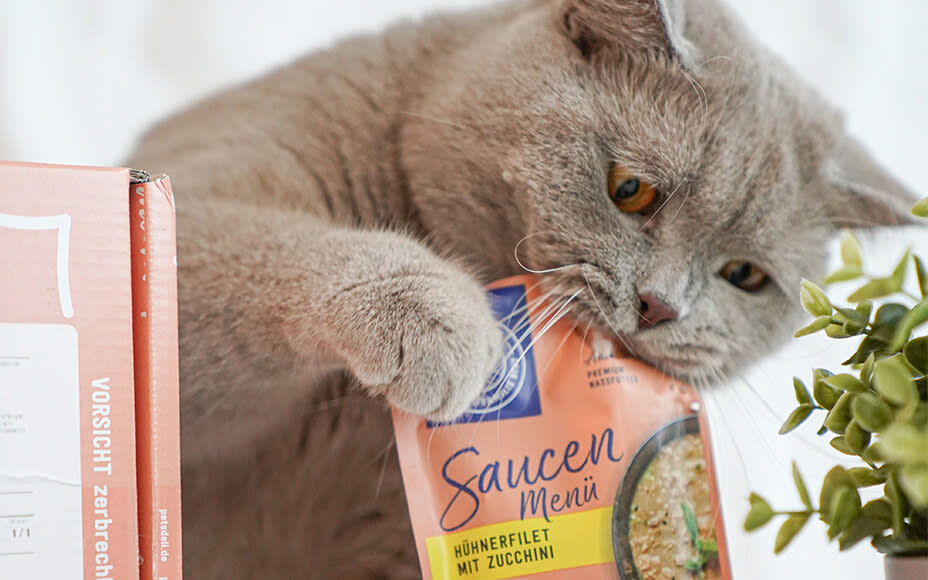
[TRANSLATION ERROR] Gemüse ja, aber vegetarisch bitte nicht. Katzen benötigen viel Fleisch und eine geringe Portion Gemüse in ihrem Futter.
Important supplements
As mentioned above: The composition of a BARF nutrition plan is very time-consuming and requires a lot of research, as otherwise there is a risk that your beloved four-legged friend may develop deficiencies in the long run due to incorrect nutrition. The original idea of BARFing is based on the feeding of a whole prey animal over a longer period. This includes innards like leaf stomach, tripe, but also blood and bones. Only in this way are all vital nutrients provided in sufficient amounts. However, some important components can also be added through dietary supplements, such as valuable oils and minerals:
Oils
An omega-3 oil or high-quality salmon oil provides your cat with necessary healthy unsaturated fatty acids. This portion can also be covered through the calculated →feeding of fish like salmon.
Minerals or a mineral mix
Your cat's body cannot produce minerals itself. However, they are vital and involved in numerous metabolic processes as well as important functions in the body, such as skeletal and dental development, healthy muscle function, an intact nervous system, and protection against skin and coat problems.
If you decide to cover the mineral intake through components like innards and other meaty components, that is perfectly fine. In this case, ensure a clean environment to secure the best possible hygiene. If you have concerns that the time commitment may not align with your daily routine, you can also replace these important components with special mineral mixes.
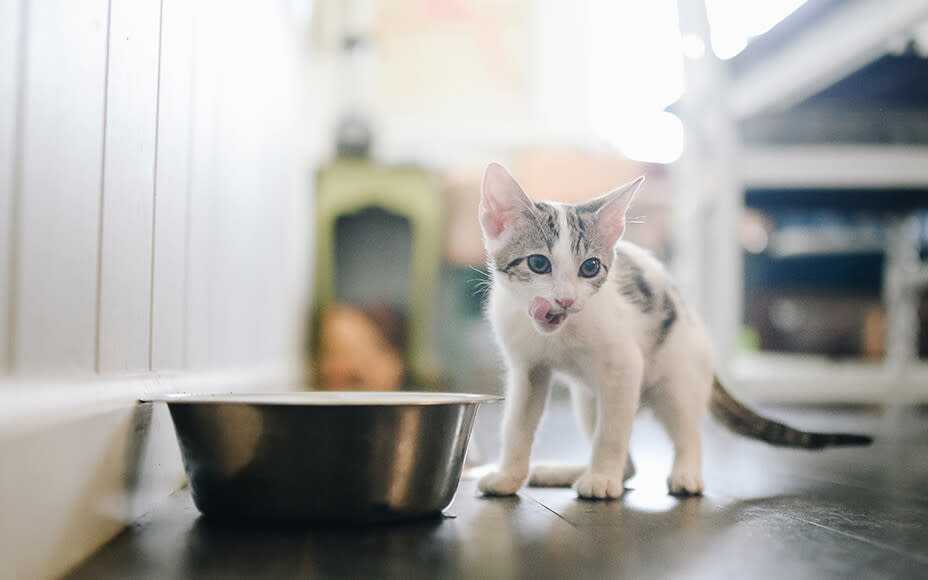
[TRANSLATION ERROR] Im Kittenalter gibt es bei der Ernährung viel zu beachten. Hier bietet sich ein hochwertiges Nass- und/oder Trockenfutter für junge Katzen an.
Is BARF better than dry or wet food?
We are completely honest with you: BARF means work. Because unlike with ready-made →complete feeds like wet or dry food, you have to individually adjust the individual food components to the needs of your cat. Moreover, it also means maintaining highest hygiene. After all, you are handling raw meat and innards, and ensuring germ-free conditions is essential.
Regardless of the right feeding method for your cat, it can be said: The content makes the difference. Every food is only as species-appropriate as its components (and the quality of these). Whether you choose BARF, →wet food, or →dry food - what matters is that the chosen food contains a high meat content. Muscle meat is particularly high-quality and healthy for your cat, while vegetables provide important vitamins and minerals.
For meat of lesser quality, the vague declaration "meat and animal by-products" applies - which can include feathers, claws, hooves, horns, and wool. A portion of fresh fruits provides the extra boost of vitamins and ensures a fresh, fruity taste. Selected herbs and oils refine the respective food and round it off with important fatty acids.