
What is chronic kidney insufficiency in cats?
Chronic kidney insufficiency (CKI) is one of the most common diseases in older cats, although unfortunately, young cats can also develop kidney diseases. But what lies behind this tongue-twisting illness? Just like in humans, the kidneys are very important detoxification organs in our furry friends' bodies. If their functionality is impaired, metabolic waste products and toxins are no longer properly excreted and accumulate in the body. If such a kidney disease goes undetected for a long time, it can become not only chronic but even life-threatening.
Learn now how to recognize the symptoms early and how you can provide your cat with a good life despite chronic kidney insufficiency! The rule here is: Prevention is the best treatment, as regular check-ups with your veterinarian can lead to the disease being detected and treated early. By providing a →healthy and balanced diet with high-quality food, you pave the way for your four-legged friend to have a happy and long life. Healthy doesn’t always have to be complicated: Whether dry food, wet food, or BARF - our food from Pets Deli is packed with high-quality meat as well as important vitamins, minerals, and oils. Sugar, grains, or artificial additives? Not here!
Unser Futter für Katzen: ehrlich, gesund, lecker.


Cause: How does kidney insufficiency develop in cats?
The causes of kidney damage in cats are varied and trigger chronic kidney insufficiency at different speeds. The most common causes include:
- Inflammation of the kidneys and →urinary tract
- Kidney stones
- A so-called cystic kidney (hereditary condition where numerous cysts in both kidneys increasingly displace functional tissue)
- Tumors or cancers
- Feline leukemia virus infection (leukemia)
- High blood pressure
As you can see, kidney insufficiency is often a secondary condition. The primary disease damages the kidney and causes the remaining kidney tissue to work harder, leading to a kind of overload. Consequently, the kidneys are increasingly damaged and the kidney function is further restricted. If kidney insufficiency is not treated, it ultimately leads to kidney failure, affecting other organs or systems.

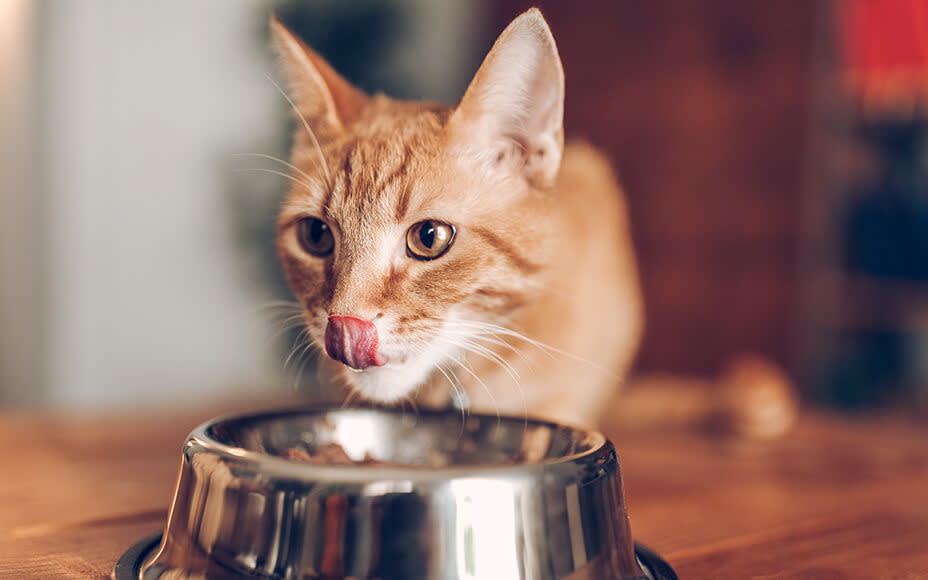
[TRANSLATION ERROR] Deine Katze rennt zum frisch aufgefüllten Futternapf, schnuppert kurz daran und geht dann wieder weg? Das kann ein Anzeichen dafür sein, dass etwas nicht stimmt!
Symptoms of kidney insufficiency in cats
To recognize the disease early and thus have it treated, you need to observe your cat closely. Unfortunately, external symptoms only appear quite late, so the kidney damage may already be significant. Therefore, pay attention to the following behavioral abnormalities in your cat:
- Lack of appetite or →anorexia leading to weight loss
- Lethargy, less activity than before
- Increased drinking and urination
- Nausea and vomiting
- In more advanced stages: severe →bad breath, loose teeth, pale mucous membranes
If you observe one or more of these behaviors in your furry friend or notice other abnormalities, you should not hesitate to go to the veterinarian. Even if it may not be immediately a kidney disease, the motto here is: Better to have it checked too often than too rarely. Because the earlier kidney insufficiency in cats is recognized, the better it can be treated.
How is a kidney disease diagnosed in cats?
During the diagnostic process, your furry friend will undergo a thorough examination. This includes both physical examinations and a comprehensive blood test, urine analysis, and blood pressure measurement. Here, the treating veterinarians may notice initial changes in the kidneys or heart rhythm disturbances. In cats with kidney disease, proteins in the urine as well as waste substances in the blood are clear indicators.
If chronic kidney insufficiency is suspected, additional ultrasound examinations and X-rays are informative to make changes in the kidneys and bone structure visible. This can also rule out that it is not "just" an acute kidney insufficiency.
To subsequently initiate the most appropriate therapy, the severity of kidney insufficiency is classified into different stages from I to IV, with I having only a few symptoms and IV being associated with massive changes.

[TRANSLATION ERROR] Einmal Rundum-Check, bitte! Mit Verdacht auf eine Nierenerkrankung wird deine Katze einmal komplett abgetastet sowie einigen weiteren Tests unterzogen.
Acute or chronic kidney insufficiency?
In kidney insufficiency, a distinction is made between a chronic or acute form of the disease, although they differ little in causes and symptoms. In acute kidney insufficiency, the kidney damage has only recently occurred and can be fully healed with timely treatment. In chronic kidney insufficiency, the damage to the kidney tissue is unfortunately already long-standing and therefore incurable. This means your cat will have permanent problems with its kidneys. However, even here, with the help of a targeted treatment and a special kidney diet, the disease can be slowed down or even halted**, and your cat's quality of life can be improved.
Therapy: How can kidney insufficiency be treated?
The treatment of kidney disease in cats is quite individual and depends on the stage of the disease. Acute kidney insufficiency can be fully treated and healed through the administration of medications.
In the case of chronic kidney insufficiency, while complete healing is not achieved through treatment, a consistent and tailored therapy can lead to a stable condition, thus allowing your beloved pet to have a good life.
The treatment includes 3 essential points:
1. Administration of medications: Depending on the stage of the disease, medications for regular intake are prescribed. These may include drugs for nausea, pain relief, or lowering blood pressure.
2. Adequate fluid intake: Access to fresh water should always be ensured, and it should be monitored that your cat drinks enough. If your kitty is a →poor drinker, feed particularly moist wet food like our →“Sauce Menu” or treat your cat with our →soups.
3. A special kidney diet: Feeding a special food is also very important to relieve the kidneys. Special kidney food contains less phosphorus and has a low protein content of high-quality, easily digestible proteins, resulting in fewer waste substances.
By your side throughout treatment: Pets Deli VET


Important! A special diet for cats with kidney disease
In the case of chronic kidney disease, your kitty's kidneys have been sick for a longer time, and healing of the damaged kidney tissue is no longer possible. It is therefore important that you provide your cat with →high-quality and healthy food without sugar or other additional flavorings and ensure that she drinks enough.
The good news: If your cat is already suffering from chronic kidney disease, you can relieve the damaged kidneys and support your cat's well-being by switching to a special kidney diet, such as by giving our →"Vet" Liver & Kidney Fit. Additionally, you should ensure adequate fluid intake and have regular check-ups by veterinarians.
If your cat's illness has affected her appetite, you can also take the cooking spoon into your own hands. Some kitties particularly enjoy being served home-cooked meals. However, you should consult with nutrition experts beforehand to ensure that you cover all necessary nutrients.
Life expectancy of cats with kidney insufficiency
Even though chronic kidney insufficiency is not curable, here is the good news: With individual treatment and tailored nutrition, your cat can lead a long and beautiful life. Acute episodes are unfortunately always possible, but the earlier these are recognized and treated, as well as the therapy being consistently adhered to, the more pleasant it will be for your beloved pet.