Your cat has dandruff - what does that mean?
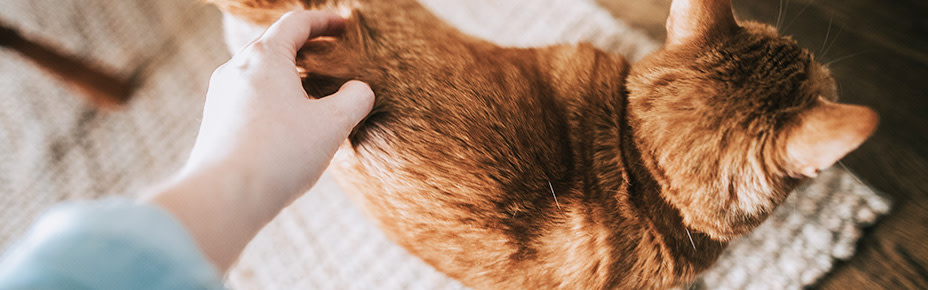
Can you see fine white flakes on your cat's fur? Then your cat most likely has dandruff. If you're unsure, brush or stroke your cat against the direction of the fur and see if white flakes fall out.
In general, dandruff is an indication that something is wrong. Often, it is a side effect of a disease. Sometimes it also occurs together with shedding. Observe your cat closely; perhaps you notice other symptoms? If you're unsure, grab your furry friend and off to the vet!

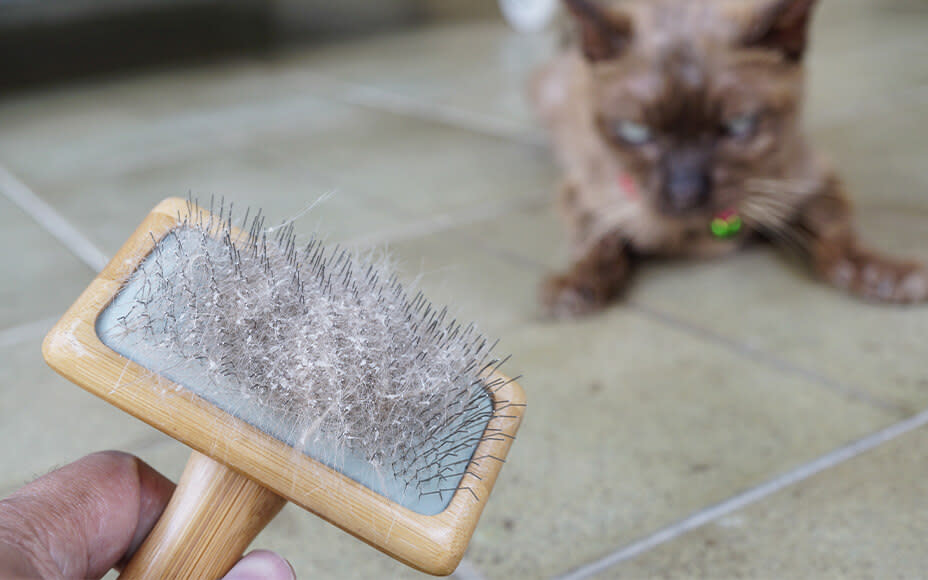
[TRANSLATION ERROR] Beim Bürsten deiner Katze oder wenn du gegen die Wuchsrichtung streichelst, kannst du erkennen, ob deine Katze viele Schuppen hat.
Causes of dandruff in cats and possible diseases
The reasons why your cat has so much dandruff can vary. Sometimes it's just a harmless shedding, but it can also indicate a serious illness.
Common causes of dandruff in cats and the diseases they may indicate include:
Shedding: Cats shed in the spring and autumn. This can lead to increased dandruff, but it usually resolves on its own.
Dry skin: Especially in winter, warm heating air can cause dry skin in your cat. Cats that are washed too frequently also develop dry skin.
Cat is not grooming properly: If you notice that your cat is →not grooming itself properly, the dandruff may be due to this. Reasons why your cat may not be grooming itself properly usually include →obesity, limited mobility due to old age, or a painful condition.
Mites, fleas, or lice: So-called ectoparasites are external parasites that can lead to dandruff. You can find out how to recognize if your cat has parasites in our →article on tick protection.
Fungal infection: A fungal infection, either from a skin fungus or yeast fungus, can also lead to increased dandruff. Another sign of this is circular hair loss. The cause is usually an immune deficiency.
Bacterial infection: Rarely, the cause of dandruff can also be a bacterial infection, although this often tends to be a "secondary infection." This means that bacteria spread in large quantities on already damaged skin.
Allergy: Our cats can also suffer from allergies, e.g., to pollen or house dust mites. If left untreated, this can lead to itching and dry, scaly skin.
Poor nutrition: A deficiency in essential fatty acids or trace elements (e.g., zinc) can lead to scaly skin and greasy or dry fur.
For the health of your cat, a →species-appropriate diet is essential. Healthy and tasty doesn't have to be complicated! Grains, sugar, and junk? You won't find that in our cat food range. Instead, our products are packed with juicy meat and important minerals and oils. Whether it's Pets Deli →wet food, dry food, or BARF: We bring your beloved pet joy in the bowl!
Extra viel Fleisch, frei von Getreide & Zucker sowie für Allergiker geeignet


What you can do against dandruff in your cat
Depending on the cause of the dandruff, you can help your cat in different ways. If it is currently shedding, daily brushing can be helpful. This not only removes loose fur but also loose skin flakes.
If it’s winter, your cat may have developed dandruff due to dry heating air. Here, a humidifier can help. A positive side effect is that it is also good for the health of the nasal mucosa and can help prevent →frequent sneezing.
If you feel that the skin flakes are due to the food, a diet change may help. Cat nutrition can sometimes be a bit confusing. As a little help, you can refer to our →article on feeding recommendations for cats**. If you're unsure which food is suitable for your cat, you can →get free advice from us.
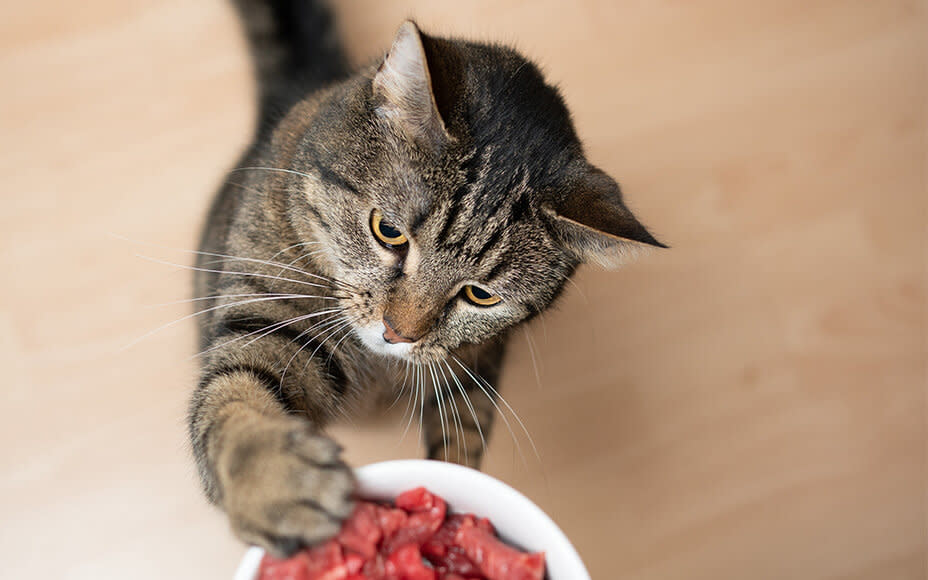
[TRANSLATION ERROR] Eine fehlerhafte Ernährung kann Schuppenbildung bei deiner Katze verursachen. Lasse es sicherheitshalber von Tierärzt*innen abklären!
Treatment by the veterinarian
You've tried a few things, but the dandruff in your cat is not improving? Then you should visit a practice and have it checked out. Perhaps there is more to it. If your cat has parasites or an infection, it is important that she is treated accordingly. Remember, in the case of a parasite infestation, to also treat the living environment and other pets (like dogs) in the household, as fleas, mites, and co. tend to spread. It is especially important to use only preparations suitable for cats or dogs, as the substances are not compatible with the other animal.