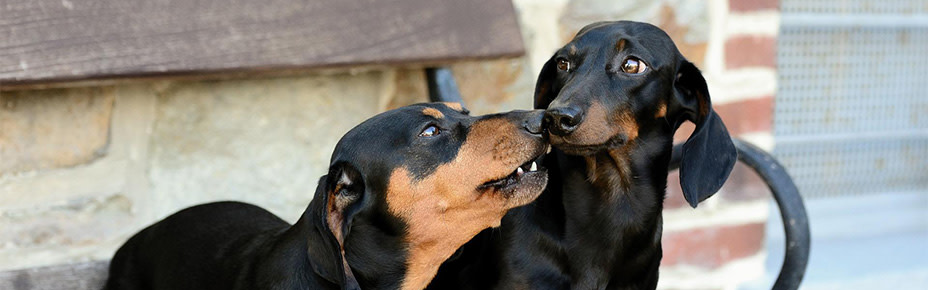
Why doesn't my older dog accept the new puppy?
Your furry friend is your best buddy and gets along well with all the other four-legged friends on your walks? All the more surprising, then, when your dog suddenly resists when →the new puppy arrives. That first dogs don't accept a puppy in the household can happen – even with sociable dogs. The reasons for this can be quite varied. It could be that...
...the higher energy level and the lively nature of the puppy are annoying your older dog.
...your dog is confused because routines suddenly change, nights become more restless, and walks get shorter.
...he is jealous because now you give your puppy much more attention and he gets less than he's used to.
...the puppy doesn't respect your dog's personal space, but you don't help him either, so he has to handle it himself.
...the →puppy is pretty cheeky and keeps challenging your first dog with rowdy behavior.
...your dog shows territorial behavior and wants to defend food, toys, and sleeping spots.
A new puppy in the household shakes things up, and some dogs need a bit of time to adjust. Make sure to inform yourself in advance about how to →properly introduce your dog and puppy so you don't overwhelm anyone and ensure a relaxed start.
What can I do to help my older dog accept the puppy?
It's important that you find out the cause of why your older dog is reacting so "allergic" to the puppy. Only then can you actively work on the relationship between the two. Ideally, you should contact experienced dog trainers. They will come to your home, observe your dogs, and can accurately assess what's going on and work with you to ensure a harmonious coexistence.

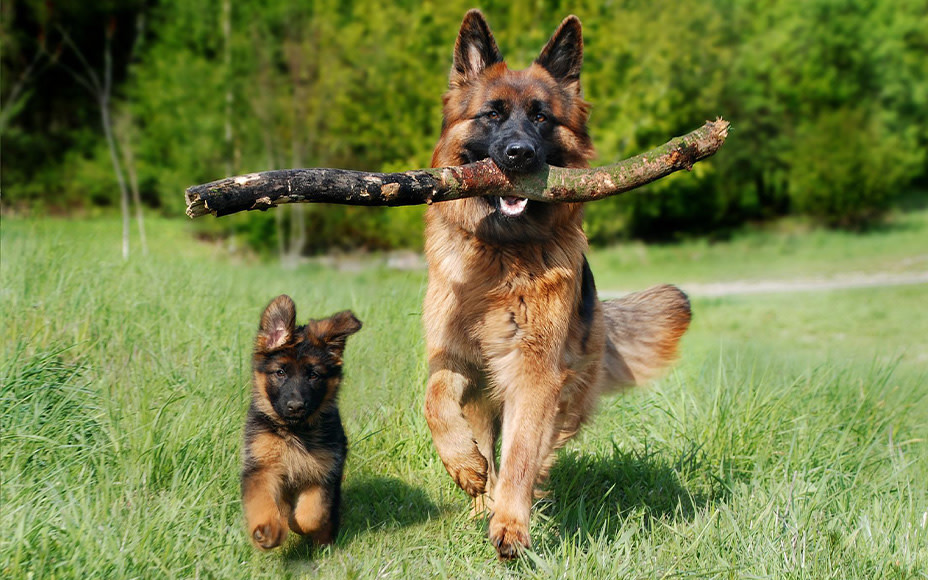
Together through thick and thin? Life with a second dog doesn’t always turn out like a storybook. Some dogs simply live side by side.
Observe your dogs very closely – who does what?
Take a close look at what your older dog does when he meets the puppy: Does he bark, walk away, yawn, lick his lips, growl, or snap at him? In what situations does this happen? Especially aggressive behavior like snapping or growling is part of canine communication and are warning signals for your puppy that he's crossing a boundary.
Also observe your puppy: How does he behave toward your older dog? Does he accept "corrections" and treat your dog with respect or does he happily help himself to food bowls, toys, and so on, and really gets up close to your first dog and invades his personal space? Understanding →puppy communication and canine body language in general is extremely important!
Give both dogs equal attention
Even though the little cutie is so sweet and certainly needs more attention than your already trained dog, you should try to divide your time equally between both dogs. Your puppy needs a few extra →play sessions than your older dog, while your older dog will probably enjoy extra cuddles.
You should also train that sometimes only one dog gets a turn while the other has to wait. If your first dog isn't food-aggressive, you can practice this perfectly by alternately giving both dogs a treat. If your dog is especially food-motivated, start by giving both a treat at the same time, then alternate later. Our irresistible snacks for young and old are perfect for this!
Indulge your pet in a healthy and delicious way – with our snacks
Make sure your home is calm and relaxed
Little puppies want to experience something all day long. Of course, just lying in the dog bed is boring! It's much more fun to see what the other dog in the house is up to, climb on them a bit, or try to get them to play. You need to be careful here, because older dogs usually don't enjoy playing the "babysitter" for your puppy – and they don't have to.
It's your responsibility to make sure your →home is puppy-proof – also for the older dog! Your first dog needs a quiet retreat where he won't be disturbed by the lively puppy. Also, he's not there to entertain your puppy. Support your dog and show him that you'll keep the puppy away from him if he wants. This way, the little one will also learn to settle down in the presence of other dogs and respect personal space.
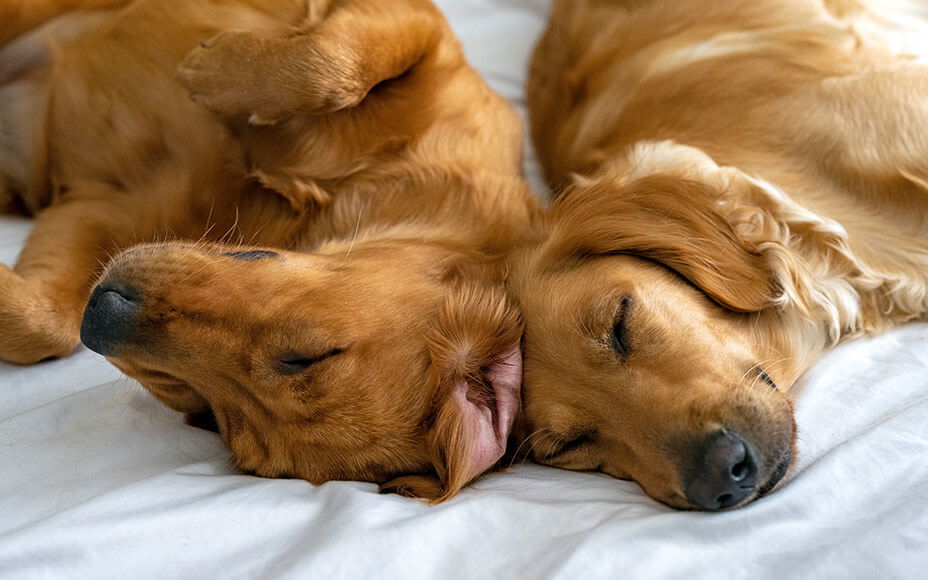
Some dogs like to sleep together, while others prefer their own sleeping spot. Both are perfectly fine and must be respected by the puppy.
Create shared experiences
Shared adventures bring you closer together – and that's true for your dogs too! What does your first dog especially enjoy? Going for a swim? Playing in the garden? Searching for food? Grab both your dog and your puppy and take them to the lake together. There, your older dog can show the little one how great water is, and the focus isn't so much on the two dogs. Sand, water, sticks – everything is exciting, and discovering it together is even better.
Older dog reacts aggressively to puppy
You notice your older dog just isn't warming up to the puppy. He barks and growls at him and might even snap at him? Instead of hoping for so-called →puppy protection and trying random things, you should seek professional help! Aggressive behavior is shocking at first, but you should never scold, hit, or otherwise unfairly punish your first dog for it. That will only make things worse. Maybe your dog is just →extremely stressed and that's why he's reacting this way.
Instead, make sure your first dog doesn't attack the puppy. Separate the two animals from each other at first. For example, you can set up a puppy gate in the living room. This way, both dogs can see and smell each other, but neither can hurt the other. If your dog tends to bite, put a muzzle on him and don't leave the dogs alone in a room together. Better safe than sorry!
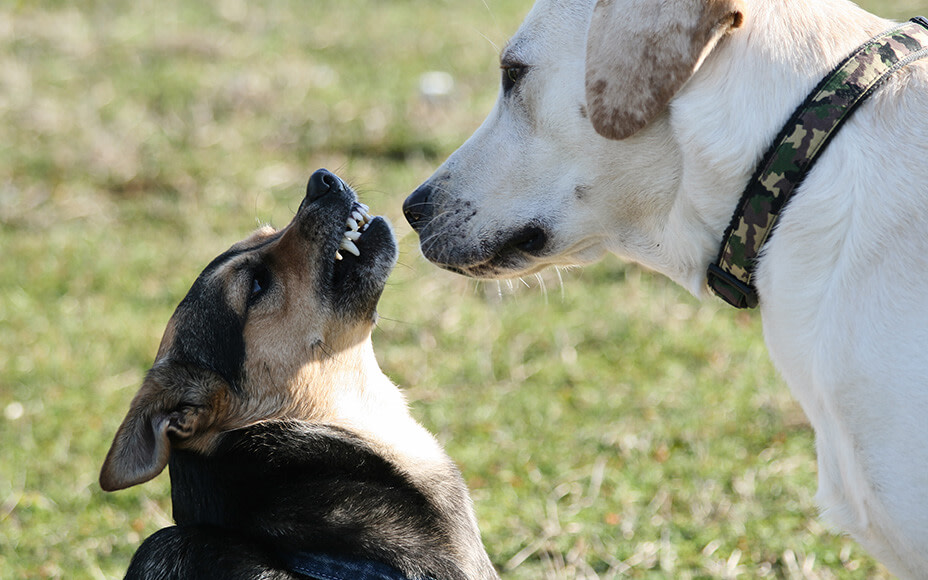
Growling, barking, snapping – dog communication can sometimes be a bit rough, but it is part of living together with other four-legged friends.
Don't worry, everything will be fine!
Even if it doesn't seem like it at first, dogs can become best friends, even if they had a rocky start. If your dog initially reacts aggressively or dismissively to your puppy, that doesn't mean you have to give him up right away. Dog trainers know what they're doing and can help you achieve a harmonious coexistence with your four-legged friends.
However, keep in mind that not every dog is made for life with a second dog. Don't be disappointed if your dream of a perfect dog friendship doesn't come true. Some dogs simply live side by side, which is also okay and doesn't mean they're unhappy.