How to properly protect your dog's paws in winter
When the temperatures drop, the first snow falls, and the roads are covered with grit due to slipperiness, your dog's paws can become quite stressed. Although the tough skin protects against sharp stones and other injuries, a little →support during the cold season can make walks more comfortable for your dog. We’ll show you what to look out for when it comes to paw care in winter and how a bit of manicure can help your dog enjoy a safe walk in the winter woods.
Why you should give extra protection to your dog's paws in winter
Our four-legged friends walk on their paw pads, which—similar to us bipeds—are covered with a layer of callus . This is obviously much tougher than ours, since dogs can easily walk over rough terrain without injury. Additionally, the claws and a thick layer of fat under the callus cushion the impact and provide optimal grip. Sounds pretty tough at first—so why bother with paw care?
Salt and ice irritate the skin quickly and can cause cracks in the callus in your dog. Especially grit and de-icing salt put extra strain on your dog's paws. With the right care, you can prevent inflammation and injuries—and not just in winter! Even in summer, hot asphalt can cause cracks in the callus, and the right paw care can easily protect your dog from this.
How sensitive are dog paws to cold?
As you’ve learned, dog paws can really withstand a lot. However, at temperatures below 0°C even the thick callus becomes a less stable barrier and cracks can form. This makes it easier for dirt and bacteria to get in and promote inflammation. Adequate protection of the paws in winter is therefore recommended as soon as the first frost is visible outside.


A dog's paw is well protected thanks to the tough callus with an underlying layer of fat. However, in sub-zero temperatures, the sturdy callus can become dry and cracked.
Paw care for dogs in two steps
Taking care of your dog's paws is not complicated. You just need a few things at home and then you can start the manicure:
a towel
a bowl of warm water
mild shampoo for dogs
paw balm (e.g. with beeswax) or Vaseline
Step 1: Apply cream to the paws before the walk
Your dog needs the protective balm especially before going for a walk, when a round in the cold is coming up. Grab all four of your dog's paws and apply a thin layer. The greasy protective film protects already cracked skin, but healthy paws also need proper prevention. The cold snow, ice, and salts can’t penetrate the skin this way, and the paws are optimally protected from drying out. Make sure your dog doesn't lick off the balm directly. While it’s not toxic, it’s not particularly tasty or healthy either, and after all, the protective film is supposed to withstand the weather.
Our →Pets Deli Paw Balm was specially developed for stressed dog paws and is suitable for every season. Our balm is especially protective and long-lasting, accompanying you through all weather conditions and protecting thanks to valuable shea butter, calendula oil, and beeswax every dog paw reliably. Supple, resilient paws are essential for adventures in forests and meadows, even into old age.
Step 2: Cleaning the paws after a winter walk
In general, it’s advisable to avoid roads with de-icing salt as much as possible. While snow and ice also put stress on paws, a walk through the woods or park is better for them than walking over salt and grit. If you can’t avoid it, you should clean your dog’s paws thoroughly with water right after the walk. Otherwise, dogs will start nibbling at their paws to remove the unpleasant salt. This can not only cause redness but also leads to swallowing grit and salts, which is anything but healthy.
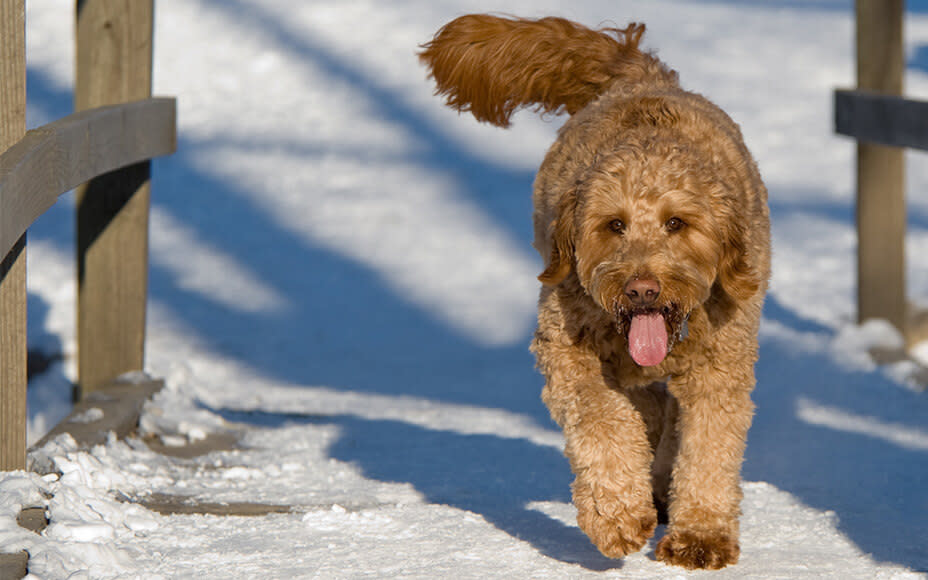
After a walk through your local winter wonderland, you should take time for paw care. Grit, ice clumps, and snow get stuck there and put strain on your dog's paws.
For cleaning, you can soak the paws in a bowl of lukewarm water and use a mild shampoo for dogs to clean them. Also make sure to gently remove any stuck clumps from the fur on the paws. Then dry the paws thoroughly with the towel and your dog is ready for a cuddle on his →favorite blanket. If you notice that the callus is irritated, you can also massage in some balm after washing.
When choosing a shampoo make sure it has a formula without perfume and unhealthy additives. With Pets Deli Shampoo, your dog’s coat and paws are well cared for, as the pH-neutral, replenishing formula cleans gently and thoroughly. The natural complex of chamomile, linden, and calendula extracts soothes stressed skin quickly and reliably.


I care for you - with our natural and gentle care for dogs, skin and coat are on the safe side.
Optional: Have the fur on the paws trimmed in winter
If your dog has especially long fur, ice clumps can easily get caught in the hair on the legs and paws. Melted snow then penetrates deep into the fur and freezes again due to the low outside temperature. The result can be larger chunks of ice, which pull and are uncomfortable for your dog. →Coat care is important in winter too, and there are special things you can do for your dog’s paws.
In this case, you can visit your trusted dog groomer for a nice trim and have the fur between the paws trimmed. To avoid injuring your dog with scissors, you should only do this yourself if you know what you’re doing. Otherwise, a trim by a professional is the safer choice. While you’re at it, you can also have them check if your dog’s →claws could use a trim for even better grip.
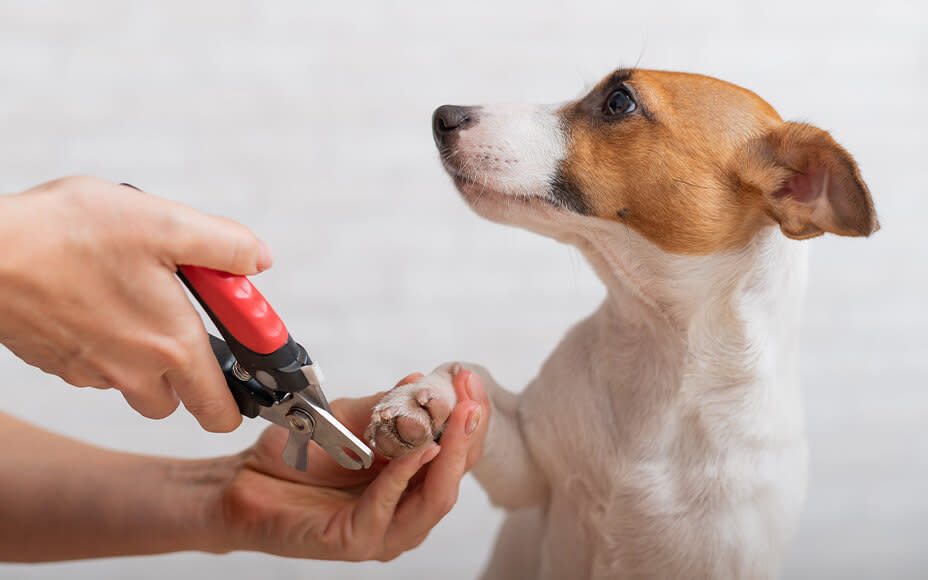
One claw trim, please! In addition to trimming the fur on the paws, shortened claws also provide better grip on smooth floors.
Are dog shoes useful in winter?
Usually, the care described above is enough to protect your dog’s paws in winter. For very heavily stressed paws and sensitive dogs, you can also use dog shoes or paw boots. It’s best to get advice at a specialist store regarding size and type. At first, your dog will find the shoes strange and will walk like a stork. Over time, however, he will get used to them and can safely walk through the winter woods over sticks and stones.
Important: The right nutrition for dogs in winter
In addition to paw care, you can do something good for your dog, in winter by ensuring a →healthy and species-appropriate diet that optimally supports your dog’s immune system. Often, due to higher energy requirements dogs need a larger food portion. According to the →feeding recommendation on the packaging, you can increase the portion here if your dog is active. Healthy dogs usually do not need extra nutrients and vitamins. A healthy food provides your dog with everything he needs, even on cold days. Exceptions are sick and →older dogs—here you can support your dog in consultation with your vet if necessary.
In addition to →nutrient-rich oils or our →Vitamin Booster our dog food delivers powerful nutrition for your dog’s body and gets you safely through the cold season.