
Salmon oil or fish oil for dogs
→Salmon oil or, more generally, referred to as fish oil, is probably the best-known oil in dog nutrition. It provides your dog with plenty of omega-3 and omega-6 fatty acids and supports →skin and coat health. The high-quality fatty acids in salmon oil are also an important building block for healthy heart function and joint mobility for your four-legged friend, making them ideal as a supplement to food for →feeding older dogs.
Of course, you can also ensure your dog gets omega-3 and omega-6 fatty acids through the feeding of certain foods. →Sprats are, for example, a healthy and nutritious snack for your four-legged friend.


Even with raw feeding, the bowl is often supplemented with some fresh fish alongside meat and vegetables.
Algae oil – the vegan "fish oil" for dogs
If you prefer plant-based foods and feed your dog →vegan or →vegetarian, then →algae oil is a great alternative to conventional salmon oil. It also contains important omega-3 and omega-6 fatty acids and, as the name suggests, is made from algae. Especially for dogs with →allergies or intolerances algae oil is an ideal supplement to food and can be added daily.
Linseed oil for dogs
Flaxseeds have long been considered a superfood because they are rich in omega-3 fatty acids, protein, and vitamins, which support brain function and blood vessels. The resulting →linseed oil is therefore also rich in polyunsaturated plant-based omega-3 fatty acids as well as alpha-linolenic acid (min. 50%).
You can easily add linseed oil as a small splash to your dog's dry or wet food. Do you love fresh ingredients in the bowl? When BARFing, the healthy and revitalizing effect of linseed oil, together with our mineral mix, makes our fresh menus a complete and super-fresh meal for your four-legged friend. Give it a try!
You'll love to try BARF!
Hemp seed oil for dogs
→Hemp seed oil is characterized by a very good ratio of omega-3 & omega-6 fatty acids and supports healthy nervous and immune system function. It is rich in antioxidants, linoleic acid, alpha-linolenic acid, vitamin E, beta-carotene, vitamin B1 and B2, as well as many minerals. This naturally supports important metabolic functions of the body.
Hemp oil is extracted from the seeds of the hemp plant and contains no THC. Therefore, the daily administration of a high-quality hemp oil for dogs is completely harmless.
Black cumin oil for dogs
→Black cumin oil has earned its reputation as a natural →tick repellent for dogs. The particularly high content of →essential oils in black cumin oil is said to create an odor and scent film on the coat that repels the little parasites. These oils can also support anti-inflammatory effects in the body.
You can give your dog a small daily splash of black cumin oil in their food. However, note that it should only be used as a supplement to complete food and not as the sole oil for BARFing purposes. Additionally, dogs with liver problems should not receive black cumin oil, as the essential oils are broken down in the liver.
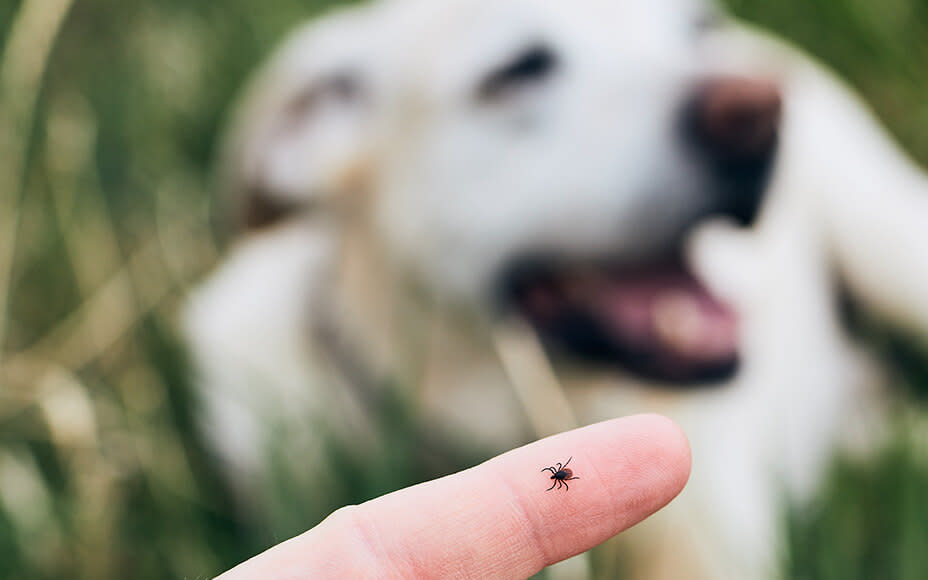
Some oils are said to naturally protect against ticks. Whether this is really true often remains to be discovered for yourself.
Coconut oil for dogs
Coconut oil is also said to have a protective effect against ticks. The reason for this is the lauric acid contained in coconut oil, which should make up at least 60%. For tick protection, it is recommended to apply the oil directly before a walk to the dog's body—that is, legs, head, neck, etc. Whether this is a →myth or really works is up to you. Scientifically proven protective effects against ticks in dogs from coconut oil are not available.
Additionally, when coconut oil is occasionally mixed into food, it is said to have a positive effect on coat health. However, when feeding, make sure that it is exclusively a pure, virgin coconut oil product.
Evening primrose oil for dogs
Evening primrose oil also has a very high content of linolenic acid (over 70% even). It is also rich in omega-6 fatty acids, alpha-linolenic acid, and vitamin E. Evening primrose oil is often used for dogs with skin problems and mixed into their food. It is said to help with →itching and irritation, as well as to relieve →allergies and support in case of parasite infestation.
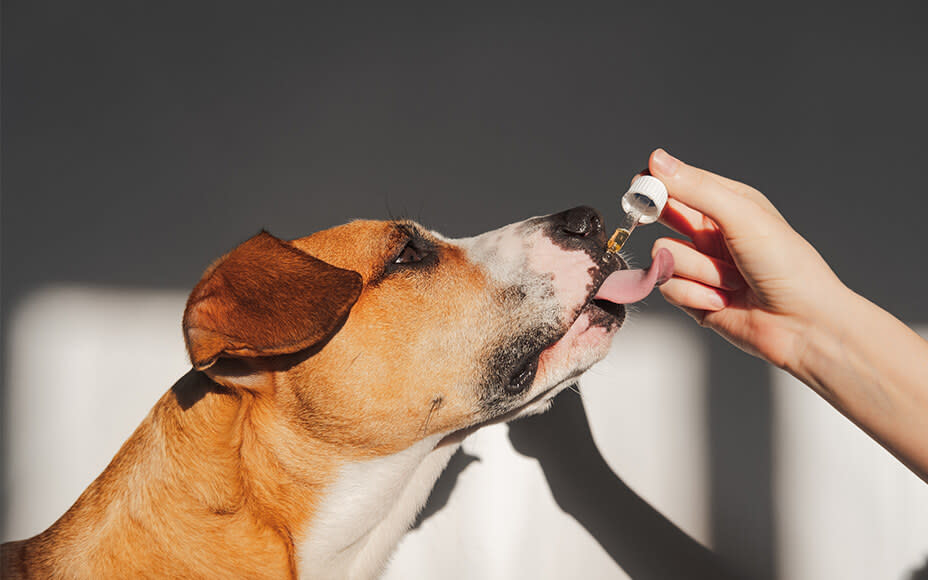
High-quality oils can make a valuable contribution to your dog's health as a supplement to their food.
Why are oils so important for my dog?
To explain why healthy oils are so important for dogs, we need to take a closer look at the topic of fats. All fats, whether "good" or "bad," are made up of different fatty acids. They are differentiated by their molecule size (short-, medium-, and long-chain fatty acids) and also by their specific chemical bonds (saturated and unsaturated fatty acids).
Saturated fatty acids are often referred to as "bad fats". These include all animal fats, palm kernel fat, and coconut fat. Excessive consumption can promote increased cholesterol levels, diabetes, arteriosclerosis, and cardiovascular diseases.
Unsaturated fatty acids are further divided into monounsaturated, diunsaturated, and polyunsaturated fatty acids. Diunsaturated and polyunsaturated fatty acids are often considered "healthier".
Monounsaturated fatty acids are found, for example, in olive oil, rapeseed oil, and many nuts and seeds. They are not essential, meaning our dogs' bodies can produce them on their own.
Polyunsaturated fatty acids are found, for example, in salmon, algae, seeds, and nuts. These include the aforementioned omega-3 and omega-6 fatty acids as well as alpha-linolenic acid and linoleic acid. Our dogs' bodies cannot produce these on their own, which is why they are essential. This means they must be supplied to the body in sufficient quantities through the diet.
High-quality oils can also help with skin and coat problems. However, it is important to look at the entire diet. Often, an allergy or intolerance is the cause of recurring problems. If you're unsure which food is right for your dog, take a look at our products specifically for allergies and intolerances section.
For skin and coat problems:
Food to strengthen skin and coat
What happens in case of a deficiency?
Now for the importance of healthy oils for dogs: A deficiency in essential fatty acids can lead to various deficiency symptoms and consequently to health impairments. In dogs, this can include changes in the skin and coat, increased susceptibility to infections, growth disorders, severe hair loss or a deficiency in blood platelets.
Are you looking for a high-quality oil as a healthy and tasty upgrade to your four-legged friend's food? We have them all: from rich salmon oil to the plant-based power of algae oil and the easily digestible hemp seed oil. Take a look at our high-quality oils for dogs!
Small Drop with Big Impact - Our Oils for Dogs
How do I recognize a good oil for dogs?
Just drive to the supermarket, buy oil, and add it to the food? Unfortunately, it's not quite that simple, because not all oils you find in stores are high quality and therefore a healthy supplement for your dog. The decisive factor for a high-quality oil is the ratio of fatty acids to each other.
The rule is: The higher the proportion of omega-3 fatty acids and the lower the omega-6 fatty acids, the better the oil. Ideally, the ratio of omega-6 to omega-3 fatty acids should be between 5:1 and a maximum of 10:1.