Caution: Toxic! What Your Cat Should Not Eat
According to popular belief, cats have seven lives. However, as we all know from experience, this does not protect them from all the dangers of everyday life. Great dangers come from the foods that are completely harmless to us humans, even delicacies - but can cause poisoning in your cat. Some of these foods, like garlic or chocolate, are also toxic to dogs.
Important: You will not find tips here for saving your cat if it has eaten something toxic. In that case, please immediately: Call the veterinary emergency service!
Free Webinar on Animal Health
Check out our free webinar now and learn everything you need to know about health in dogs and cats.
Only through a →species-appropriate and healthy diet can you create the conditions for a long and healthy cat life. To ensure that this remains the case and you can enjoy your furry friend for a long time, here is a list of several toxic or at least disadvantageous foods that your cat should definitely not get its paws on.
Onions: Highly Toxic for Cats
Whether in cooked, raw, dried, or powdered form - onions are highly toxic to cats. They contain dangerous sulfur compounds that attack the animals' red blood cells. Thus, the consumption of onions can lead to vomiting, →diarrhea, or mucosal irritation up to anemia. The blood count can already change due to repeated ingestion of small amounts.
Leeks: Always Toxic for Cats
In addition to onions, all leek plants are toxic to cats. These plants include wild garlic and chives. Especially chives are often found as a plant in the kitchen or on the balcony. As interesting as this plant may be for your cat, it must not be consumed under any circumstances, as it can lead to signs of poisoning.
Garlic: Highly Toxic for Cats
Garlic is also extremely toxic to cats, as it contains harmful substances such as N-propyl disulfide and allyl propyl sulfide. While harmless to us and even good for blood, heart, and vessels, it is immensely harmful to the cat's organism. Consumption of garlic can lead to severe poisoning symptoms in cats. Since the gastric mucosa is strongly irritated, it can cause discomfort such as diarrhea and vomiting.

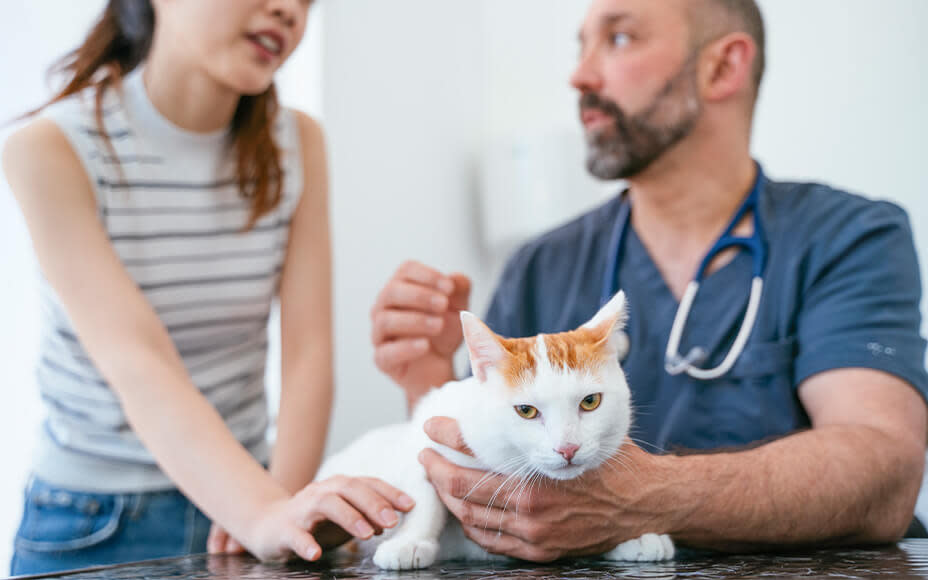
[TRANSLATION ERROR] Hat deine Katze etwas gefressen, was sie nicht soll, hol dir lieber tierärztlichen Rat ein. In der Praxis kann man ihr zügig helfen und eine Vergiftung im besten Fall vermeiden.
Bread and Toast: Can Cause Digestive Problems
There is a reason why good quality food is labeled "gluten-free" - because gluten has no place in cat food. Gluten is a protein found in wheat and other grains.
Bread and toast are made mostly from grains and can cause diarrhea and other digestive problems in your cat. Cats are carnivores and can only digest such carbohydrate sources in very small amounts. Bread and toast, as formal gluten bombs, have no place in your cat's stomach!
Dairy Products like Butter, Cheese & Co.: Can Cause Digestive Disorders
Cow's milk and dairy products like →cheese or →quark are not inherently toxic to cats. Especially during the nursing period, kittens need milk to grow into robust house tigers. However, at this stage, their bodies produce lactase, which, like in humans (at least if there is no intolerance), breaks down the milk sugar lactose. Adult cats may still be crazy about milk, but they no longer produce lactase, which is why the tasty milk often does not agree with them.
Since lactose cannot be properly broken down in adult cats, it reaches the large intestine and is fermented there. The result can be digestive disorders and damage to the intestinal flora. Therefore, you should definitely avoid feeding milk, butter, and cheese. Treating your cat with a bowl of milk is indeed one of the →most common feeding myths.
Lactose-free products could be an alternative. Ideally, you should wean your cat off dairy products.
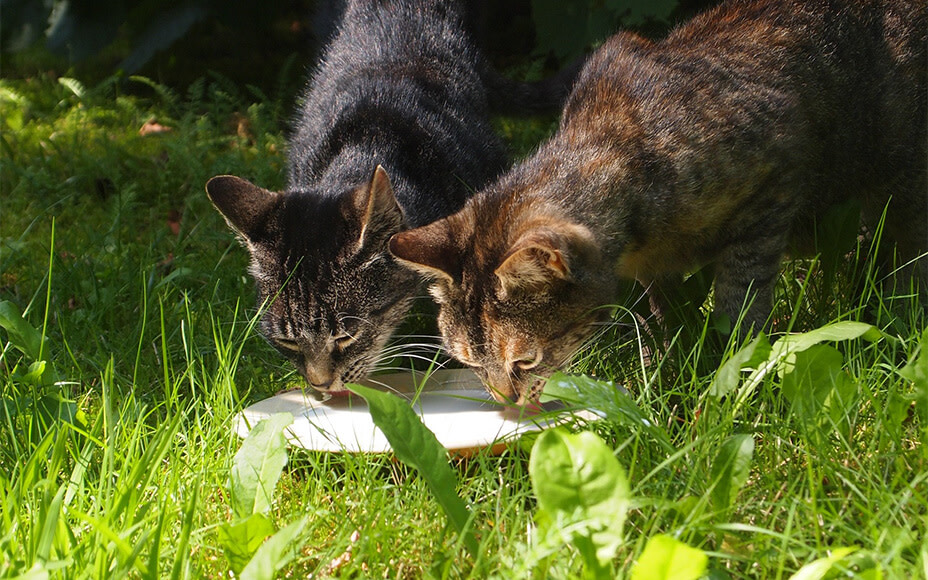
[TRANSLATION ERROR] Ein Schälchen Milch als besondere Belohnung für die Mietzen? Besser nicht! Viele Katzen vertragen Milchprodukte nicht gut und bekommen Bauchschmerzen und Durchfall davon.
Unhealthy Spices for Cats: Salt, Chili, Curry & Co.
It sounds self-explanatory, but it is not always: Salt and other spices are not for cats! In general, salted or heavily spiced foods like →sausage are harmful to your pet. Spices burden the kidney metabolism of your cats and therefore do not belong on their menu. Additionally, your furry friend's senses are extremely fine, which is why intense spices like chili, pepper, nutmeg, and curry should be removed from your pet's diet.
However, some spices are absolutely great for the health of your furry friend! Basil and fennel support a functioning digestion. If you feel your cat is longing for something aromatic, tempt it with a bit of catnip.
Grapes and Raisins: Very Toxic for Cats
The light and healthy snack for you can cause discomfort in cats. It is still unclear which component of grapes leads to the symptoms in cats, but it is suspected to be the oxalic acid contained in the seeds. In the worst case, grapes can lead to →kidney failure in your cat. However, diarrhea and vomiting as a consequence are also serious.
The same applies to raisins. The toxic substance for cats is even present here in higher concentration, making the consumption of raisins even more dangerous. So why take a risk? It’s better to go for tasty snacks specifically developed for cats.
Snacks Straight to the Heart - Our Treats for Your Cat


Alcohol: Highly Toxic for Cats
While alcohol can lead to intoxication in small amounts for us, it is significantly more harmful to the much more delicate cats. The ethanol contained poses a danger of alcohol poisoning even in small amounts. Cats can suffer from coordination disorders (ataxia), stomach problems, and liver damage from consumption.
Human Medications: Never Suitable for Cats
It goes without saying that your medications should never be fed to your cat. So please do not get the idea of giving your furry friend painkillers from human medicine (such as sleeping pills or paracetamol) for self-treatment.
Cats react very sensitively to this and can develop severe poisoning symptoms. If your cat's stomach is grumbling and you think it needs medical treatment, your veterinarian can prescribe medications specifically developed for cats.
With Pets Deli Vet, you can also do something good for your sick cat: A special vet food that is tailored to the needs of sick house tigers, is healthy and also tastes good? Exactly, that's Pets Deli Vet!
By your side throughout treatment: Pets Deli VET
Chocolate: Always Toxic for Cats
Mmmh, delicious. Probably also for cats. However, it is an absolute taboo! Chocolate, as well as other sweets, are very popular with us and are not particularly healthy (not to mention the figure).
But for cats, it is simply dangerous. Chocolate contains the substance theobromine - a chemical compound that is highly toxic to cats. It can cause symptoms such as vomiting, diarrhea, restlessness, panting, increased breathing, muscle tremors, and even seizures in small amounts, and can lead to death within a short time. The darker the chocolate, the higher its cocoa and theobromine content.
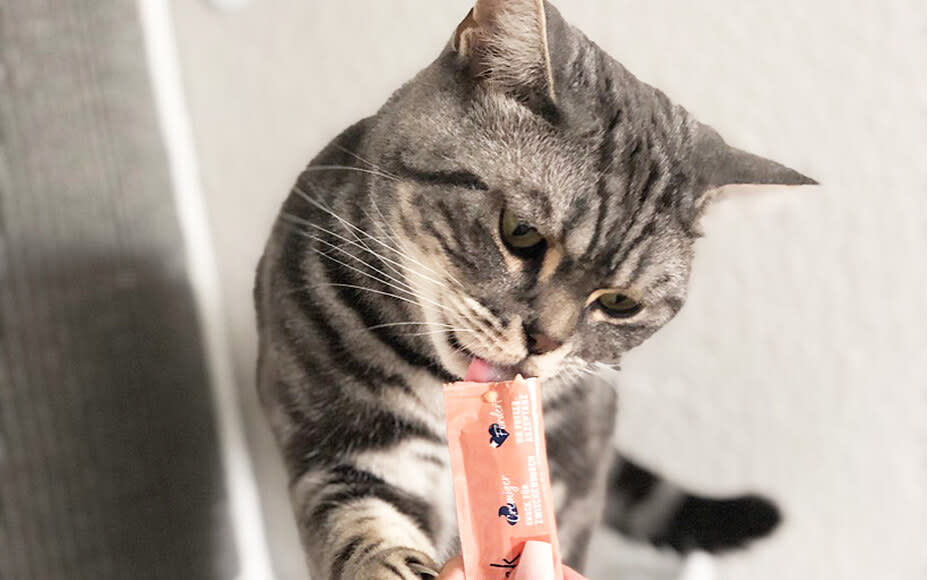
[TRANSLATION ERROR] Besser als jede Schokolade: Nach unseren Creme-Snacks lecken sich alle Vierbeiner die Pfoten.
Raw Pork: Extremely Toxic & Can Transmit Diseases
→Raw pork must under no circumstances be on the menu of cats. By consuming this food, cats can become infected with the harmful Aujeszky virus. This can lead to an incurable inflammation of the brain or spinal cord. Additionally, raw pork can be contaminated with trichinella, →tapeworms, salmonella, or pathogens of toxoplasmosis.
Raw Potatoes, Eggplants, and Unripe Tomatoes: Toxic for Cats
Raw potatoes and eggplants contain solanine. This toxin damages the mucous membranes of cats and can lead to diarrhea, cramps, and respiratory paralysis in four-legged friends. Raw potatoes also contain a high proportion of starch, which is indigestible for both you and your furry friend.
Tomatoes also contain the substance solanine, but this becomes harmless to cats once the vegetable is overripe. During the cooking process, solanine is also rendered harmless. Therefore, our processed vegetables are always gently cooked before they are added to cat food.
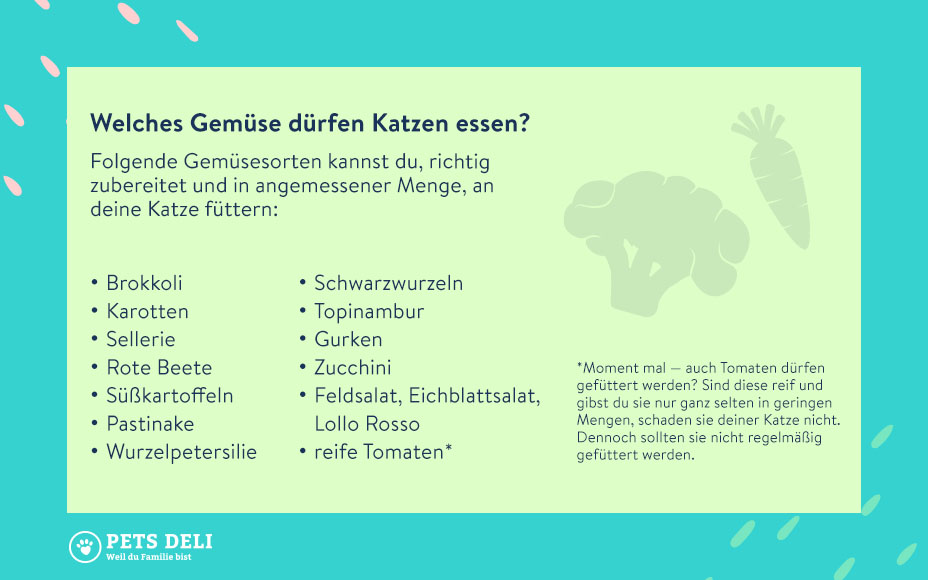
[TRANSLATION ERROR] Unsicher, welches Gemüse Katzen fressen dürfen? Dann wirf einen Blick in unsere Tabelle!
Avocado: Very Toxic for Cats
Avocados contain dangerous persin for cats. This toxin can cause gastrointestinal issues or heart muscle damage and can even be fatal. Due to their high fat content, feeding avocados to your cat can cause inflammation of the pancreas.
The pit of the avocado should also be off-limits for your cat - it can cause a bowel obstruction if swallowed.
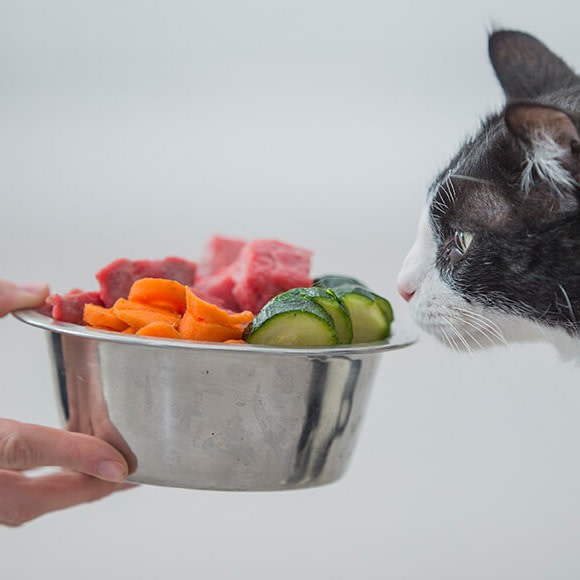
Gemüse für Katzen
Dieses Gemüse dürfen Katzen fressen!
Tea and Coffee: Always Toxic for Cats
Even if you need a cup of coffee every morning and a cup of tea every evening: Neither belongs on the menu of cats. These indulgences contain caffeine and theophylline – substances that are highly toxic to cats.
100 milliliters of coffee contain between 60 and 100 milligrams of caffeine. The caffeine content in black tea is about half that. Already at a dose of 80 milligrams per kilogram of body weight, caffeine can be fatal for cats. Furthermore, coffee and black tea contain the substance theobromine. This can also lead to poisoning in cats even in small amounts.
Both beverages can cause symptoms in cats such as rapid heartbeat, muscle tremors, vomiting, diarrhea, shaking, or seizures. With higher consumption, as described above, death can also occur.
Xylitol: Toxic Sugar Substitute for Cats
Xylitol is used in many products as a sugar substitute, for example in candies or dental care gums. For us humans, it is a good alternative to regular sugar, but it is toxic for our furry friends. It can promote liver damage and lead to life-threatening hypoglycemia due to increased insulin secretion. Therefore, store candies and gums in a kitchen cabinet or a secure drawer where your furry friend cannot find them.
Nicotine: Toxic Even in Small Amounts
Nowadays, everyone knows that cigarettes are harmful to human health. For our furry friends, cigarettes are toxic even in small amounts. The nicotine contained can cause symptoms such as vomiting and diarrhea, increased salivation and muscle tremors up to seizures in cats. Although cats are often picky eaters, it can still happen that the ashtray suddenly appears attractive and interesting. Therefore, cigarettes and ashtrays should always be kept out of your cat's reach.
Antifreeze
When the cold season arrives, we take the antifreeze for the car out of the cellar again. As long as it is well sealed and nothing spills, it poses no problem for your furry friend. However, if it spills or the antifreeze tips over and leaks, it can become dangerous. The liquid tastes sweet and is therefore often licked up by cats. Antifreeze contains, among other things, ethylene glycol, which is highly toxic to cats. It leads to vomiting, cramps, balance disorders, and kidney failure. So be careful when handling antifreeze and keep your furry friend away from it.
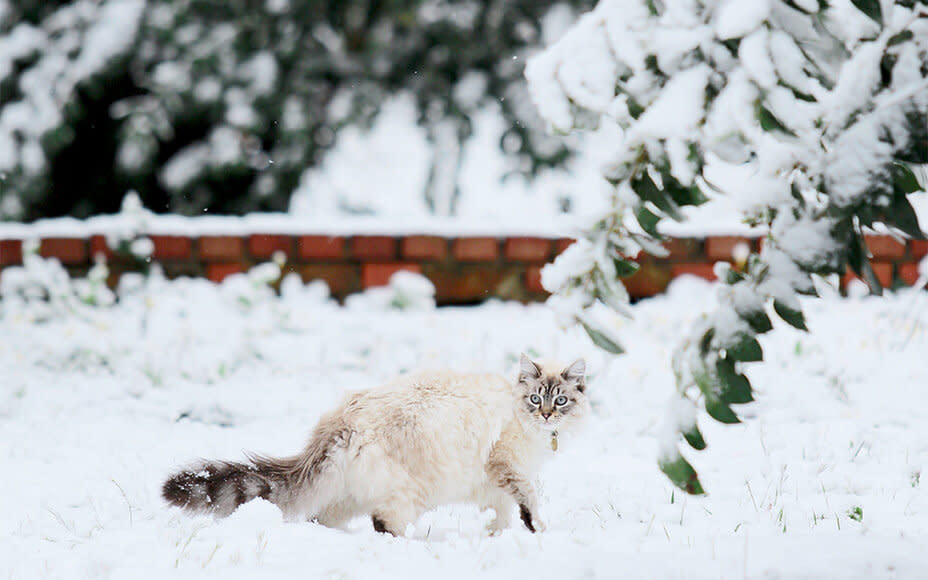
[TRANSLATION ERROR] Der Winter birgt für Katzen so einige Gefahren - wie verschüttetes Frostschutzmittel. Aufgrund seines süßlichen Geschmacks schlecken es Katzen gern auf, was allerdings höchst giftig für sie ist.
Rat Poison
Are you or one of your neighbors struggling with mice or rats in the garden or cellar and want to get rid of them with rat poison? This means not only a painful death for the rodents but can also be life-threatening for your cat. Either through direct ingestion of poisoned bait or by eating poisoned rodents, rat poison can lead to severe internal bleeding up to death. The first signs of this are pale mucous membranes, weakness, mucosal bleeding, or bloody urine. So it