Dry food for dogs – healthy and appropriate in canine nutrition?
When it comes to the →species-appropriate and healthy nutrition of your dog, it's important to know what actually makes such feeding. Especially when it comes to the different types of feeding, →BARF, wet and dry food, opinions often differ widely. But basically, it's simple: your four-legged friend needs to get all essential nutrients in a balanced ratio from their food – so each meal should always be nutritionally complete. These so-called complete foods are available in a wide variety of flavors and textures – which is exactly why it's not always easy to keep track.

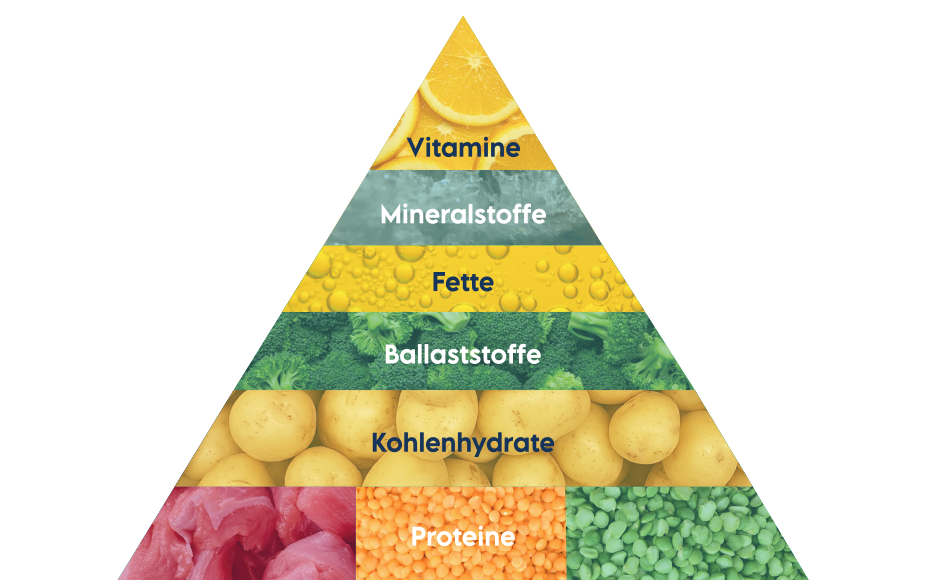
Regardless of the type of feeding, your dog's meals should follow the structure of the nutritional pyramid for dogs.
Dry food is considered particularly practical in its compact form. But what exactly defines this type of feeding, how can you recognize a good dry food, and which food is best for your dog?
What are the advantages and disadvantages of dry food for dogs?
Even within dry food itself, there are different types depending on the manufacturing process. With extruded dry food, you can achieve high meat content, while cold-pressed dry food preserves natural nutrients. However, all types of dry food have a low moisture content and therefore a high energy density – so dry food is more concentrated than →wet food. Unlike wet food, you need to make sure your furry friend drinks enough extra water.
A tasty compromise is our →soft dry food, which, as a semi-moist treat, has a higher moisture content than conventional dry food and is very popular with dogs.
Dry food can be stored airtight at room temperature and is therefore easy to transport. The long shelf life is also a real advantage, but only if the bag is properly sealed or, even better, the contents are stored in an airtight container. Otherwise, food mites can multiply quickly, which can trigger →allergies with →itching. Many owners swear by dry food because of its dental care benefits. The high energy content in a small amount of food is also reflected in the cost, so dry food is usually more affordable than wet food or BARF.
By the way: all of our dry foods are grain-free and have an extra high meat content of up to 80%. Because we usually use only one type of meat (monoprotein), our dry food is highly digestible.
Dry food at a glance
all essential nutrients your dog needs for a balanced diet
supports dental health through longer chewing the →teeth, strengthens gums and teeth
easy to transport and store – perfect for on the go and →training sessions
very economical and therefore often more affordable
long shelf life if stored properly and kept airtight
low moisture content, which must be compensated by sufficient drinking

Intense in flavor, supports dental care, and often more cost-effective: both furry friends and their owners benefit from the advantages of a high-quality dry food.
What makes a good dry food for dogs? What you should look out for
Pure meat and nothing but meat in a healthy dry food? The →myth that dogs are strict carnivores persists. But our modern domestic dog is no longer a wolf! In the course of domestication, the digestive tract has adapted to digesting carbohydrates and, thanks to enzymes, can process them without any problems. Even the ancestors of our four-legged friends ate prey including stomach contents – so grasses, berries, and vegetables were already on the menu about 20,000 years ago – even if only indirectly. According to current scientific knowledge, a →vegan or →vegetarian diet for dogs is therefore also possible.
Did you know that insect protein is not only tasty, but also reduces the ecological paw print? With Pets Deli Green, you not only add variety to the bowl, but also do something good for our planet.
Taste the goodness of meat-free power - discover Pets Deli GREEN now
So, you can recognize a good dry food by the fact that the composition is balanced. Natural ingredients like meat (or other protein sources), vegetables, fruit, herbs, and →oils are components that are flexibly usable in the formulation of truly healthy dog food in general, and dry food in particular.

Behind a healthy dry food is fresh meat, but fruit, vegetables, herbs, and oils are also essential.
On the other hand, ingredients such as sugar, →grains, and artificial additives have no place in healthy food. Also, when it comes to vaguely declared "animal by-products" you should critically check what they actually are. By-products that should not be in the food include, for example, claws, horns, hooves, feathers, and wool. Allowed (and sometimes even desirable), on the other hand, are tripe, liver, lungs, or kidneys.
We put our hands and paws in the fire for this: we want exactly that for your four-legged friend – a truly healthy, complete →premium dry food with controlled and high-quality ingredients. Pets Deli provides your four-legged friend with crunchy fresh dry food – you won't find grains, sugar, or artificial additives here. Whether →senior or →junior, picky gourmet or sensitive tummy: our delicious →dry food for dogs offers something for every taste.
For every breed, every age, and every coat color: Our healthy dry food with bite
Should my dog only get dry food?
Dry food as a complete food provides your dog with everything needed for an active daily life. Proteins are especially important for dogs and make up the largest part of dog food, because only then can basic bodily functions and processes like cell renewal work properly. This way, your dog also gets essential fatty acids that they need to live and that the body cannot produce itself.
Your four-legged friend can easily get all this from dry food. So when it comes to the question of whether your dog should only get dry food, that's a decision that is up to you. There is no simple yes or no here, because your dog's feeding plan can be as individual as you want it to be. A mixed feeding where you combine two or more feeding types is also possible. Dry food is so attractive for many owners because it is simply practical. However, this should not be the only reason – the quality of the dog food should always be your top priority. It forms the basis for healthy digestion, well-being, and a healthy life for your dog.
Dry food or wet food – which is healthier for dogs?
You've learned that healthy dry food provides your dog with everything they need and also offers some advantages for you. As long as you pay attention to good food quality, there is no better or worse here. You can let your dog's keen nose and gourmet palate decide – not every dog is enthusiastic about dry food. Whether you serve your dog dry food, wet food, BARF, or a mix – besides quality, you can also choose entirely according to the taste of your four-legged favorite!